



A witness signature is the signature of a neutral adult who watches someone sign a document and confirms they signed it willingly. Wills, deeds, powers of attorney and marriage certificates often need one.
Witnesses must be over 18, not a party to or beneficiary of the document, and typically physically present. Witnessing a signature is commonly used for important legal documents such as wills, power of attorneys, affidavits, deeds, and some contracts involving money and property.
When an agreement is executed, a signature witness is brought to confirm the identity of both parties and prevent forgery and misrepresentation. Understanding the forge signature penalty highlights why witnessing is critical. A witness can be anyone over 18 with no personal interest in the signed document and is competent to testify in court.
The purpose of signature witnessing is to prevent fraud and ensure that the signatory is fully aware of the legal consequences of the document they are signing. It reduces the risk of influence or coercion, as the witness can determine if the signer is mentally sound and can understand what the document entails. If the legal contract is ever to be questioned, witnesses are likely to be called upon in court to verify the execution of a contract.
What is the importance of a witness signature?
Witness signatures are important because they help prevent fraud, ensure authenticity, provide additional legal enforceability, and can help in legal proceedings.
As is well known, credible and verifiable evidence comes in handy in proceedings before the court. A deal or contract may be considered null and void and unenforceable without a proper witness. It is required for various documents, such as contracts, deeds, agreements, guarantees, mortgages, power of attorney, and affidavits.
Considering its role in addressing and fulfilling legal requirements, it has gained widespread acceptance in financial institutions and real estate; and is a backbone in completing contractual binding. For example, a witness signature is required in Florida for recorded documents dealing with real estate’s legal ownership. Such documents include mortgage, grant deed, deed of trust, quit claim deed, and warranty deed.
When is signature witnessing required?
Signature witnessing is generally required to ensure validity and authenticity when executing certain legal documents, such as wills, trusts, and powers of attorney. Not all state officials issue a mandate on a witness signature of every document. However, this does not imply the documents not needing attestation under a relevant statute cannot have a witness. Instead, the validity of document attestation does not require court verification.
Most legal document signings do not have to be witnessed. Likewise, a commercial deal between businesses does not need witnesses to be binding. For documents that require a witness, rules can be applied as to what type of witnesses must be selected, and how they are to conduct the witnessing.
Most US states require witness signatures for the execution of specific legal documents, such as wills, trusts, and powers of attorney. However, the requirements for witness signatures may vary depending on the jurisdiction and the signed document type.
For example, in California, two witnesses are required for a will to be valid, while in New York, two witnesses are needed for a power of attorney to be valid. In Florida, a will must be witnessed by two individuals who are not beneficiaries of the will, while a trust may or may not require witness signatures depending on the terms of the trust document.
It is important to consult with a legal professional to determine the specific witness signature requirements for a particular legal document in a specific state.
What signatures need to be witnessed?
As a neutral third party, a witness watches the parties sign the legal documents. Not all documents, however, need witnessing. The following are among the standard documents that get notarized:
- Last Will and Testaments
- Prenuptial Agreement
- Affidavits
- Power of Attorneys
- Mortgage Deals
- Quitclaim Deeds
- Marriage Certificates (between Prenuptial Agreement and Affidavits)
Legal factors concerning signature witnessing to be aware of
Is it a legal requirement for a witness to sign? Are contract witnesses expected to follow the rules? Clients often inquire whether a witness must sign an agreement.
The answer is Yes – the agreement itself may require both parties and witnesses to sign for evidence. During disputatious situations, when a party to the legal agreement later claims they did not sign, the witness can be called upon to confirm it before the court.
Here are some legal factors to be aware of concerning signature witnessing:
- Legal requirements: Different legal documents may have specific requirements for witness signatures, such as the number of witnesses required or who can serve as a witness. Understanding the key legal clauses in contracts that require witnessing helps ensure full compliance.
- Capacity and competency: Witnesses should be competent and have the ability to understand the nature and consequences of the document being signed.
- Impartiality: Witnesses should not have a conflict of interest or be a beneficiary of the signed document, as this could call into question their impartiality.
- Identification: Witnesses should correctly identify themselves and provide their contact information, including full name, address, and phone number.
- Recordkeeping: It is important to keep accurate records of the witness signatures, including the date, time, location, and identity of the witnesses.
- Notarization: In some cases, witness signatures may need notarized to provide additional authentication and verification.
- Legal implications: Witnesses may be called upon to testify in legal proceedings to provide evidence of the document’s validity and the signature’s authenticity. It is important for witnesses to be aware of this possibility and to take their role as a witness seriously.
Who can witness a signature?

Source
In most cases, any adult (18 or older) of sound mind who is not named in the document and does not benefit from it can witness a signature. Family members and anyone who gains from the document should usually not be witnesses. Some documents and states have extra rules, so check local requirements.
The requirements for being a witness or notary may vary between states. A general requirement, however, is that they need to
- have no criminal records,
- be at least 18 years of age,
- be able to identify themselves,
- not be a beneficiary,
- be of sound mind, and
- reside in the state they are acting in.
Depending on the state, additional steps may also be required, such as a background check, entering a surety bond, completing training, or passing a state-administered exam.
Note: A signature witness is different from a notary. While a notary is a public official authorized to authenticate legal documents, administer oaths, and certify signatures, a witness simply observes the signing of a document and can attest to its authenticity. Notably, authorized witnesses often include a notary public, barrister or solicitor, justice of the peace, senior court officer, and other professionals such as senior police officers or doctors.
For convenience, many people now prefer to sign documents online through platforms like Signeasy, which allows the document signer to complete the process efficiently without needing to meet in person.
Types of witnesses and their roles
Witnesses ensure that legal documents are executed transparently and without conflict of interest. Depending on the nature of the document, witnesses can be neutral individuals or certified professionals.
Below are the most common categories and their specific roles.
1. Neutral witnesses
A neutral witness is an independent individual who has no personal or financial interest in the document being signed. Their impartiality helps maintain fairness and prevent disputes later.
For example, a colleague may act as a neutral witness when an employee signs an employment agreement.
Common use cases: contracts, affidavits, and basic business agreements
2. Professional witnesses
A professional witness is typically required when the law or document type demands formal authentication. These individuals hold specific authority to verify the legitimacy of legal documents.
- Lawyers and notaries: Commonly involved in the signing of wills, deeds, and property documents that require certified validation.
- Justice of the Peace (JP): Often witnesses affidavits or declarations where legal affirmation is required.
- Doctors or other licensed professionals: Participate when mental capacity or health verification is part of the process, such as in medical consent forms.
Example: A doctor witnessing a patient’s living will to confirm the signer’s mental competence and consent.
3. When each type is required
Different documents call for different types of witnesses based on their legal weight and jurisdictional requirements:
- Contracts or agreements: Usually require only a neutral witness
- Wills or deeds: Often require one or more professional witnesses under state law
- Affidavits or powers of attorney: May need notarization or an authorized witness to be legally valid
4. Who can sign as a witness (general rules)
Most jurisdictions follow similar guidelines for witness eligibility:
- Must be over 18 years old and mentally sound
- Must not be a party to the document
- Must be physically present during signing (unless electronic witnessing is legally permitted)
Tip: Always verify jurisdiction-specific rules, as eligibility can vary by state or country.
Real-world example
In a real estate closing, both a neutral witness and a notary public often verify the property deed.
For example, in Florida, state law requires two witnesses and a notary for certain real estate documents like deeds or mortgages. Docusign for real estate can help facilitate electronic signing workflows where electronic witnessing is legally permitted.
The neutral witness observes the buyer and seller signing to confirm the act was voluntary and properly executed.
The notary public checks their identities, confirms their intent, and applies an official seal for legal validity.
This dual process prevents fraud, forgery, and disputes by ensuring every signature is genuine and properly documented.
What makes a witness different from a notary?
The roles may look similar at first, but a witness and a notary serve different legal purposes. One focuses on observing the act of signing, while the other confirms identity and adds formal certification.
Here’s a breakdown of how their functions differ and when each is required.
1. Purpose and authority
A witness confirms that the signer signed voluntarily and in their presence.
A notary verifies the signer’s identity, checks their understanding, and applies an official seal to authenticate the document.
2. When only a witness is sufficient
Some documents only require a simple confirmation that the signer acted voluntarily.
Examples: personal contracts, leases, or general agreements where identity verification is not mandated.
3. When notarization is mandatory
Notarization is required for documents that have public, legal, or financial implications. For a breakdown of notarization costs and when a notary is required, see our detailed guide.
Examples include: property transfers, affidavits, and powers of attorney.
4. Can a notary also act as a witness?
Rules vary by state. Some jurisdictions allow notaries to serve both roles, while others prohibit dual participation.
For example, in Florida, a notary can also act as a witness. In Texas, this dual role is not allowed.
5. Why some documents require both
Certain high-value or high-risk documents need both witnessing and notarization for maximum authenticity.
For example, real estate deeds often require both to ensure all parties are verified and the signing is legally sound.
This dual verification minimizes fraud and strengthens the document’s enforceability in court.
Side-by-side look at witness and notary roles
Witnessing laws you should know in each state
Witnessing requirements in the United States vary by state. Each jurisdiction sets its own rules depending on the document type and its legal impact.
The following categories discuss how state-specific witnessing laws differ and what you should know before signing any legal document.
1. Why witnessing laws differ by state
Each state’s witnessing law is shaped by its legal framework and history. Some states rely on traditional in-person witnessing to ensure authenticity. Others have adopted digital witnessing to accommodate remote signings and modern eSignature platforms.
For instance, certain states allow remote witnessing for wills or affidavits, while others insist on physical presence before witnesses or notaries.
The variation ensures that documents meet local standards for evidence and validity in court.
2. Common document types and witness rules
Different documents demand different levels of witnessing or notarization. Understanding these requirements prevents legal disputes and rejected filings:
- Wills: Commonly require two witnesses who are not named as beneficiaries.
- Power of attorney: Usually needs one or two witnesses and notarization for extra legal assurance.
- Property deeds: Must be notarized in almost every state to confirm ownership transfer.
- Affidavits: Often require one witness or notarization, depending on the state’s evidentiary rules.
3. How different states apply these rules
A few examples highlight how differently states approach the same types of documents:
- California: A will must have two witnesses, but notarization isn’t necessary. Electronic witnessing is also recognized under certain conditions.
- New York: A power of attorney needs two witnesses and notarization. Witnesses must be disinterested and present at signing.
- Florida: A deed must be signed with two witnesses and a notary public. This dual process validates property transfers and prevents fraud.
- Texas: A will must have two witnesses over age 14. Notarization is optional but adds evidentiary strength in probate proceedings.
Let’s look at how selected states approach witnessing for common legal documents:
(Adapted from LawDepot’s Witness Requirements Guide)
Restrictions on who can become a signature witness
Using an improper witness may diminish the legitimacy of the legal documents. Who can witness a signature can also vary depending on the document type, the location, and the relevant legislative requirements.
Here are some examples of restrictions that may apply:
- Personal interest: A witness cannot be a party to the transaction or have a personal interest in the outcome of the document being signed.
- Family members: Family members are usually prohibited from acting as witnesses due to concerns about bias or conflict of interest.
- Mental capacity: A witness should be of sound mind and capable of understanding the nature and consequences of the signed document.
- Age: A witness must be of legal age in the jurisdiction where the document is being signed.
- Criminal record: Some jurisdictions may prohibit individuals with certain criminal records from acting as witnesses.
- Professional role: Some professions, such as attorneys or notaries, may have specific rules and restrictions on acting as a witness.
How to properly execute a signature witnessing?
If someone asks you to be a signature witness on legal documents, it is a key to follow the proper steps, or else the document may be void. For that reason, it is a good idea to ensure the following:
- you are entitled to signature witnessing in the circumstances,
- the document is correctly signed, and
- you followed any witnessing requirements, including checking the signer’s identification if you have known them for over a year.
Process of signature witnessing: steps to correctly witness a signature
In brief, the signature witnessing process follows three steps:
1. Presence: The witness must physically observe the signer executing the document in real time — not after the fact.
2. Identity Verification: The witness confirms the signer is who they claim to be, either through prior knowledge or formal ID review.
3. Sign and record: The witness signs their own name an provides their address to create a verifiable record of the witnessing act.
When witnessing a signature, there are certain obligations to follow. You must:
- Ensure the signing is done in front of you in real-time. Providing a signed document and asking you to witness it is unacceptable.
- Use black or blue ink, as the original legal documents will be scanned more clearly to create electronic versions.
- Check whether the person has signed on all required pages
- State that you have known the signer for at least a year or taken steps to verify their identity. This may include their occupation and address.
Common pitfalls in signature witnessing to avoid
Even well-intentioned witnesses can invalidate a document through avoidable mistakes. The most common pitfalls are:
1. Using an interested witness: A witness named as a beneficiary or party to the document has a conflict of interest that can void the witnessing and the document itself.
2. Signing before the signer: A witness must observe the act of signing in real time. Retroactively witnessing a pre-signed document is legally invalid.
3. Ignoring state-specific laws: Witness requirements differ by state and document type — especially for wills, deeds, and powers of attorney. What's valid in Texas may not be valid in New York.
4. Using the same person as both signer and witness: The witness must be a completely separate individual from any signing party.
What is the role of eSignatures in witnessing signatures?
E-Witnessing (electronic witnessing) is the digital equivalent of in-person signature witnessing. Using platforms like Signeasy or video conferencing tools, a witness can remotely observe and authenticate a signing — provided the jurisdiction legally recognizes electronic witnessing for the document type.
With technological innovation and digitalization gaining momentum, the acceptance of electronic signatures has surged over the years. Businesses can also sign PDF online to simplify witnessing and reduce coordination time. Many prepare their sign-off in advance using an online signature generator so the signing step is quick and consistent across documents. Getting the signer, sender, and witness in one place can be time-consuming and costly. This is why electronic witness signing has picked up.
Electronic signatures play a role in signature witnessing by providing a digital alternative to physical signatures. In some jurisdictions, eSignatures are legally recognized as a valid form of signature for specific documents, and witness signatures may also be done electronically.
However, when lawyers need to get signatures on court documents, they usually prefer “wet ink” signatures (where the person signs on paper with a pen) rather than electronic signatures. While it’s not against real-time electronic signatures, some lawyers worry that they might have to redo the documents if they aren’t accepted.
How does Signeasy make document witnessing reliable and compliant?
Even when witnesses must be physically present, you still need a secure way to prepare, sign, store, and verify documents.
Signeasy adds that layer of protection by creating tamper-evident files, recording every action in an audit trail. This ensures each signer’s identity is properly captured during the process.
Key Signeasy features that support secure and compliant document witnessing:
1. Verified signer and witness identity
Each signer and witness is verified through email authentication, secure access links, or multi-factor verification.
This ensures that only authorized individuals can access or sign documents, preventing impersonation or unauthorized entry.
2. Timestamped audit trails
Signeasy records every action with timestamps, IP details, and digital certificates.
These immutable audit trails create verifiable proof of execution and can be used as admissible evidence in legal proceedings.
3. Trust Seals
Every signed document is digitally sealed to prevent unauthorized edits or replacements.
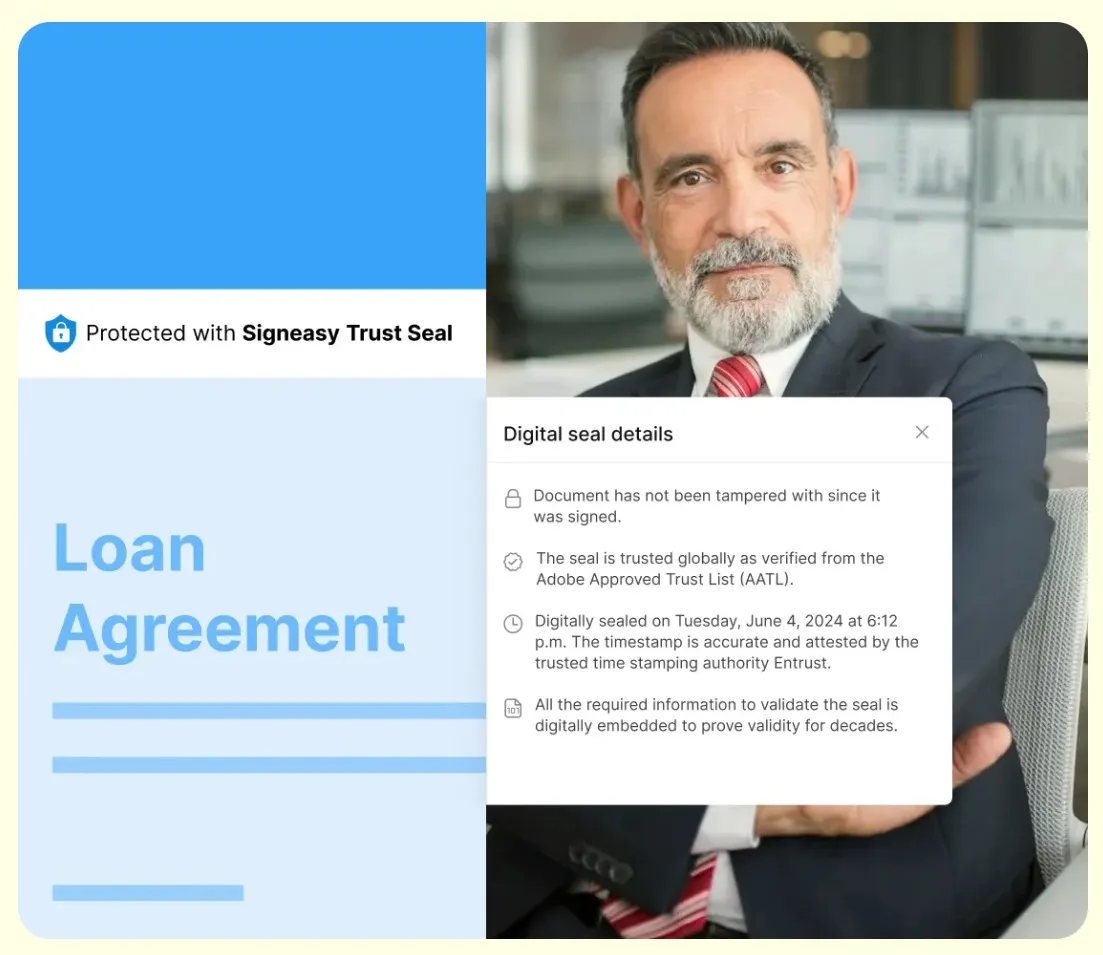
If any modification occurs post-signing, the system instantly detects and flags it, ensuring the document’s authenticity remains intact.
4. Compliance with global eSignature standards
Signeasy complies with ESIGN and UETA (U.S.) and eIDAS (EU), giving every signed and witnessed document full legal validity.

This compliance helps businesses operate confidently across jurisdictions without worrying about enforceability.
5. Centralized record keeping with Intelligent Contract Repository
All signed and witnessed documents are stored securely in Signeasy’s centralized dashboard, eliminating the need for manual tracking.
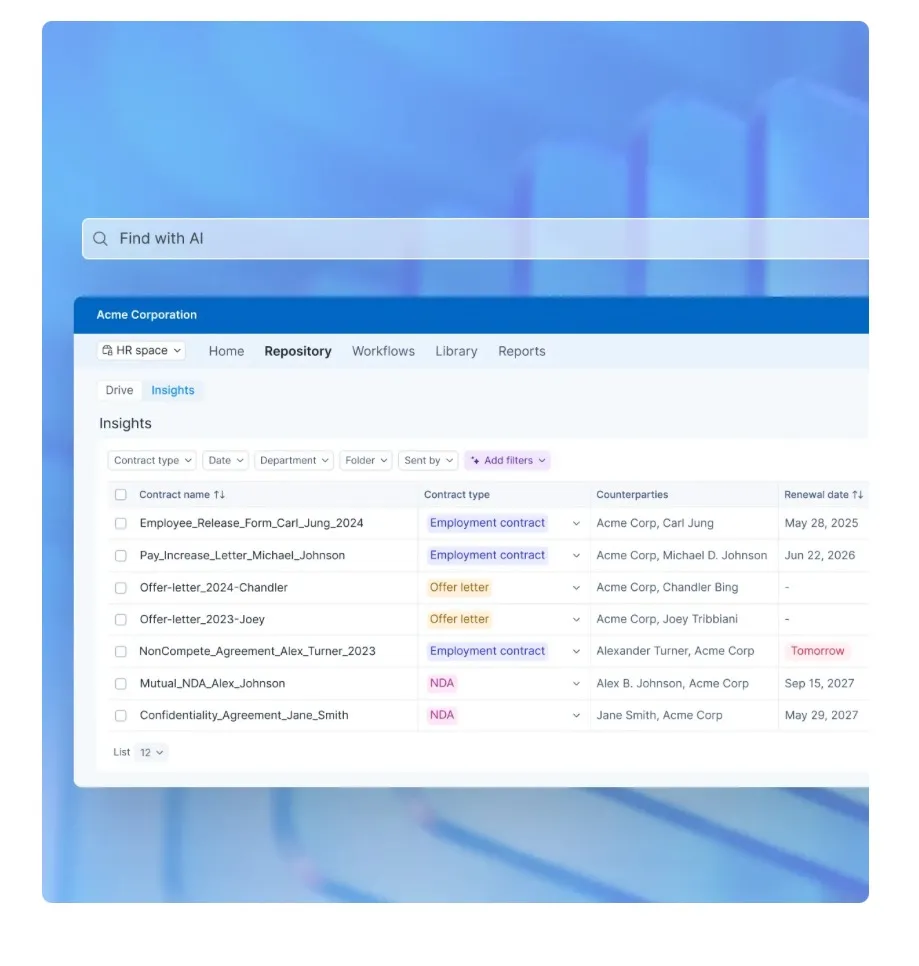
The Intelligent Representative feature goes a step further by automatically categorizing, tagging, and retrieving witnessed documents. This means faster audits and compliance checks.
6. Fraud prevention and accountability
Signeasy combines digital verification, identity proofing, and audit tracking to minimize fraud risk.
Each record contains verifiable signer data, location logs, and chronological signing order, ensuring full transparency and accountability across the document lifecycle.
Protect your business from signature fraud and compliance errors. Use Signeasy’s secure audit trails and identity checks for every document you send.
Signature witnessing for evidence: key takeaways
To execute legal documents, signature witnessing is an important aspect. It helps ensure the signing process is valid, authentic, and legally binding. Documents need to be witnessed correctly to avoid legal consequences and other disputes. Including witnesses in commercial contracts is considered good practice since it makes the contractual parties more accountable and prevents them from refuting valid claims from the opposite party.
Now that you know the hows, whats, and whys of signature witnessing, it is time to learn how it works on electronic signatures in detail. Signeasy specializes in the workflow of sending, signing, and managing eSignatures and documents. Reach out to know more.