



Teams compare PandaDoc alternatives for 2 different jobs. Some still need proposal creation, configurable quoting, and eSignature in one place. Others already prepare documents in a CRM, word processor, or another system and mainly need a reliable way to send and track signatures.
This article compares 13 PandaDoc alternatives across both workflows, including current pricing, sending limits, integrations, and the trade-offs that affect the switch.
Why teams compare PandaDoc alternatives
Teams compare PandaDoc alternatives when advanced features sit on higher tiers, add-ons change the expected cost, custom pricing makes the final bill harder to estimate, or the document workflow no longer matches how their team works. PandaDoc works as a proposal platform that combines proposal creation, Quote Builder, approvals, eSignature, and sales integrations, so the replacement depends on which of those steps still needs to stay.
Paid features can raise the total cost
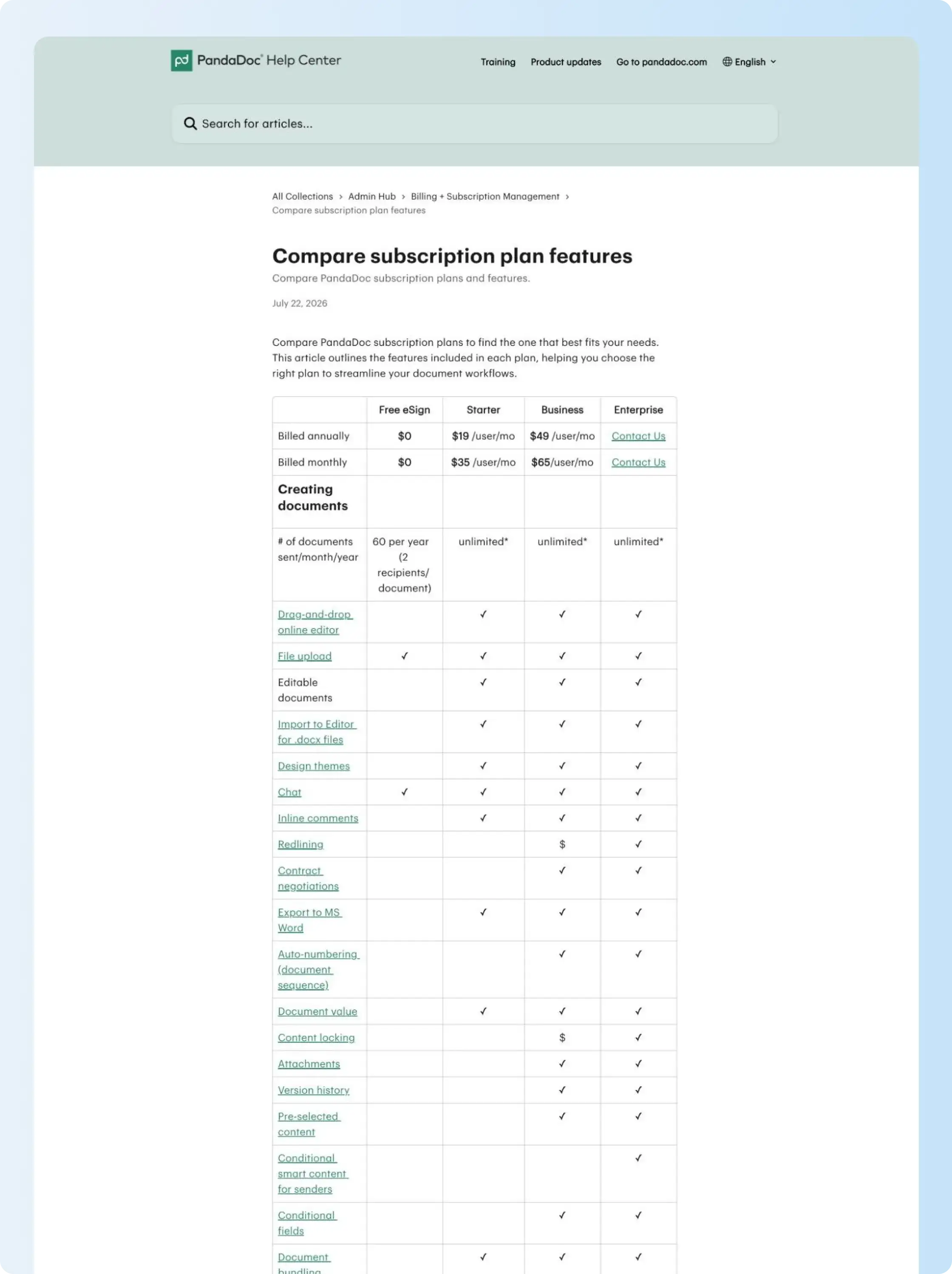
PandaDoc pricing goes beyond the base subscription when the workflow needs paid add-ons or features from another plan. The Business plan costs $49 per user per month with annual billing, while redlining and content locking are listed as paid features.
Customer reviews also describe additional charges in specific accounts. These are individual experiences rather than PandaDoc’s published pricing policy, but they are a useful reason to confirm the plan, seats, add-ons, and usage charges before signing an annual contract.
Technical and delivery issues can slow active deals
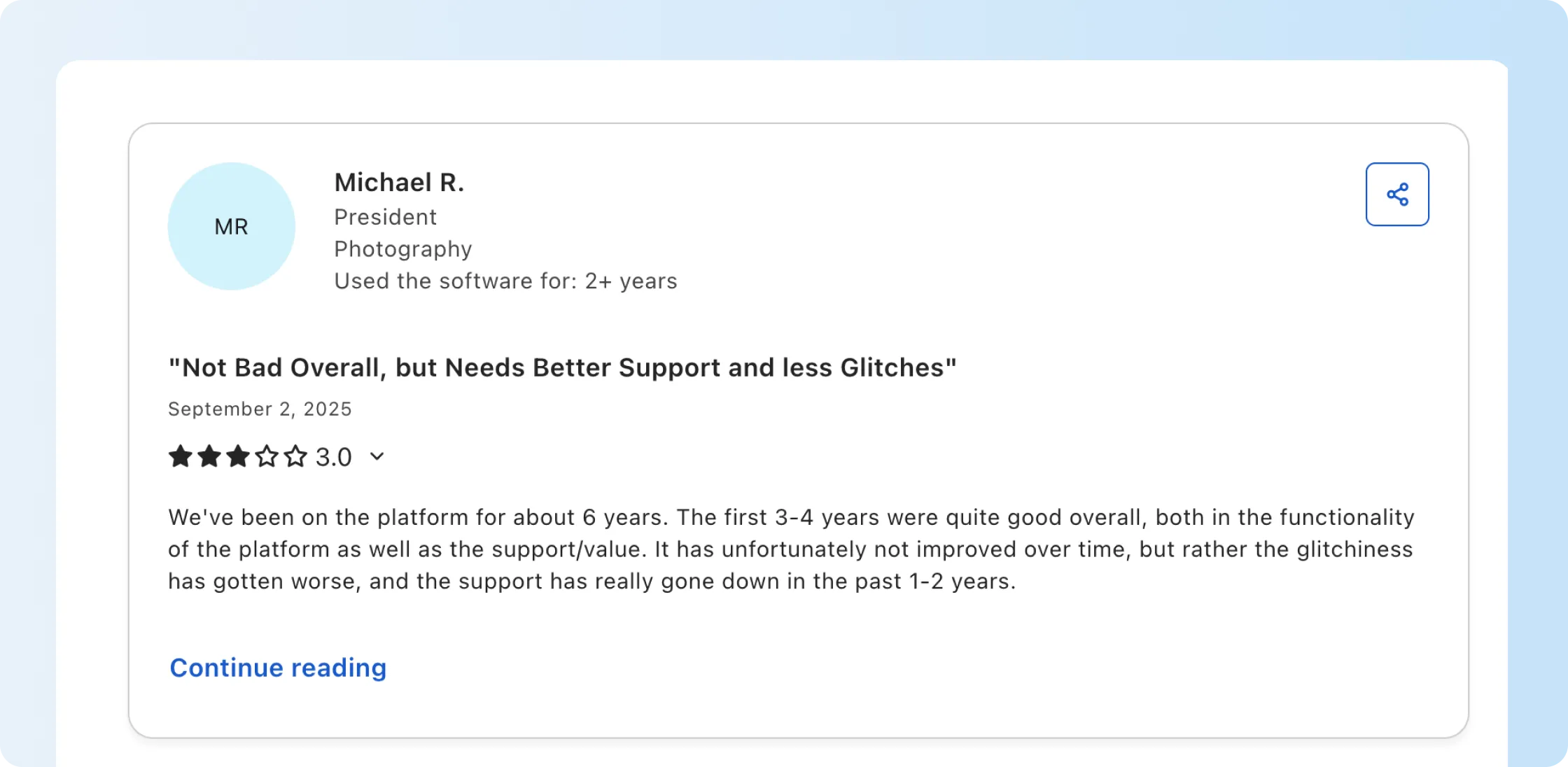
A proposal that is ready for signature can still stall if the link does not load properly or the email never reaches the recipient. Capterra feedback includes reports of links requiring repeated refreshes and delays in resolving technical problems.
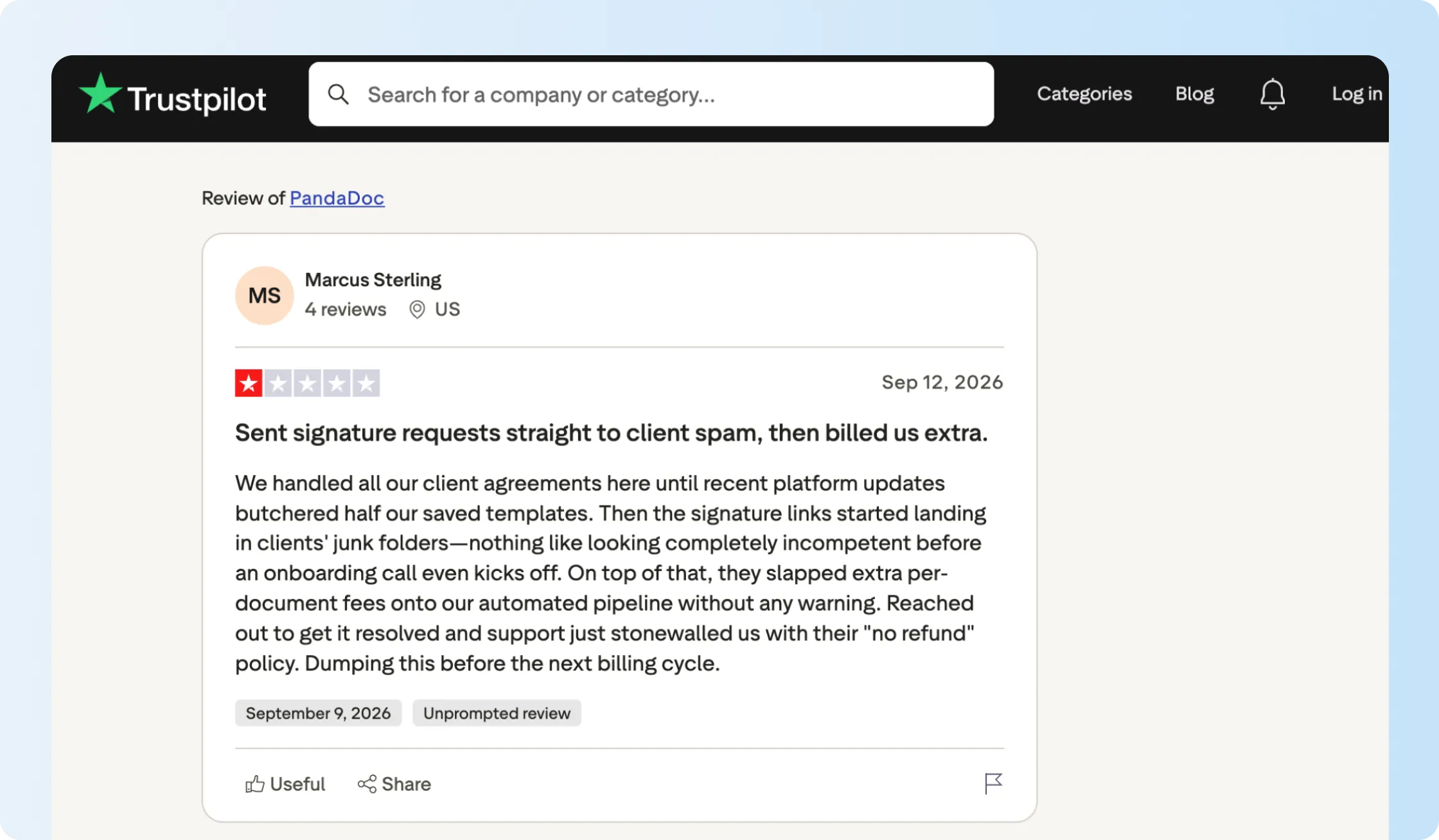
Email delivery is another point to test. A Trustpilot reviewer reported PandaDoc signature links reaching client junk folders after a platform update, alongside problems with saved templates and additional document charges.
For teams sending customer-facing documents every day, test the workflow with real external email domains before moving the full process.
Workflow changes can add manual work
Established templates become harder to manage when a feature or workflow changes underneath them. Capterra feedback includes a long-term user describing functionality they relied on being removed, leaving information to be entered manually again.
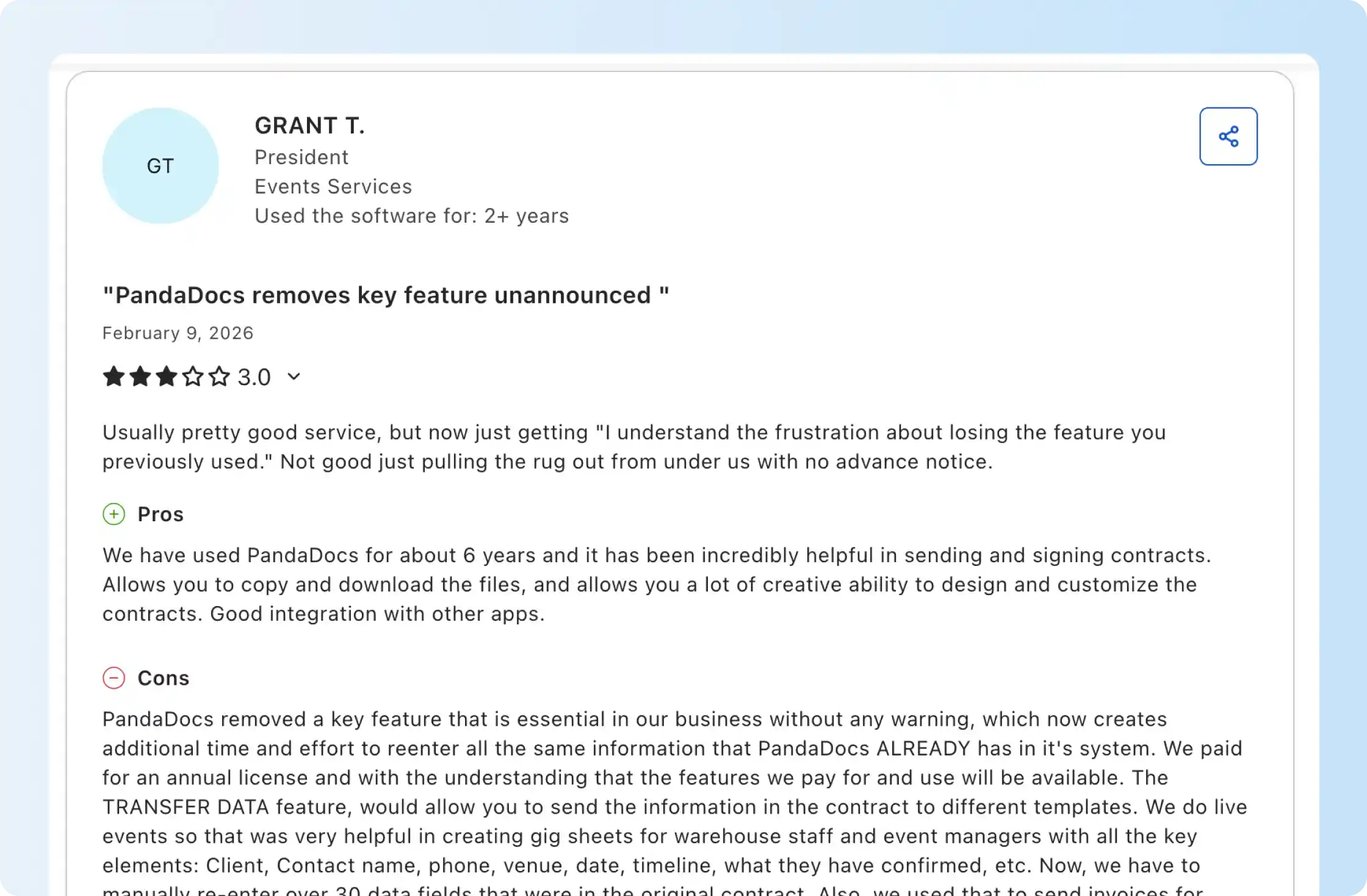
If your PandaDoc setup relies on customizable templates, workflow automation, version control, interactive pricing tables, or data shared across related documents, record those dependencies before comparing replacements. A static PDF preserves the finished document, but it does not carry over the rules and logic behind those workflows. Replacing the eSignature step alone therefore does not remove manual work tied to proposal creation, pricing, or document data.
Trustpilot also includes individual complaints about cancellation, annual renewals, and refund handling. These reports do not establish how every PandaDoc cancellation is handled, but teams on annual contracts should confirm the current renewal and cancellation terms before switching.
How did we evaluate these PandaDoc alternatives?
We compared each of the leading PandaDoc alternatives against the document task it handles best. PandaDoc covers proposal creation and eSignature, so we compared each product across document management, integration capabilities, and the business tools needed before, during, and after signature.
Here are the criteria we used:
What are the 13 best PandaDoc alternatives in 2026?
These PandaDoc alternatives fall into 2 main groups: eSignature tools for documents that are already prepared, and proposal tools for teams that still create pricing and sales content inside the platform. The table shows the relevant entry point for each workflow.
Plans are not feature-equivalent. The price shown is the relevant entry point for the workflow described in each profile.
First, here are the signing-focused PandaDoc alternatives for teams working with documents that are already prepared.
1. Signeasy
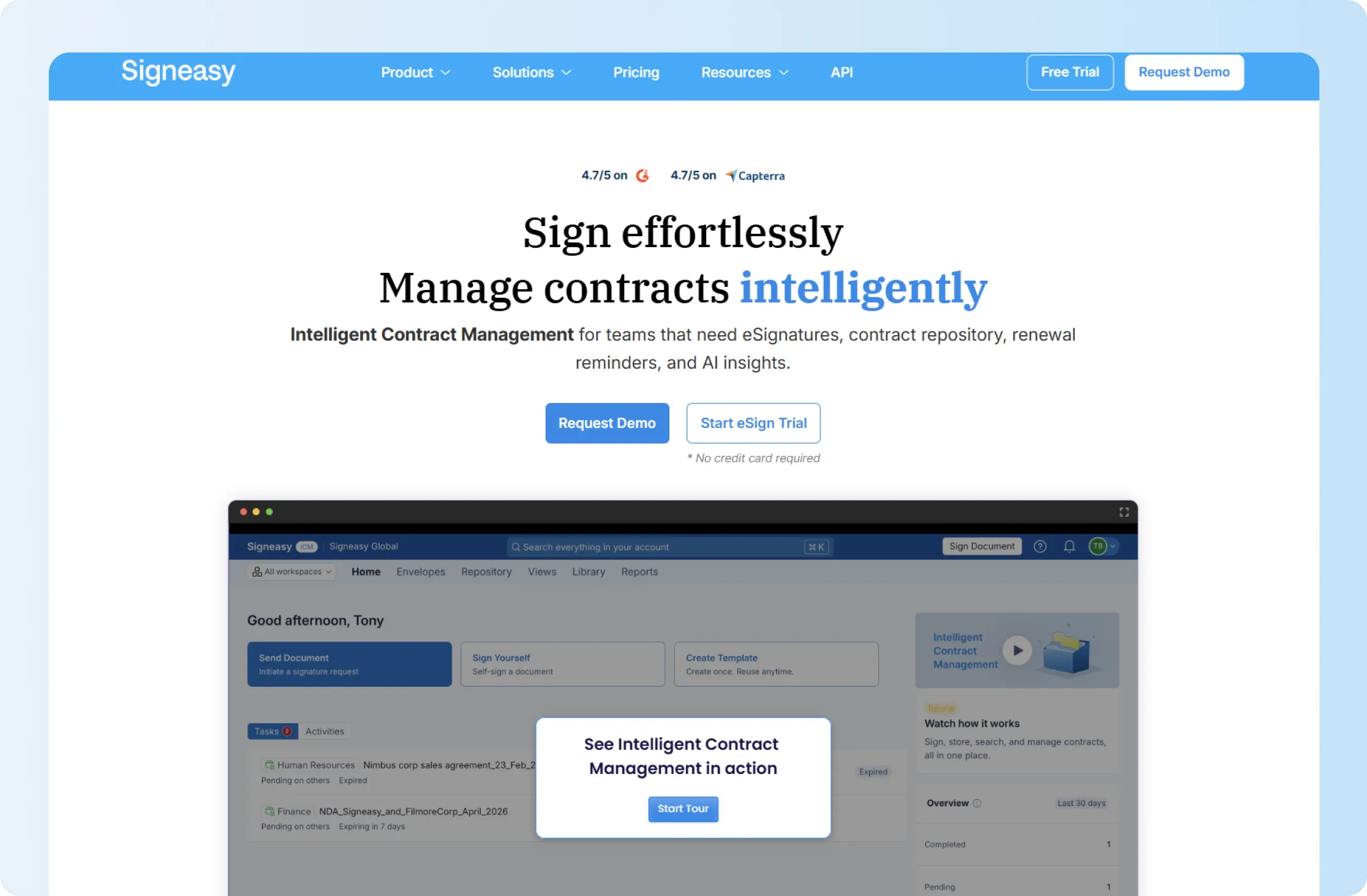
Best for: Growing businesses that prepare proposals and agreements elsewhere and need several teams to send them for signature.
Signeasy is an eSignature and intelligent contract management platform for mid-sized and growing businesses. Its eSignature software fits teams that already have the document and need to prepare it for signature, send it, track progress, and keep the completed agreement accessible.
Proposal creation and configurable quoting stay in the tools already used for that work, while Signeasy handles the signing workflow across sales, HR, finance, procurement, and operations.
Key features
- Prepared document signing: Upload an existing agreement, add signer fields, set the signing order, and send it for signature.
- Reusable templates: Preserve documents and signer fields for agreements sent repeatedly.
- Team sending: The Business plan includes unlimited document sends, shared templates, reminders, and an admin dashboard.
- Connected work: Signeasy supports workflows through Gmail, Google Sheets, SharePoint, Microsoft Teams, Outlook, and HubSpot, depending on the plan.
- Mobile signing: iOS and Android apps support sending and signing away from a desk.
Limitations
- Signeasy does not replace PandaDoc’s proposal editor or configurable Quote Builder.
- SharePoint is available on Business Pro. HubSpot is also available on Business Pro and carries an additional $20/user integration cost.
- The eSignature API is a separate product with its own pricing and usage allowances.
If you are deciding between the two specifically, Signeasy vs PandaDoc across signing, proposal creation, integrations, and team pricing.
2. Docusign
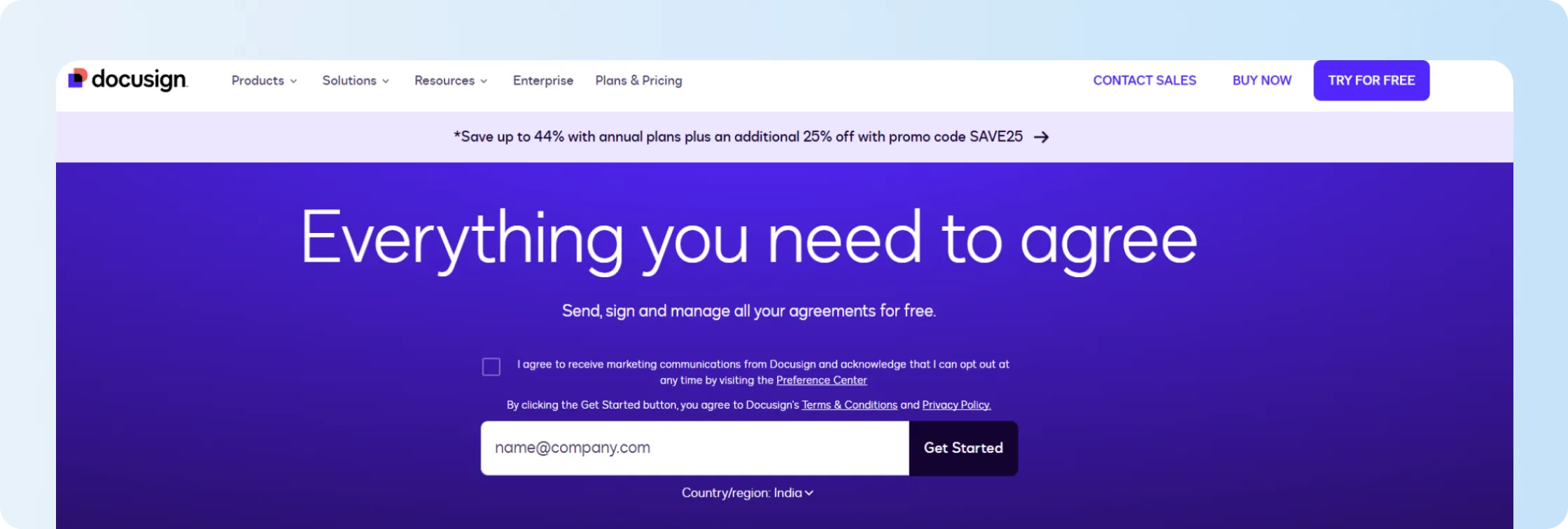
Best for: Teams that need established eSignature workflows and a large integration ecosystem.
Docusign is a business eSignature platform used to prepare, route, sign, and track agreements across teams. It fits this list when PandaDoc’s proposal editor is no longer required, although teams with higher sending volume need to account for Docusign’s envelope model.
The trade-off is sending volume. Standard and Business Pro both include 100 envelopes per user per year, so teams with steady high-volume sending need to price additional envelopes as well as user seats.
Key features
- Reusable templates: Preserve standard fields for recurring agreements.
- Signing order: Route a document through recipients in sequence.
- Integrations: Connect eSignature with major CRMs, productivity software, storage platforms, and other business applications.
- Audit trails: Record activity throughout the signing process.
Limitations
- The Standard plan includes 100 envelopes per user per year on annual billing. Additional envelopes are billed after the allowance is used.
- Proposal writing and configurable quoting sit outside the core eSignature workflow.
- Teams that need Bulk Send, web forms, payment collection, or other advanced features move to Business Pro at $45/user/month, while the 100-envelope annual allowance still applies.
Teams comparing that envelope model with unlimited document sending can also see how Signeasy compares with Docusign.
3. Adobe Acrobat Sign
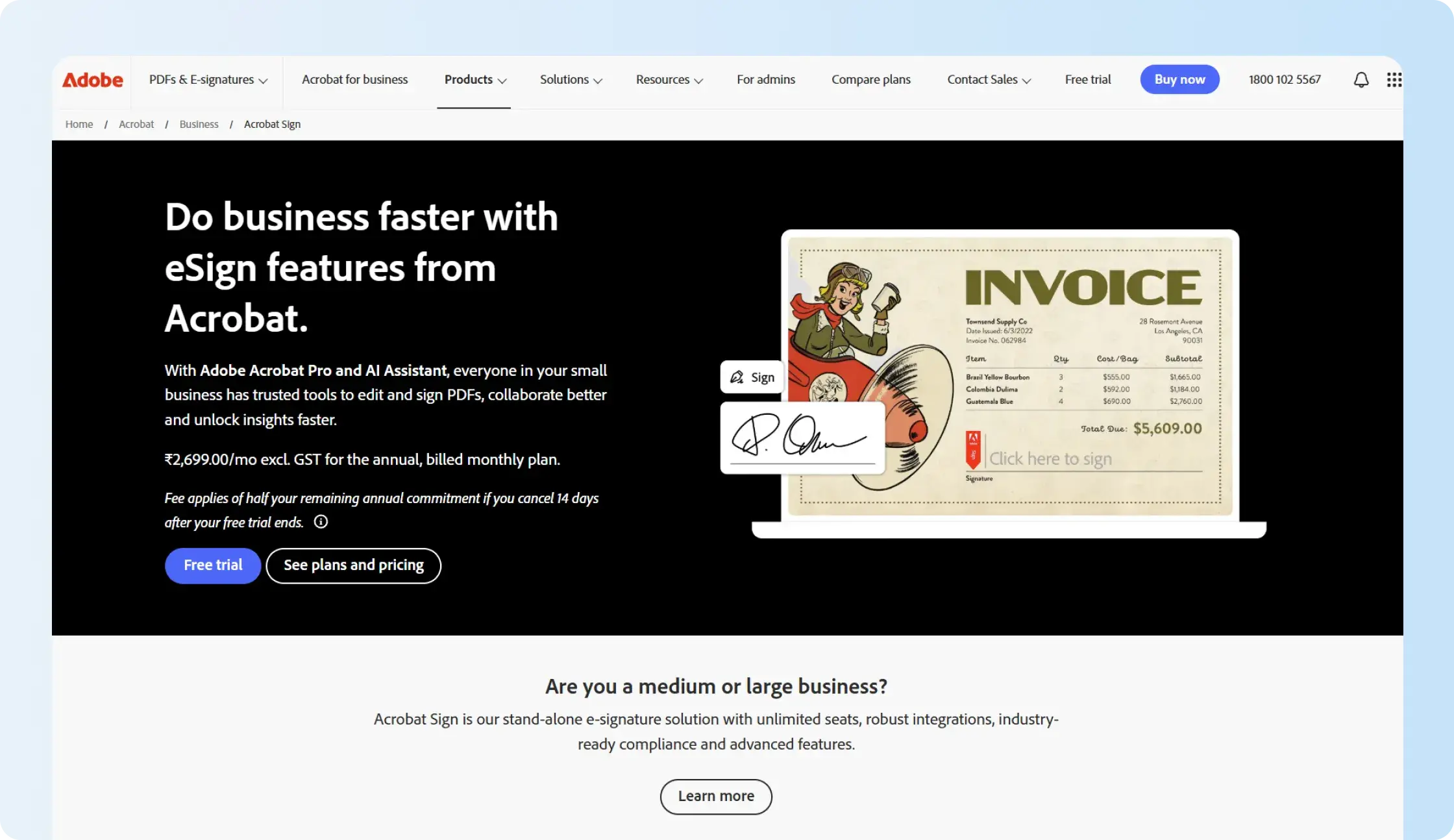
Best for: Teams that need to edit or organize PDFs before collecting signatures.
Adobe combines PDF preparation with eSignature, so it fits teams that still need to edit or organize a PDF before sending it. Acrobat Standard and Acrobat Pro cover PDF preparation and signing, while broader enterprise requirements move into Acrobat Sign Solutions.
At $16.99 per license per month, Acrobat Standard makes the most sense when PDF editing is part of the job. It does not replace PandaDoc's proposal editor or the broader signing controls available through Adobe's separate Acrobat Sign Solutions.
Key features
- PDF editing: Change text, images, and document structure before signature.
- File conversion: Turn common office files into PDFs.
- Signature collection: Send documents for signature and track responses.
- Admin controls: Manage business licenses through the Adobe Admin Console.
Limitations
- Acrobat Standard for teams covers PDF editing and basic signature collection; broader enterprise signing controls sit in Acrobat Sign Solutions.
- PDF editing does not replace interactive proposal pricing or buyer-selectable quote options.
- Acrobat Sign Solutions uses custom enterprise pricing rather than a public self-serve rate.
When evaluating Signeasy vs Adobe Sign or PandaDoc vs Adobe Sign, Adobe wins on native PDF editing, while Signeasy is the more cost-effective choice for simple, unlimited document signing.
4. Dropbox Sign
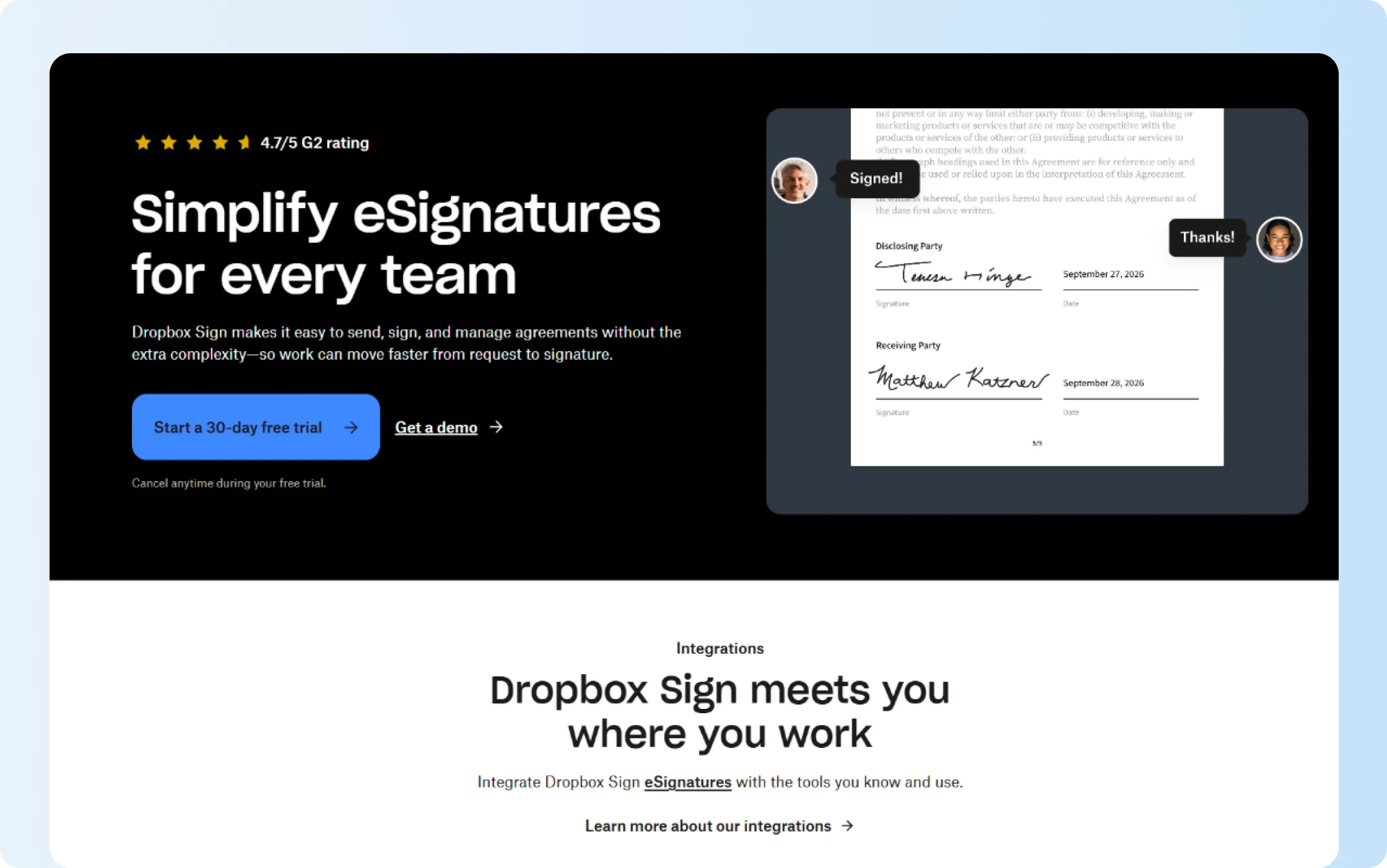
Best for: Teams that store documents in Dropbox and want a direct path into eSignature.
Dropbox Sign is an eSignature product for sending and tracking documents that are already prepared. It fits teams that already keep agreements in Dropbox and want signing close to that file workflow.
Key features
- Unlimited signature requests: Paid eSignature plans include unlimited signature requests.
- Reusable templates: Preserve signer fields for repeat documents.
- Reminders: Follow up with recipients who have not completed a request.
- Dropbox connection: Move stored files into signing without a separate download-and-upload step.
Limitations
- The Essentials plan is an individual plan; the Standard plan starts with a team subscription.
- Proposal creation and configurable pricing require another product.
- Dropbox Sign API pricing is separate from its standard eSignature subscriptions.
Teams considering a move from Dropbox Sign can compare Signeasy vs Dropbox Sign across templates, integrations, mobile workflows, and team setup.
5. airSlate SignNow
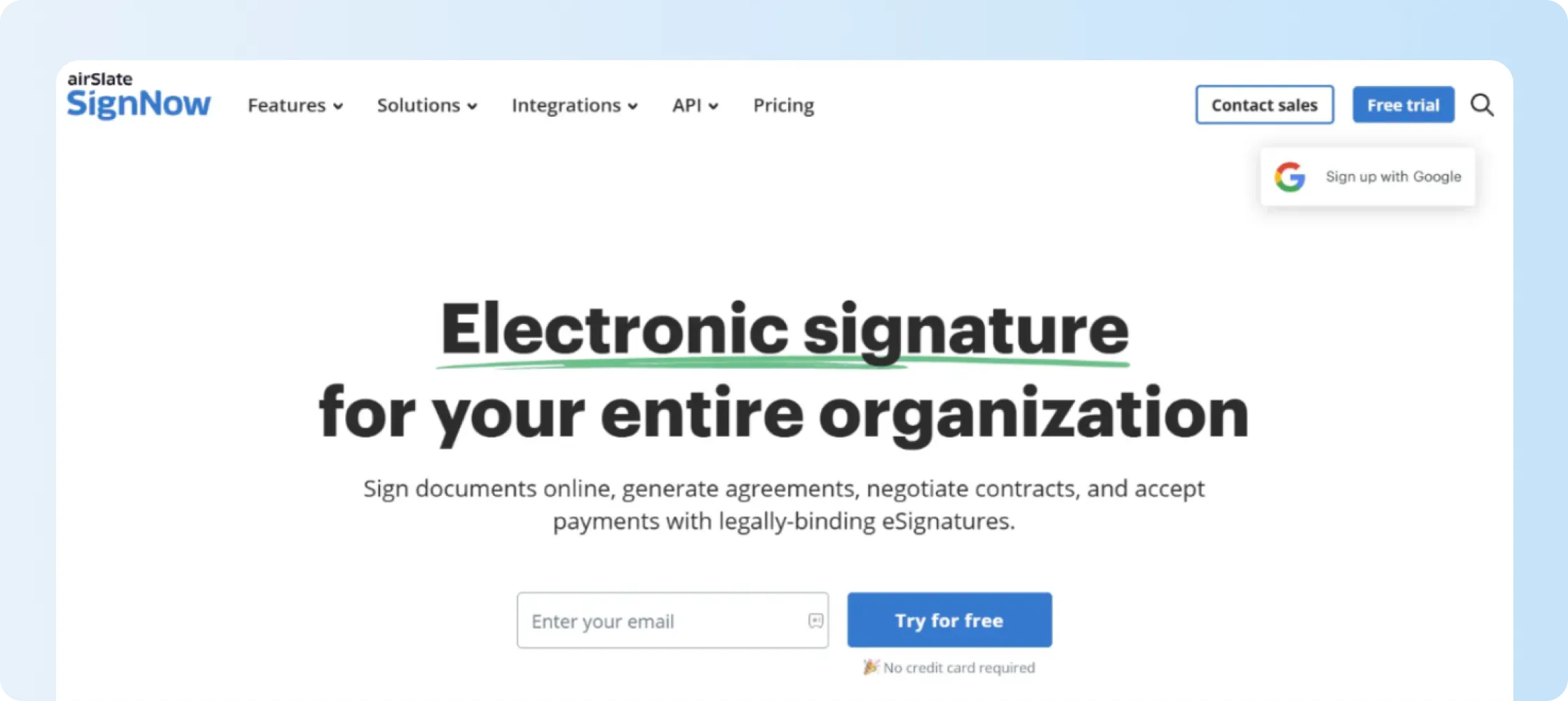
Best for: Teams that need broad user access but want cost tied more closely to signature activity.
SignNow is a business eSignature platform with a user model that separates account access from signature-invite usage. That becomes relevant when several employees need access but only part of the team sends documents regularly.
Key features
- Reusable templates: Preserve fields for repeat documents.
- Signing order: Route recipients through the document in sequence.
- User access: Additional users can be added to paid workspaces under SignNow’s current seat model.
- Bulk Send: Available through the Business Premium plan.
Limitations
- Annual subscriptions include 100 signature invites per paid license; monthly subscriptions include 10 per license each month.
- Additional invites are charged after the included allowance is used.
- The Business Premium plan is required for Bulk Send rather than the Business plan.
The Signeasy vs SignNow comparison goes deeper into how those invite limits affect growing teams.
6. SignWell
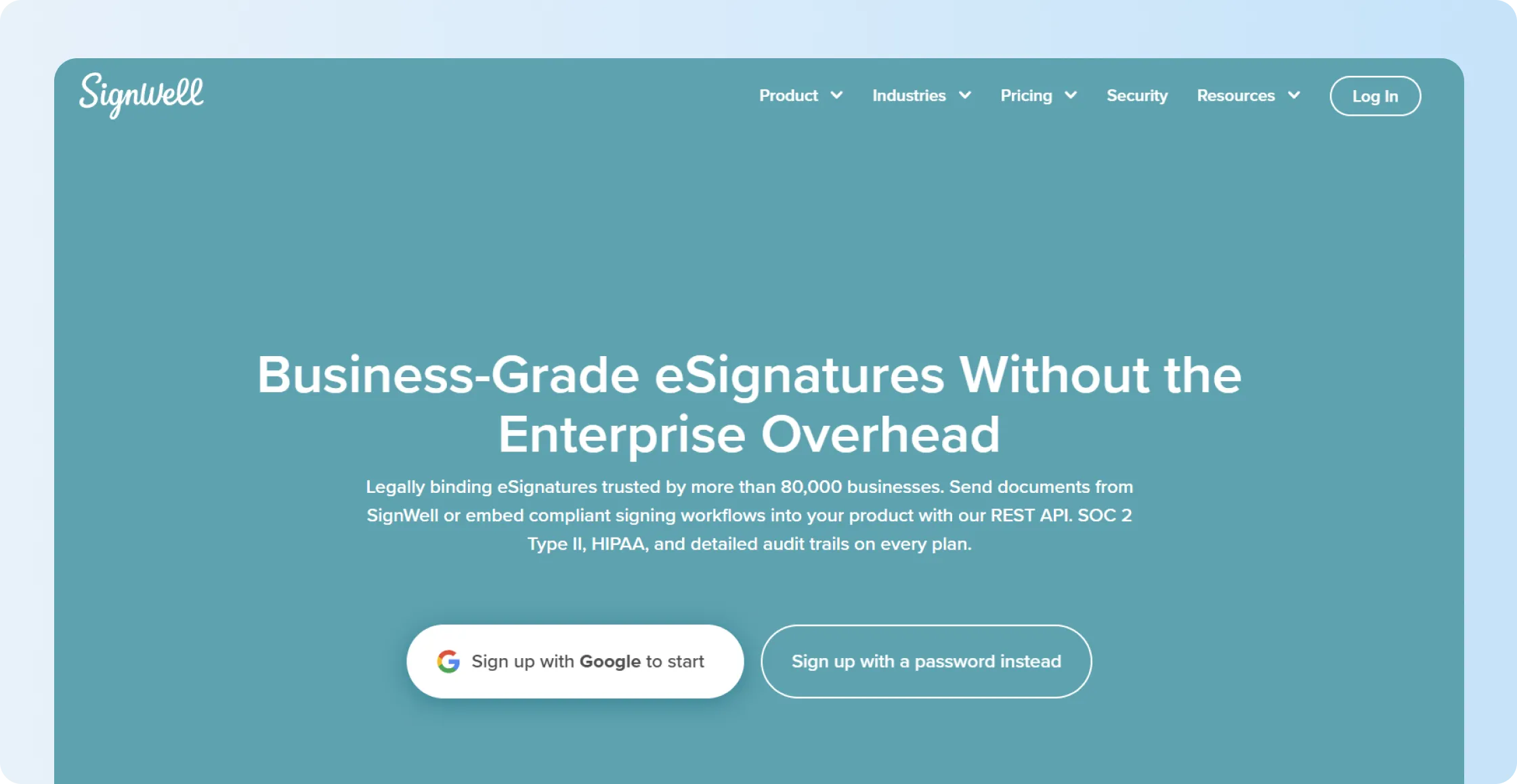
Best for: Small teams with recurring signing needs and a limited number of active senders.
SignWell is an eSignature product priced around active senders. It suits smaller teams that regularly send finished agreements and want the subscription tied to the people who actually send documents.
Key features
- Reusable templates: Keep repeat documents and signer fields ready.
- Signing order: Control the sequence in which recipients sign.
- Audit trails: Record signing activity and document history.
- Unlimited documents: The Light plan does not meter regular signing by completed document.
Limitations
- The Light plan includes 5 templates per sender.
- Additional senders increase the monthly subscription cost.
- Proposal creation and configurable pricing require another product.
Our SignWell review looks more closely at how sender limits and template allowances affect growing teams.
7. Zoho Sign
Best for: Businesses already running sales, HR, finance, or operations through Zoho apps.
Zoho Sign is the eSignature product inside Zoho’s wider business-software ecosystem. It fits best when documents already move through Zoho apps and the signing step needs to stay connected to those workflows.
Key features
- Zoho integrations: Connect signing with CRM, Books, People, Recruit, Writer, and other Zoho products.
- Signing order and reminders: Manage multi-recipient agreements.
- Audit trails: Record document and signer activity.
- Professional plan sending: Removes the regular envelope limit and includes unlimited templates.
Limitations
- The Free plan supports 1 user and 5 envelopes per month.
- The Standard plan supports 25 envelopes per user per month.
- Bulk Send, SignForms, APIs, webhooks, and SDKs require the Enterprise plan and consume Zoho Sign credits.
Our Zoho Sign review breaks down those credit-based workflows and plan restrictions in more detail.
8. BoldSign
Best for: Small teams that want a permanent free tier and a route to higher signing volume.
BoldSign offers business eSignature alongside separate developer API products. It fits teams comparing regular document signing with embedded signing without needing PandaDoc’s proposal editor.
Key features
- Essential plan: Includes monthly envelopes, reusable templates, signer authentication, reminders, and audit trails.
- Growth plan: Adds template sharing, team management, and collaborative status tracking.
- Developer API: Supports embedded signing outside the standard team subscription.
Limitations
- The Essential plan supports 1 user and 2 reusable templates.
- The Growth plan includes 50 envelopes per user per month.
- Bulk Send, SMS, identity verification, and other usage-based functions can carry separate charges or require another plan.
9. Jotform Sign
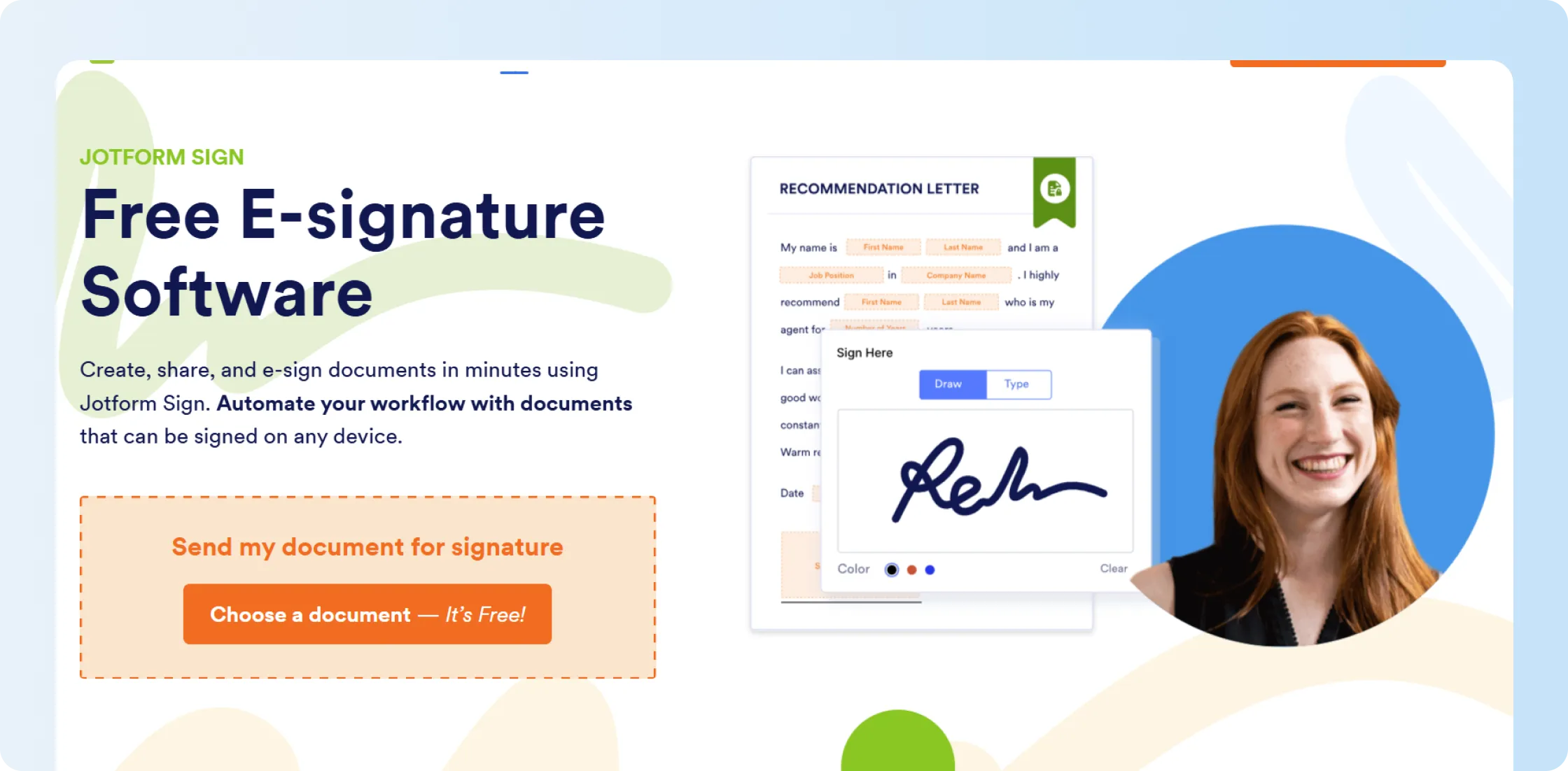
Best for: Teams that collect information through forms before generating a document for signature.
Jotform Sign connects form data with documents that need a signature. It fits applications, approvals, intake forms, and waivers where the recipient provides information before the final document is generated.
Key features
- Forms: Collect recipient information before the signing step.
- Reusable Sign documents: Support repeat form-to-signature processes.
- Audit trail: Records signing activity for completed documents.
Limitations
- The Starter plan is limited to 10 signed documents per month.
- Starter, Bronze, Silver, and Gold are individual-user plans.
- Jotform branding remains on the Starter plan.
- Detailed sales proposals with configurable buyer pricing still need proposal software.
The full Jotform review covers its form limits, document allowances, and fit for business eSignature in more detail.
Here are the proposal-focused PandaDoc alternatives for teams that still build the sales document inside the platform.
10. Proposify
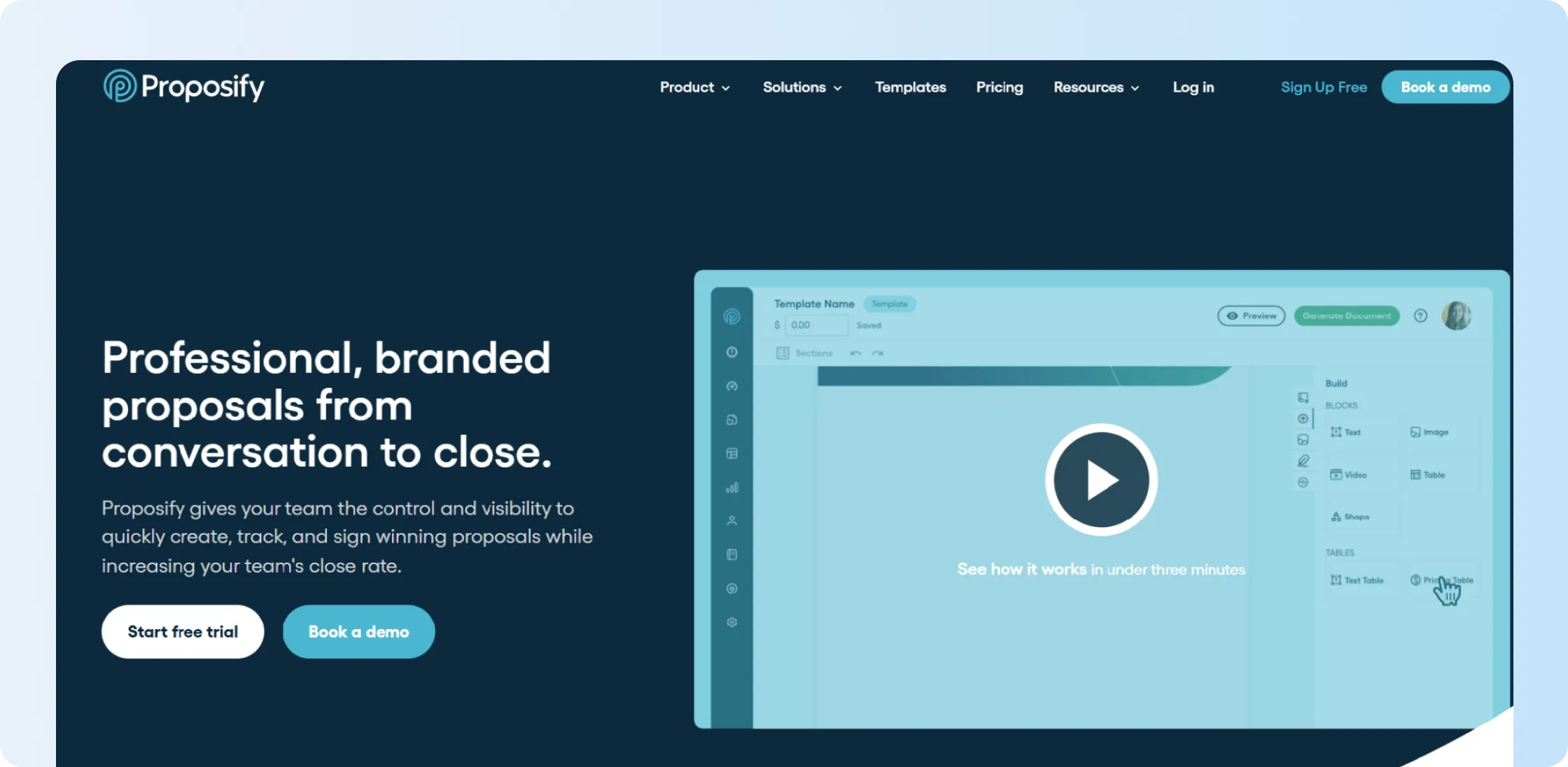
Best for: Sales teams that create, price, present, and track proposals before signature.
Proposify is a proposal builder for sales enablement teams that create, price, present, and track client proposals before signature. It stays closer to PandaDoc’s proposal workflow than the signing-first products above.
Key features
- Proposal editor: Build sales documents from text, images, and sections.
- Content library: Reuse case studies, team bios, and other sales content.
- Interactive pricing: Present buyer-facing prices and options.
- Engagement reporting: Track whether a prospect has opened the proposal.
Limitations
- The Basic plan includes 10 sends each month; extra sends cost $0.50 each.
- CRM integrations and the pricing catalog require the Team plan.
- Roles, permissions, approval workflows, single sign-on, and API access require the Business plan.
11. Qwilr
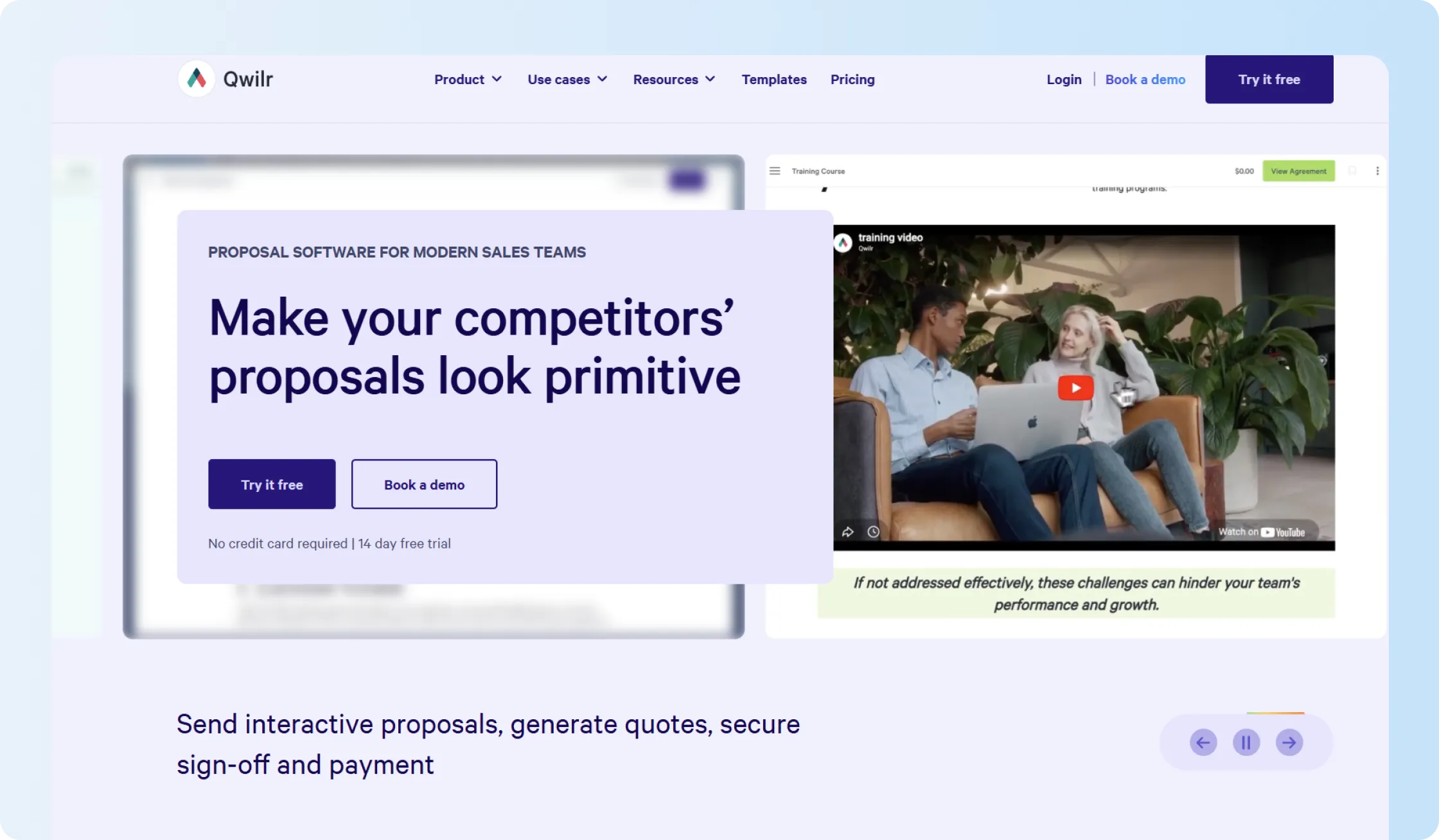
Best for: Sales teams that want proposals to behave like interactive web pages instead of standard PDFs.
Qwilr replaces static PDFs with interactive web proposals. Sales teams can present pricing and buyer choices online, which makes it relevant when proposal design and the buyer experience are part of the sale.
Key features
- Web-based proposals: Present content in responsive online pages.
- Interactive quotes: Let buyers select packages or optional services.
- eSignature and acceptance: Keep approval inside the proposal.
- Buyer analytics: Track engagement with shared pages.
Limitations
- The Starter plan costs $35 per user per month with annual billing.
- The Growth plan starts with 5 users, creating a $275 monthly minimum.
- The Scale plan starts with 10 users, creating a $750 monthly minimum.
- Salesforce integration requires the Scale plan.
12. GetAccept
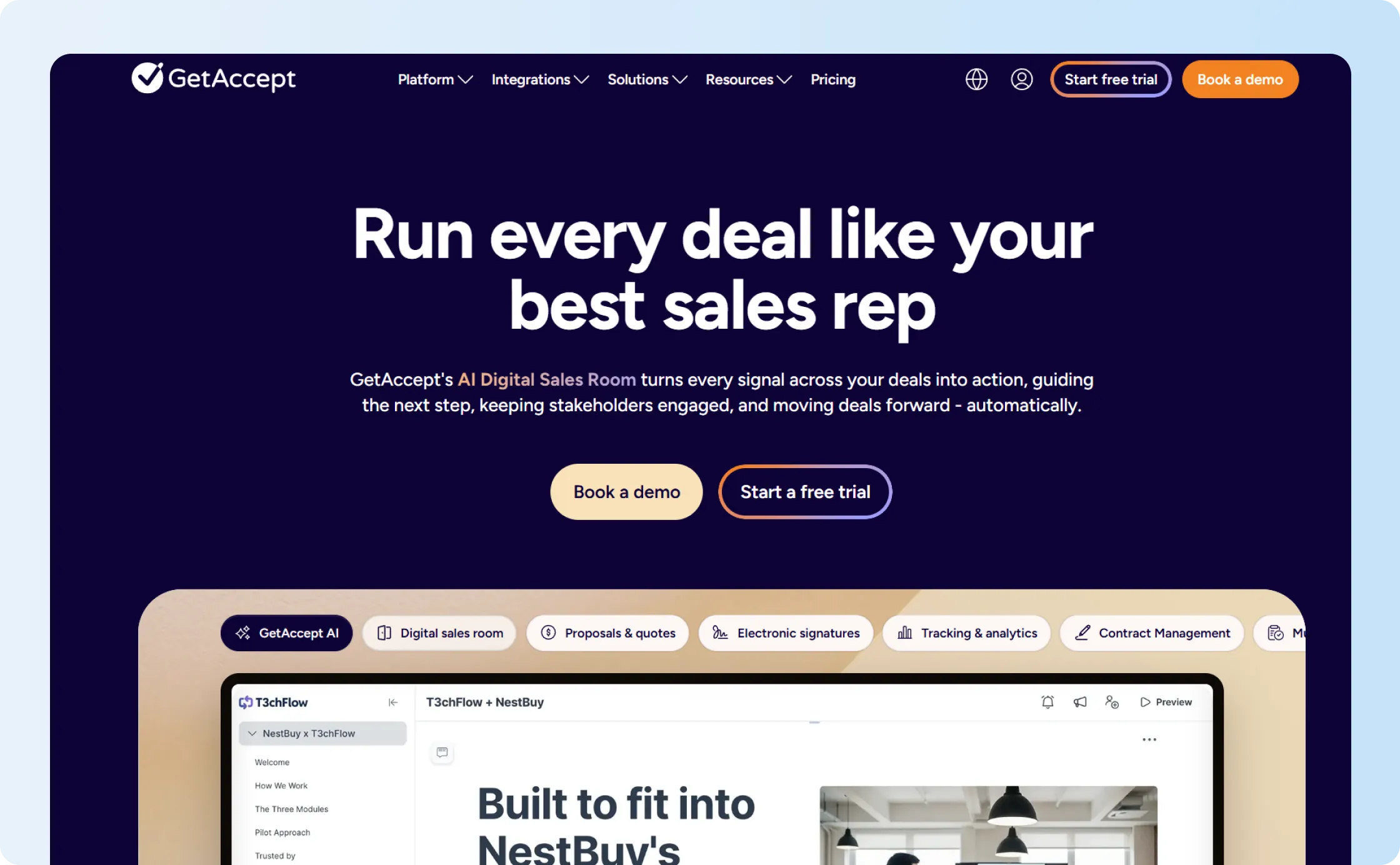
Best for: B2B teams that want buyer engagement and a digital sales room around the proposal.
GetAccept combines eSignature with digital sales rooms for B2B sales enablement, where the sales process involves more than sending a document. Buyers can review shared sales material and communicate with the seller before the agreement is signed.
Key features
- Digital sales rooms: Keep files, buyer communication, and deal content together.
- Engagement tracking: Show which material a buyer has viewed.
- eSignature: Keep agreement acceptance inside the sales workflow.
- Content library: Reuse sales collateral across deals.
Limitations
- The Professional plan costs $49 per user per month and requires at least 5 users, creating a $245 monthly minimum.
- The lower-cost eSign plan does not include the full Digital Sales Room workflow.
- Teams that only need prepared agreements signed use little of the Professional plan’s sales-engagement functionality.
13. Better Proposals
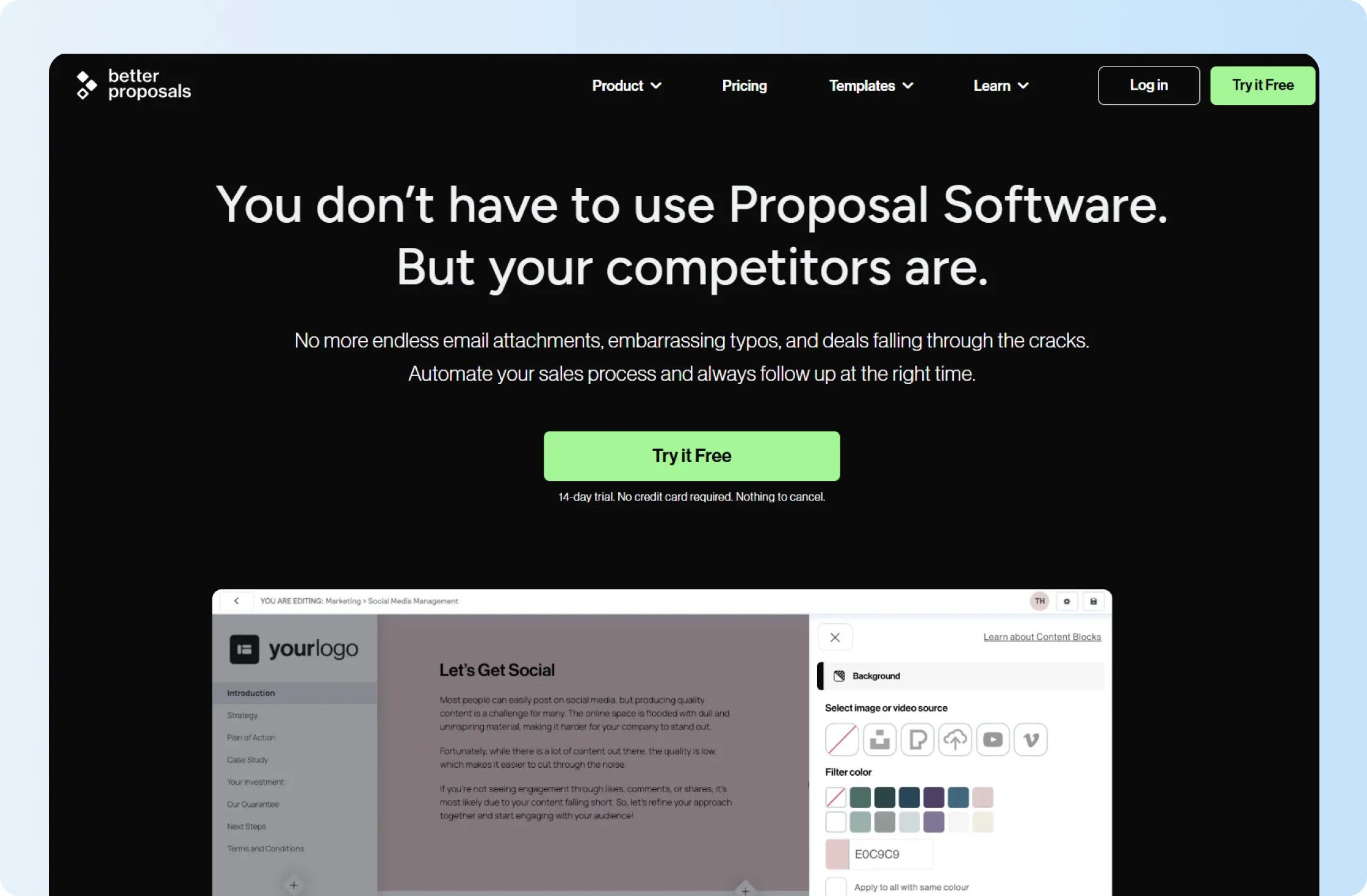
Best for: Agencies and smaller sales teams that send repeat proposals with pricing and online acceptance.
Better Proposals is proposal software for smaller sales and service teams that create repeat client offers with pricing and online acceptance. Its workflow stays centered on preparing and sending proposals.
Key features
- Templates: Reuse sales content across proposals.
- Pricing tables: Present services and buyer options.
- Open notifications: Show when a client views the proposal.
- Built-in signatures: Let buyers accept proposals online.
Limitations
- The Starter plan supports 1 user and 10 sends per month.
- CRM integrations require the Premium plan.
- Manager approvals and advanced user permissions require the Enterprise plan.
How to choose the right PandaDoc alternative for your workflow?
The right PandaDoc alternative starts with the document your team sends most often. If the work happens inside PandaDoc before the document is sent, test the creation and pricing workflow first. If the document reaches PandaDoc finished, test the signing process instead.
Does your team create proposals inside the platform?
Open a recent proposal and note where the work happens. If the team writes the copy, adds visuals, inserts prices, and gathers internal approval in PandaDoc, test Proposify, Qwilr, Better Proposals, or GetAccept with that same document.
If the document is completed elsewhere, upload it to the alternative, add fields, send it, and check the recipient experience.
That second workflow is where Signeasy fits: document creation stays in the tool your team already uses, while Signeasy handles preparation for signature, sending, and tracking.
Do your quotes need configurable pricing?
If buyers change quantities, choose packages, or add optional services inside the proposal, test those same pricing rules in the replacement.
PandaDoc Business includes Quote Builder, and PandaDoc has been moving users away from its older Pricing Tables workflow. Review PandaDoc’s Quote Builder migration guidance before moving existing pricing templates or API-driven documents.
Signeasy does not replace this part of PandaDoc. If buyers select packages, quantities, or optional services inside the proposal, that quoting work needs to remain in a proposal or sales system before the finished agreement moves to Signeasy for signature.
How will the document reach the signer?
Test recipient roles, signature fields, signing order, authentication, reminders, and the process for correcting recipient details.
Then complete the request as an external signer. Check where the signed document and audit record are stored when the transaction is finished.
Signeasy's send-for-signature workflow lets a team upload the prepared document, add recipients, set the signing order, place the required fields, and send the request. Test this flow when the document reaches the eSignature tool already completed.
If the workflow specifically requires certificate-based digital signatures rather than standard eSignature, verify that requirement separately because signature standards and assurance levels vary by provider.
Which integrations need to stay connected?
Map the actual handoff by team before comparing integration lists. For example, HubSpot for sales, SharePoint for procurement, and the system HR uses for employee documents.
If your sales team sends agreements from HubSpot, Signeasy for HubSpot lets users select a template or upload a document and send it for signature from the CRM. The integration requires Business Pro and costs an additional $20/user, so include that add-on when comparing the switch cost.
For teams working in SharePoint, Signeasy for SharePoint can send documents for signature and keep signing activity inside the SharePoint workflow. SharePoint is also part of Business Pro.
See how Signeasy fits your HubSpot, SharePoint, and existing signing workflows.
What does the required plan cost at your real volume?
Count the people who send documents and the number they send in a normal month or year. Then add the functions that change the subscription: templates, integrations, authentication, API usage, proposal creation, or extra volume.
A per-user subscription, annual envelope allowance, monthly document cap, and usage credit are different pricing models. Compare the unit that drives your actual bill.
Apply the same check to Signeasy. Business plan is $20/user/month annually for team sending and templates, while Business Pro is $30/user/month for workflows that need features such as SharePoint or HubSpot. HubSpot then adds another $20/user, so a team that depends on that CRM should not compare its cost against the $20 Business headline alone.
What happens after signing?
A one-off proposal usually ends with a completed PDF and audit trail. Supplier agreements, customer contracts, and employee documents may stay active for months or years, which introduces broader contract lifecycle management needs such as storage, search, access controls, and renewal tracking.
If your workflow needs that lifecycle management after signing, evaluate it separately from the eSignature subscription instead of assuming it comes with the signing plan.
If agreements need to remain searchable and tracked after signing, Signeasy also offers Intelligent Contract Management separately from its eSignature subscription. Evaluate that product only when the workflow needs contract search, agreement information, or renewal tracking; it should not be treated as part of the $20 Business eSignature plan.
Which PandaDoc alternative fits your workflow?
Use the table below to narrow the PandaDoc alternatives around the job your team needs to replace:
Where does Signeasy fit among PandaDoc alternatives for eSignature?
PandaDoc Business includes proposal creation and Quote Builder, while Signeasy Business is built around sending and signing documents your team has already prepared.
Among signing-focused PandaDoc alternatives, Signeasy fits growing businesses that want several teams using the same eSignature workflow without moving document creation into the signing platform.
Here is how the 2 Business plans compare:
*Under PandaDoc’s current subscription terms.
For a growing business that already creates agreements elsewhere, Signeasy Business focuses the subscription on sending, templates, reminders, and team signing. PandaDoc Business costs more in this comparison because it also includes proposal creation, Quote Builder, content management, and other sales-document capabilities.
Signeasy also offers intelligent contract management separately for teams that later need repository search, contract information, renewal tracking, and other agreement-management workflows. That product should be evaluated separately from the Business eSignature subscription.
Comparing Signeasy and PandaDoc for your own workflow?
How can teams move from PandaDoc to Signeasy?
Before switching, separate the signing workflow from the PandaDoc features used to create the document. Quote Builder rules, proposal content, pricing logic, and other PandaDoc-specific setup will not move with a finished PDF.
Check these 5 areas before moving your signing workflow:
- Inventory the documents: Separate completed agreements, active proposals, source files, templates, and documents still waiting for signatures. Let in-flight requests finish where appropriate.
- Record PandaDoc-specific setup: Note Quote Builder rules, reusable content, CRM fields, approval steps, and other logic that will not travel with the PDF.
- Rebuild one representative template: Upload a source file to Signeasy, add signer roles and fields, set the signing order, and test the most detailed recurring document first.
- Check integrations and permissions: Confirm that the Signeasy plan covers the tools and access each department needs.
- Run an external test: Send the document to someone outside the organization, complete it as a recipient, and verify the signed file and audit record.
For a large template library or several departments, test one recurring workflow from each team before setting the migration timeline.