



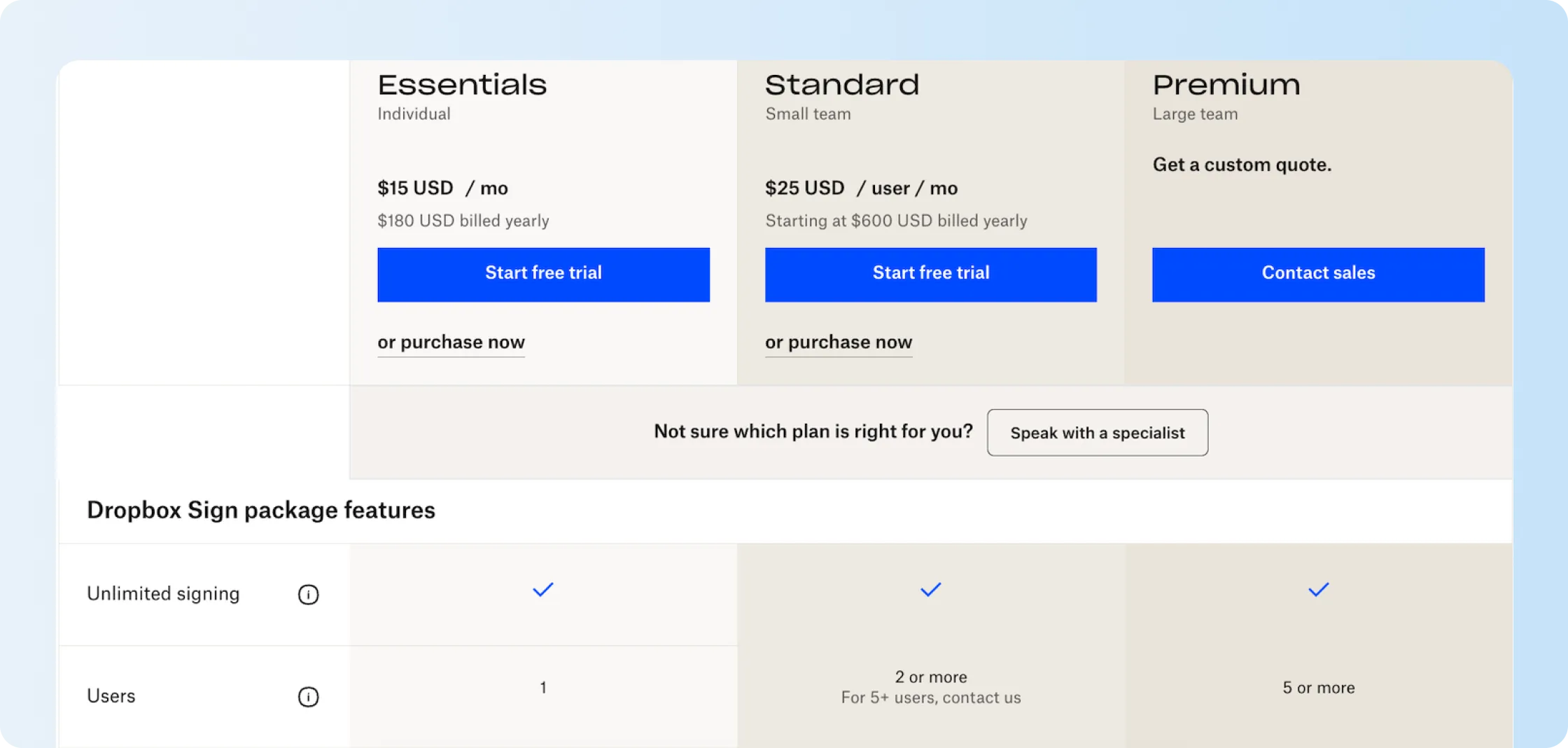
If you're comparing Dropbox Sign alternatives in 2026, the main differences show up in reusable template limits, bulk-send access, business integrations, signer authentication, mobile workflows, and API requirements. Dropbox Sign, formerly known as HelloSign, includes unlimited signature requests on its paid eSignature plans, while the Essentials plan includes 5 templates, the Standard plan includes 15, and Bulk Send starts on the Standard plan.
Those differences become more noticeable once several people send contracts, HR documents, sales agreements, NDAs, or other repeat documents. This article compares 13 Dropbox Sign competitors across everyday eSignature workflows, API capabilities, pricing, integrations, document preparation, signer verification, and mobile use.
Why teams look for Dropbox Sign (HelloSign) alternatives
Teams look for Dropbox Sign alternatives when template limits, Bulk Send requiring Standard or Premium, integration changes, mobile restrictions, or API requirements stop matching the way documents are sent and managed.
The friction usually appears once sending volume increases or the signature workflow needs to connect with other business systems.
Bulk sending requires the Standard or Premium plan
Dropbox Sign Bulk Send is available on the Standard and Premium plans and supports up to 250 recipients in one bulk request. Users on the Essentials plan need to upgrade for bulk signature requests, while batches above 250 recipients need to be divided across separate requests.
That becomes relevant for teams sending onboarding forms, policy acknowledgments, renewal documents, waivers, or other standardized agreements to large recipient lists.
Some business integrations require another plan or setup
Microsoft SharePoint users face a more direct change. Dropbox discontinued its native SharePoint integration starting March 16, 2026 and now directs customers toward a custom API integration or another service provider.
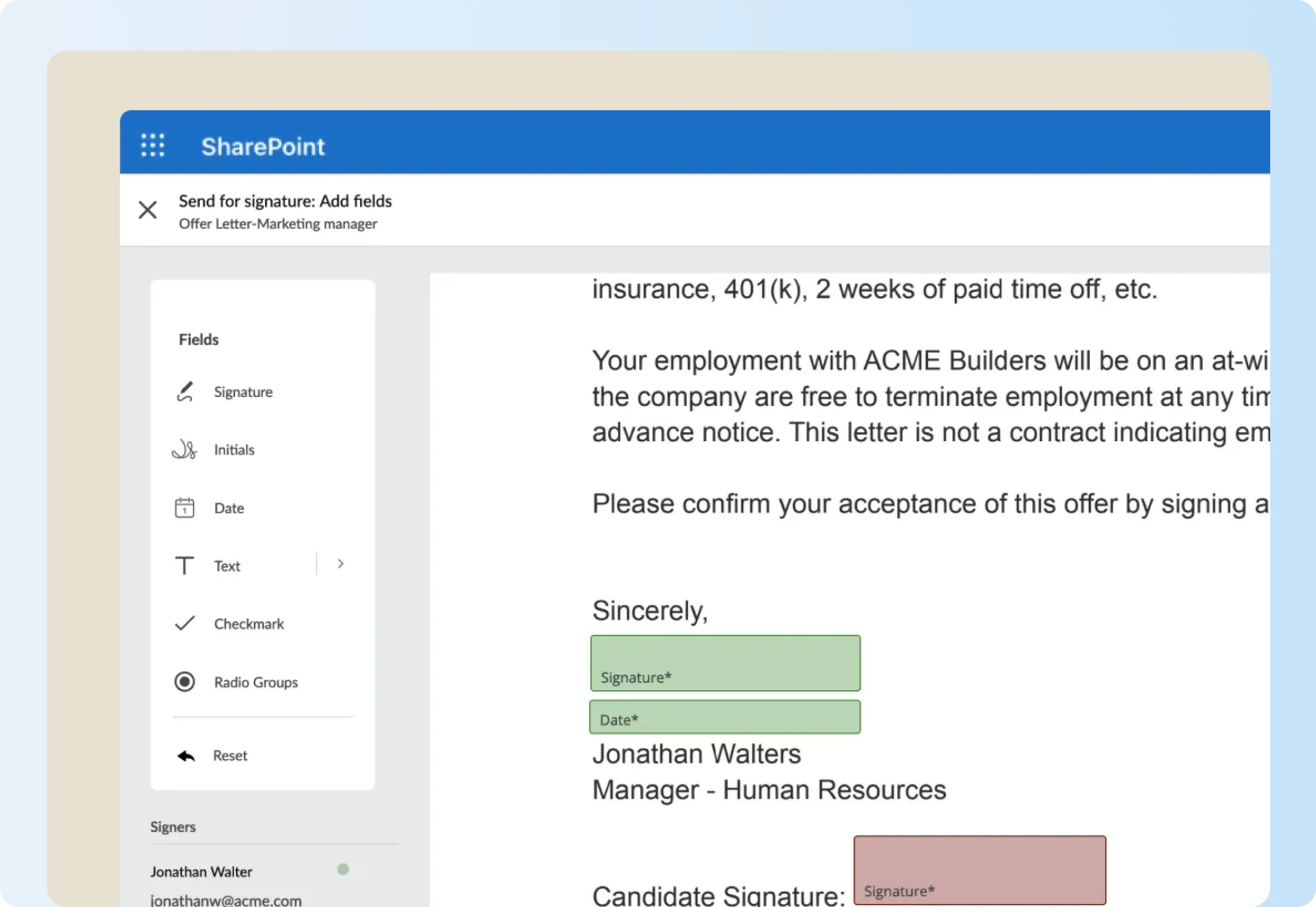
Signeasy's native SharePoint integration keeps that workflow inside SharePoint, where teams can send documents for signature, track progress, and return completed files to the document library. The integration is part of Business Pro.
Replacing Dropbox Sign in SharePoint? See how the same workflow runs with Signeasy.
The Essentials and Standard plans limit reusable templates
The Dropbox Sign Essentials plan includes 5 reusable templates, while the Standard plan includes 15. Teams managing a larger library of repeat agreements need the Premium plan for unlimited templates.
That limit becomes easier to reach when sales, HR, finance, procurement, and operations maintain separate NDAs, offer letters, vendor agreements, authorization forms, and customer contracts.
Mobile sending has fewer options than the web workflow
Dropbox discontinued the standalone Dropbox Sign mobile app in September 2024 and moved signing workflows into the Dropbox mobile app. The current mobile workflow allows one signer per signature request, while the web workflow supports multiple signers.
That affects field sales, site teams, real estate staff, and other employees who prepare multi-party documents away from a desktop.
How we evaluated Dropbox Sign alternatives
A Dropbox Sign replacement should match the workflow you are actually replacing. A team sending everyday agreements needs different features from a developer embedding signatures, a sales team creating proposals, or a business handling regulated documents.
We compared each option using six criteria that cover day-to-day eSignature use, cost, integrations, API requirements, ease of use, functionality, and security.
What are the 13 best Dropbox Sign alternatives in 2026?
The best Dropbox Sign alternative depends on the workflow you need to replace. Everyday business signing, proposal creation, PDF preparation, embedded eSignature APIs, form collection, and regulated signing all place different demands on the platform.
This overview shows the main buyer fit and trade-off before the individual product profiles.
The individual profiles below show how those differences play out across sending limits, integrations, API access, signer controls, templates, and pricing.
1. Signeasy
G2 rating: 4.7/5
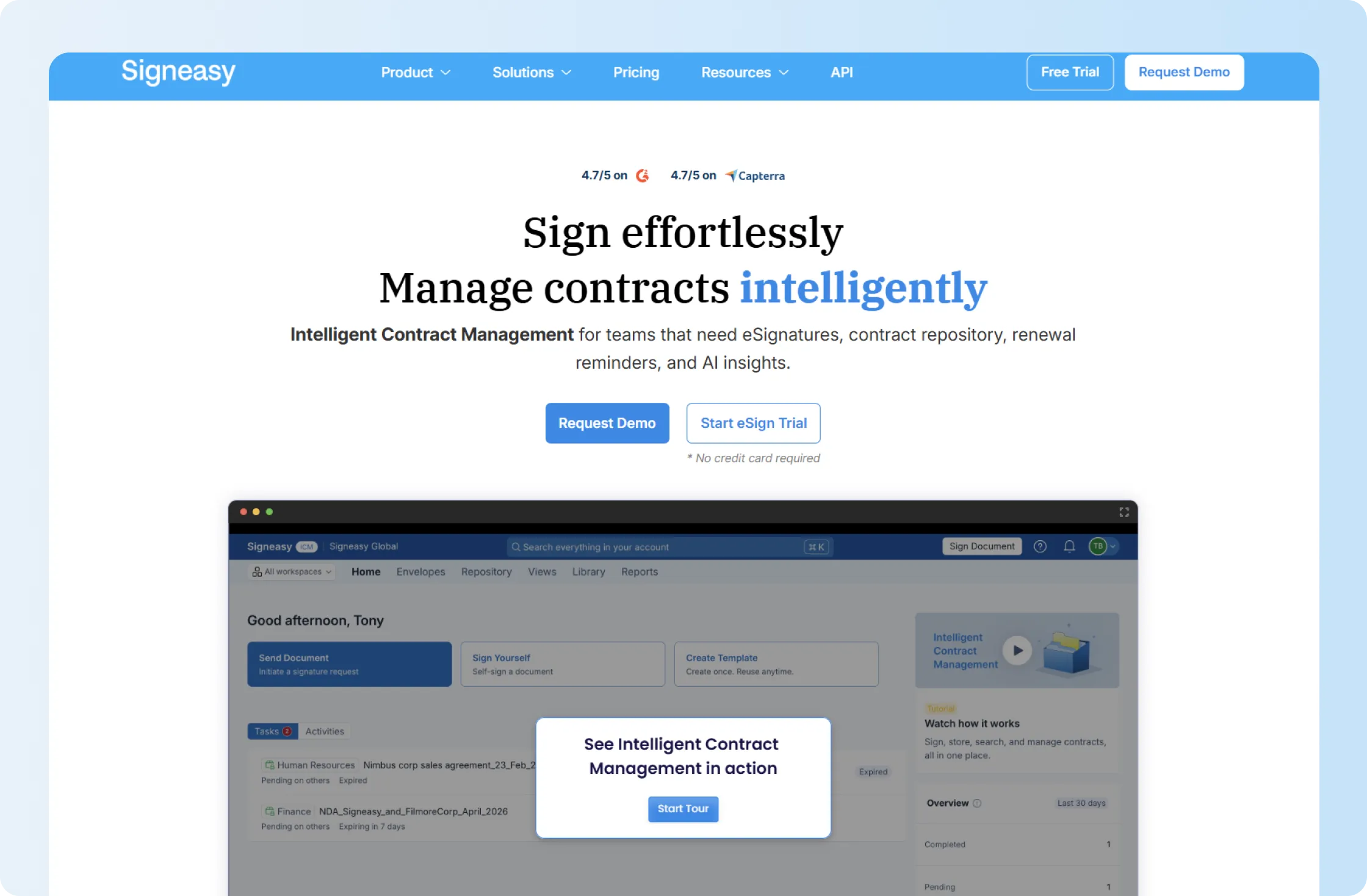
Signeasy is an eSignature and contract management platform for small businesses, growing teams, and mid-sized companies that want a simpler day-to-day signing workflow. For teams comparing Dropbox Sign alternatives, its main fit is everyday business eSignature across team, mobile, Microsoft, Google, and embedded signing workflows. Intelligent Contract Management is available separately for teams that also need searchable contract storage, renewal tracking, or post-signature access controls.
The Signeasy Business plan costs $20 per user per month with annual billing, while the Business Pro plan costs $30 per user per month. Both plans include unlimited document sends for signature, with the Business Pro plan adding broader team controls, integrations, and signer verification.
Key features of Signeasy
- The Business and Business Pro plans include unlimited document sending for signature.
- Reusable templates preserve signer roles and fields for repeat agreements, with up to 5 templates on the Business plan and unlimited templates on the Business Pro plan.
- Signing order and reminders support multi-party agreements and pending signature follow-ups.
- iOS and Android apps support document signing and signature-request workflows away from a desk.
- SharePoint, Outlook, Microsoft Teams, Gmail, Google Sheets, and Google Drive connect signing to existing business workflows.
- Separate eSignature API plans support embedded signing, embedded sending, webhooks, templates, and production usage priced around documents signed.
Pros
- Signeasy combines ease of use and simplicity for everyday eSignature workflows, with unlimited document sending on Business and Business Pro.
- Team management features on Business Pro include roles, permissions, usage reporting, and broader business integrations.
- Transparent pricing lets teams compare Business and Business Pro costs without needing a custom sales quote.
- Excellent customer support gives teams help when they need assistance with setup or ongoing signing workflows.
- Native SharePoint workflows keep sending, status tracking, and completed documents inside the existing document library.
- eSignature API pricing is based on documents signed, not documents sent, and is separate from regular team subscriptions.
Want to see how Signeasy would handle your current Dropbox Sign workflow?
Cons
- Bulk Send is a paid add-on. Signeasy currently lists it at $1.50 per document, with pricing varying by usage, volume, and number of users.
- eSignature API usage follows separate plans and pricing from standard Signeasy subscriptions.
Teams moving from Dropbox Sign can explore Signeasy vs Dropbox Sign to compare templates, SharePoint integration, mobile signing, and team workflows.
2. Docusign
G2 rating: 4.5/5
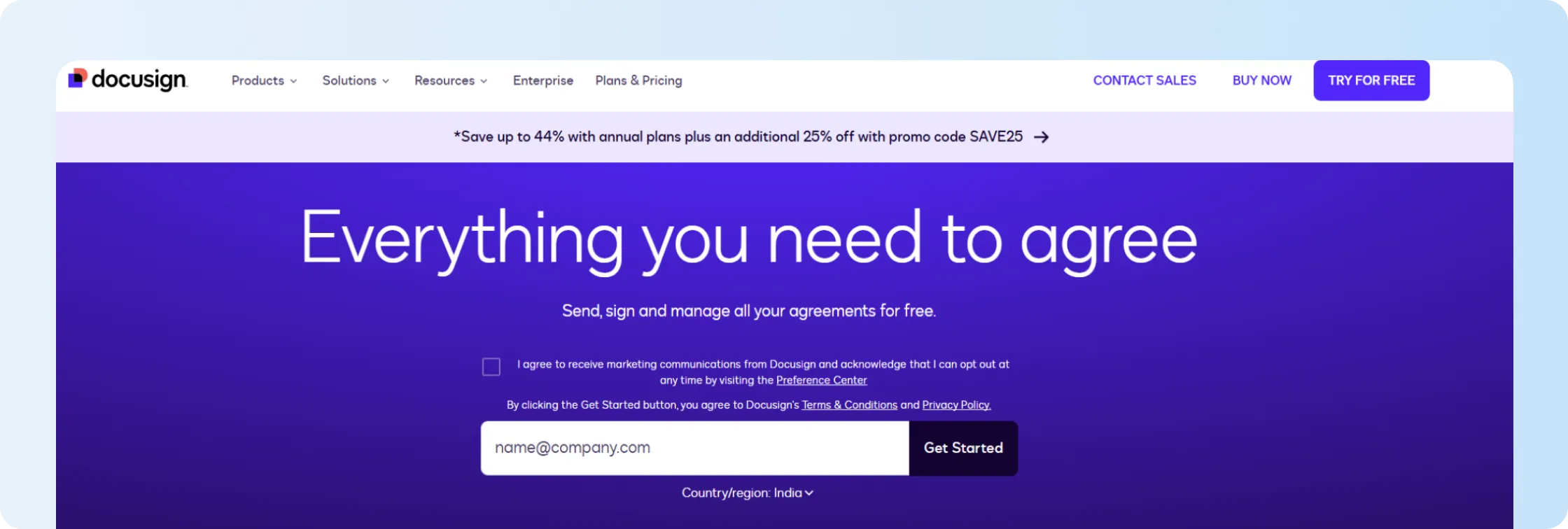
Docusign is an eSignature platform for businesses that need standard signing alongside more involved agreement workflows. Its self-serve plans extend into payments, web forms, bulk sending, and a large integration ecosystem, while annual envelope allowances affect how much sending is included.
Key features
- Reusable templates standardize frequently sent agreements.
- Signing order controls the sequence for multi-recipient signature requests.
- The Business Pro plan adds web forms, payments, signer attachments, conditional fields, and Bulk Send.
- More than 1,000 integrations connect Docusign with CRM, productivity, storage, and business applications, including Salesforce and other widely used business systems.
Pros
- The Business Pro plan keeps forms, payments, attachments, and bulk signature requests inside the same eSignature workflow.
- The integration ecosystem connects signing across CRM, productivity, storage, and enterprise systems.
- Shared templates and team controls help standardize recurring agreements across several departments.
Cons
- The Standard and Business Pro annual plans include 100 envelopes per user per year; additional envelopes are billed separately.
- The Business Pro plan is currently listed at $45 per user per month on Annual | Billed monthly and keeps the same 100-envelope annual allowance as Standard.
- Bulk Send and PowerForm activity count against applicable envelope allowances, so higher-volume workflows require the sending model to be checked separately from the feature list.
See how Signeasy compares with Docusign when envelope allowances are part of the cost calculation.
3. PandaDoc
G2 rating: 4.7/5
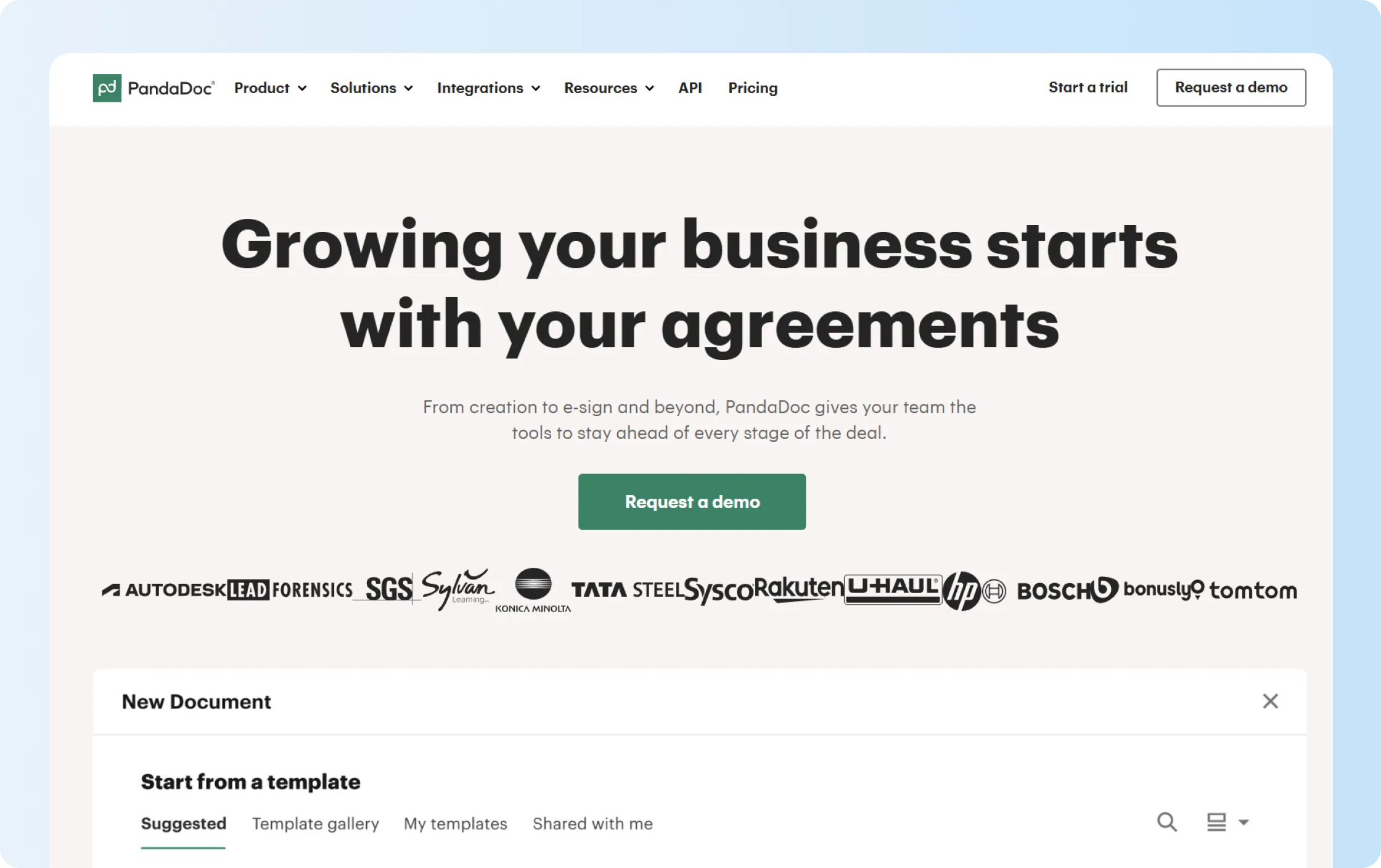
PandaDoc combines eSignature with sales-document creation, making it relevant when proposals, quotes, and agreements are built inside the platform before signature. The workflow extends from document preparation and internal approval through customer signing.
Key features
- The document editor builds proposals and agreements from reusable content.
- Real-time tracking shows document activity after a proposal is sent.
- The Business plan adds advanced features such as custom quotes, CRM integrations, approval workflows, deal rooms, web forms, Bulk Send, and more customization for sales workflows.
- The Enterprise plan adds SSO, team workspaces, CPQ, workflow automation, and API access.
Pros
- The Starter plan suits teams that need eSignature alongside basic document creation.
- The Business plan keeps proposals, quotes, CRM data, approvals, and signing inside the sales workflow.
- Document analytics give sales teams recipient activity to use when deciding when to follow up.
Cons
- The Business plan costs $49 per seat per month annually when teams need CRM integrations, quotes, approvals, or deal rooms.
- Single sign-on is included with the Enterprise plan and is available as a $20-per-seat monthly add-on to the Business plan.
- API access sits in the Enterprise plan or separate developer arrangements rather than the Starter plan.
Teams that no longer need proposal creation can compare Signeasy and PandaDoc across signing, pricing, and team workflows.
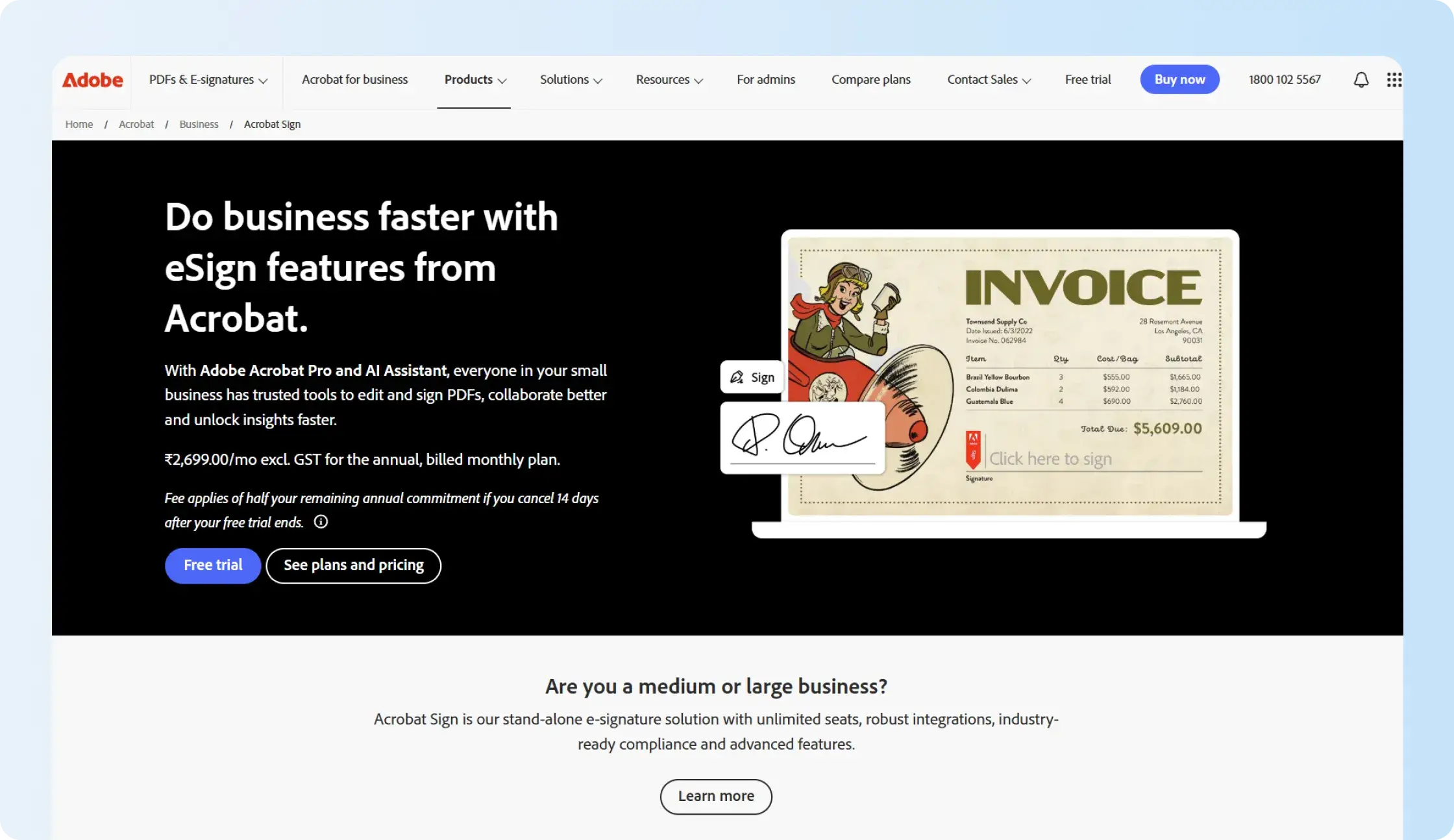
4. Adobe Acrobat and Acrobat Sign Solutions
G2 rating: 4.4/5
Adobe covers eSignature through two related product layers. Acrobat Standard for teams and Acrobat Pro for teams combine PDF preparation with signing, while Acrobat Sign Solutions extends into enterprise eSignature, authentication, integrations, and compliance requirements.
Key features
- Acrobat Standard for teams edits, converts, organizes, and sends PDFs for signature.
- Acrobat Pro for teams adds broader PDF preparation and eSignature capabilities.
- Supported Acrobat plans provide tracking, audit trails, web forms, and bulk signature requests.
- Acrobat Sign Solutions adds enterprise integrations, authentication, compliance workflows, and advanced customization for larger deployments.
Pros
- Acrobat keeps PDF preparation and signature collection inside the same document environment.
- Existing Adobe users can move documents from PDF editing into signature without switching document tools.
- Acrobat Sign Solutions extends the workflow when larger deployments need broader authentication, integrations, or governance.
Cons
- Acrobat Sign Solutions uses contact-sales pricing instead of a public self-serve rate card.
- If PDF preparation happens elsewhere, compare Signeasy and Adobe Sign across the signing workflow or check out a detailed Adobe Sign review before deciding.
- Acrobat Standard for teams and Acrobat Pro for teams do not provide the same compliance level as Acrobat Sign Solutions.
5. airSlate SignNow
G2 rating: 4.6/5
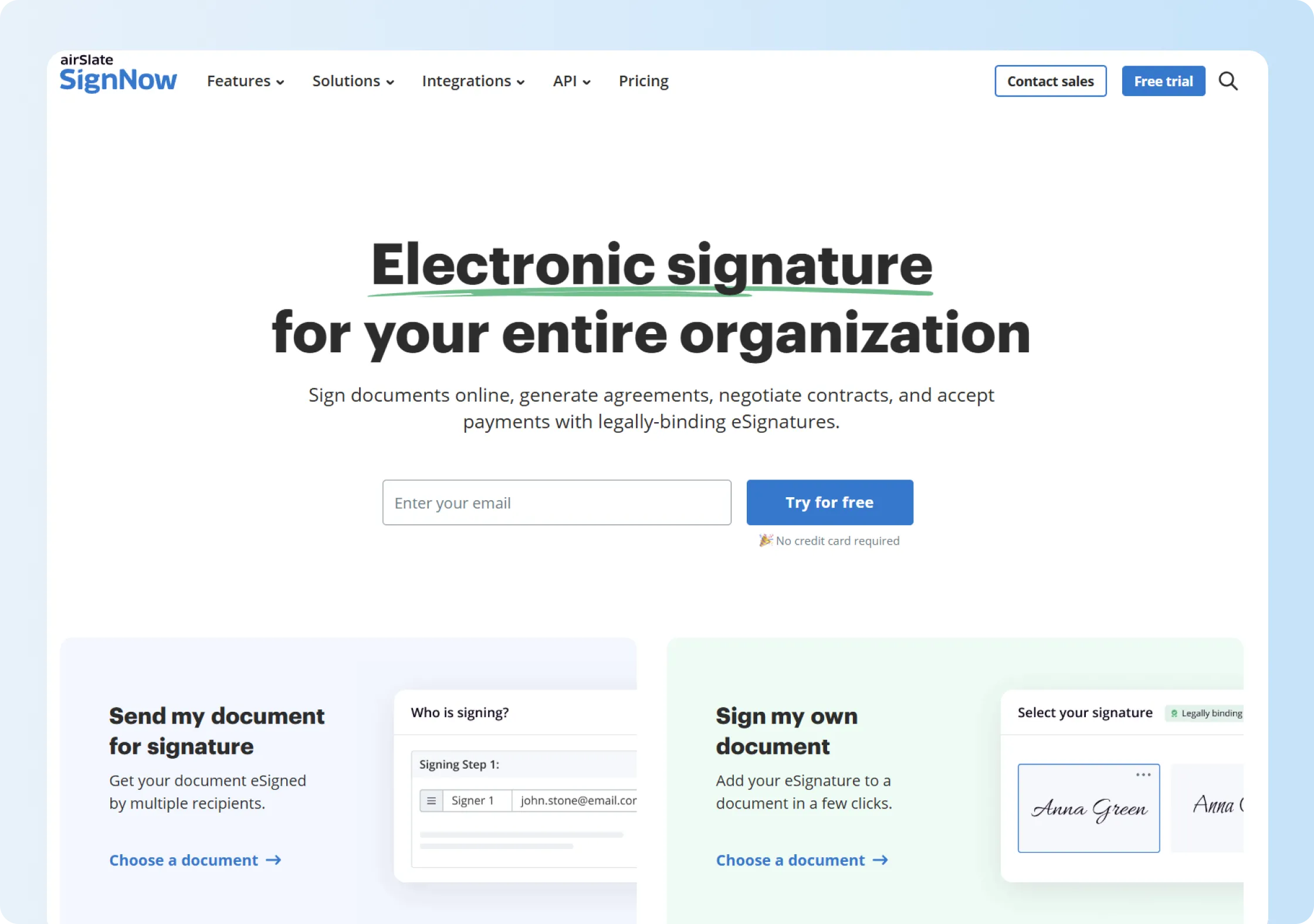
SignNow focuses on affordability for teams that need everyday business eSignature, starting at a lower price than many larger providers. You can prepare documents, create templates, add fields, set a signing order, and send agreements from your desktop or mobile device.
Key features
- Reusable templates save frequently used agreements and repeat signer field setups.
- Signing order controls the sequence when several recipients need to sign.
- Bulk sending sends the same document to multiple recipients when needed.
- Mobile apps support sending, signing, and managing documents away from desktops.
Pros
- Unlimited paid-plan user seats support teams with many internal platform users.
- Bulk sending and reusable templates support repeat, higher-volume business signing workflows.
- Mobile apps enable common document-sending and signing tasks away from desktops.
Cons
- Signature invite allowances and extra-invite charges make total cost usage-dependent.
- Daily document and invite limits can affect teams with concentrated sending volumes.
If those invite limits could affect your sending volume, the Signeasy vs SignNow comparison shows how the two platforms handle documents, templates, team access, and higher-volume signing.
6. SignWell
G2 rating: 4.8/5
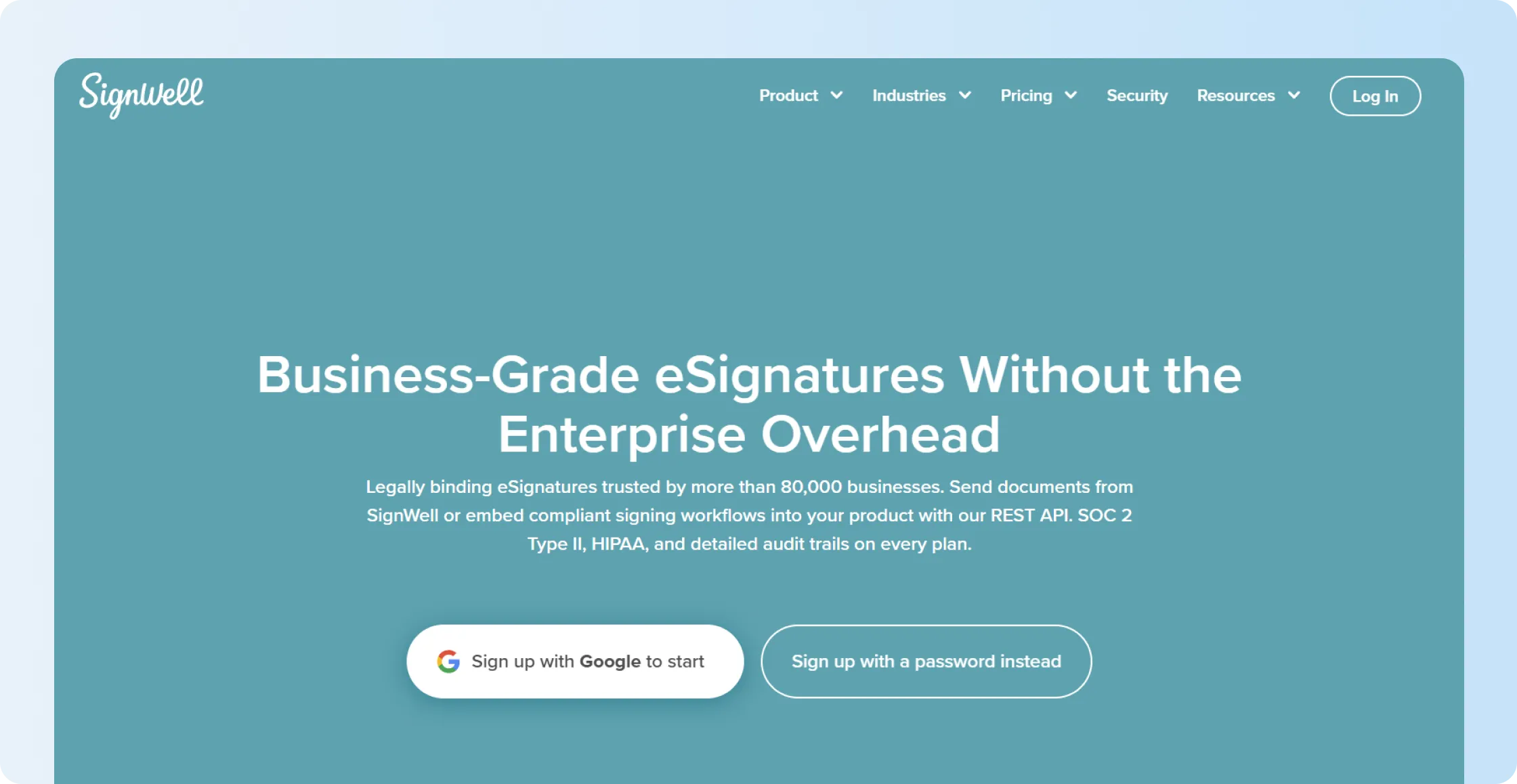
SignWell is a lightweight eSignature platform for smaller teams that want straightforward document sending and API access without a wider sales or PDF suite. Its pricing is organized around sender counts, so team size affects which plan fits.
Key features
- Paid plans include unlimited signing requests.
- Reusable templates preserve signer roles and document fields.
- Bulk Send distributes the same agreement to multiple recipients.
- API access supports embedded signing, requesting, templates, and webhooks.
Pros
- Unlimited document sending keeps regular eSignature volume separate from per-document charges.
- The Business plan expands the account for teams that need more senders and a larger reusable-template library.
- Included API allowances let teams test embedded workflows before moving into additional usage-based API volume.
Cons
- The Light plan includes one sender and charges separately for additional senders.
- The Business plan includes three senders and charges separately for additional senders.
- The Light plan includes 15 free API documents per month and the Business plan includes 25 before pay-as-you-go API pricing applies.
If sender limits or API allowances are likely to affect your team, our SignWell review takes a closer look at its pricing, features, and trade-offs for growing businesses.
7. Zoho Sign
G2 rating: 4.4/5
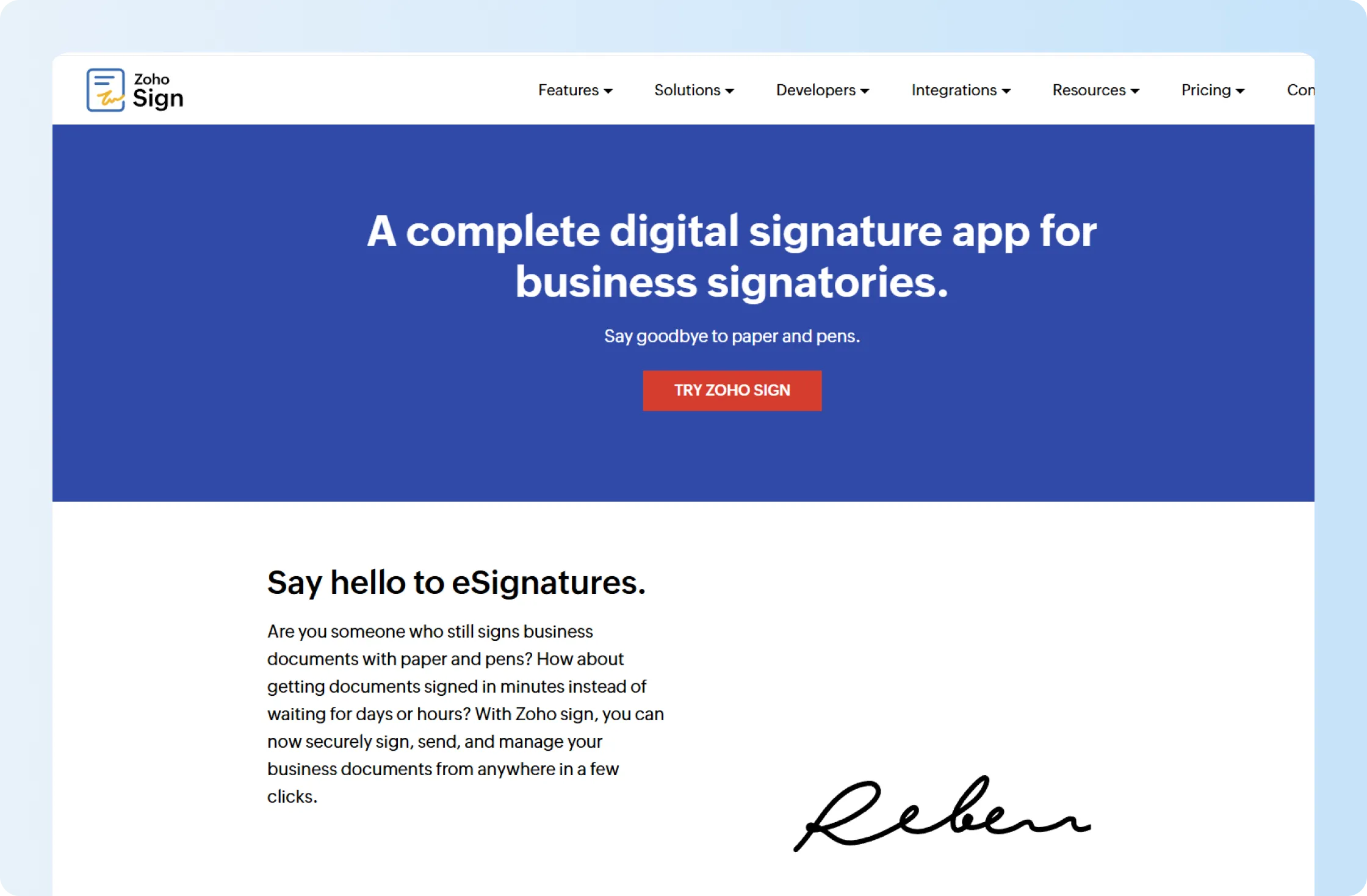
Zoho Sign is the eSignature layer within the wider Zoho business suite, making it relevant for businesses that want a more seamless integration between signing and the Zoho tools already used for sales, HR, finance, or operations.
Key features
- Signing order controls multi-recipient document routing.
- Approval workflows add an internal review step before signature.
- The Enterprise plan adds Bulk Send, SignForms, APIs, webhooks, and in-person signing.
- Mobile and desktop apps support signature workflows across supported devices.
Pros
- Native Zoho connections reduce file handoffs between signing and CRM, HR, finance, or operational workflows.
- The Professional plan fits teams that need higher regular signing volume and a larger reusable-template library.
- The Enterprise plan extends the workflow into bulk distribution, SignForms, and embedded signing.
Cons
- The Standard plan includes 25 envelopes per user each month.
- Bulk Send, SignForms, APIs, and webhooks require the Enterprise plan or an API-specific setup.
- High-volume automations, API requests, and some third-party integrations consume Zoho Sign credits beyond regular subscription usage.
Teams expecting to use those higher-volume workflows can see how the limits and credit model work in our full Zoho Sign review.
8. Jotform Sign
G2 rating: 4.7/5
Jotform Sign sits inside a broader form and workflow platform. Teams can collect structured information, generate a document, route it through approvals, and request signatures, which fits applications, registrations, HR intake, and other form-driven processes.
Key features
- Bulk links let several recipients complete the same document workflow.
- Automatic reminders follow up on outstanding signature requests.
- Custom branding applies business identity to emails and signing pages.
- Signer authentication adds verification before sensitive documents are opened.
Pros
- Form workflows keep structured data collection, document generation, approvals, and signatures inside one process.
- Self-serve plans give individual users progressively higher monthly signed-document allowances.
- The Enterprise plan extends the same workflow to multiuser teams and higher document volumes.
Cons
- The Starter plan includes 10 signed documents per month, the Bronze plan 100, the Silver plan 250, and the Gold plan 1,000.
- The Starter, Bronze, Silver, and Gold plans remain single-user plans.
- Multiuser deployment requires the Enterprise plan.
If you're considering Jotform Sign for a team, our Jotform review goes deeper into its document limits, multiuser requirements, pricing, and form-first workflow.
9. BoldSign
G2 rating: 4.6/5
BoldSign separates standard business eSignature from its developer API products. Its subscription model gives teams a choice between per-user unlimited sending on the Business plan and a shared-envelope model for unlimited users on the Premium plan.
Key features
- The Business plan includes unlimited envelopes and reusable templates.
- The Premium plan includes unlimited users and 250 shared envelopes each month.
- Mobile workflows support sending and signing outside the desktop interface.
- Separate API plans provide sandbox and production signature requests.
Pros
- The Business plan suits licensed users who send agreements frequently throughout the month.
- The Premium plan pools document volume across an unlimited number of users.
- Separate developer products keep API request volume and embedded signing outside the standard team subscription.
Cons
- The Premium plan includes 250 envelopes per month and charges $0.50 for each additional envelope.
- Bulk Send is a paid add-on on applicable plans.
- ID verification, SMS authentication, KBA, QES, and other higher-assurance methods carry separate usage charges.
10. Xodo Sign
G2 rating: 4.8/5
Xodo Sign, formerly Eversign, combines business eSignature with Xodo's wider PDF environment. It fits teams that prepare and sign PDF documents in the same tool, with separate developer options available when signatures need to sit inside an application.
Key features
- The Basic plan includes unlimited signed documents and three reusable templates.
- The Professional plan adds unlimited templates and advanced PDF editing.
- Mobile apps support document sending and signing from iOS and Android.
- Separate API plans support embedded signing, webhooks, OAuth, and bulk workflows.
Pros
- The Basic plan covers regular electronic signatures without charging by completed document.
- The Professional plan fits teams that need more PDF preparation alongside repeat signing.
- Separate API plans let developers add signing to an application without moving standard team users onto an API subscription.
Cons
- The Basic plan limits reusable templates to three.
- The Professional plan includes 10 Bulk Send credits and 10 SMS credits per user.
- The API Light plan costs $50 per month when billed annually and includes 50 API documents rather than unlimited production API usage.
If API volume, templates, or Bulk Send limits are part of your decision, our Xodo Sign pricing guide breaks down its plans and usage allowances in more detail.
11. Foxit eSign
G2 rating: 4.6/5
Foxit eSign sits alongside Foxit's wider PDF products, making it relevant for teams that already prepare and manage documents in the Foxit environment. Its Essentials and Business plans differ mainly in sending volume, reusable templates, and team requirements.
Key features
- Reusable templates standardize frequently sent agreements.
- Audit trails and certificates record document and signing activity.
- Mobile signing supports signature workflows on supported devices.
- The Business plan adds unlimited envelopes, unlimited templates, and custom branding.
Pros
- Existing Foxit users can move from PDF preparation into signature without introducing another document environment.
- The Business plan removes the envelope and template ceilings that apply to the Essentials plan.
- Audit certificates give teams a documented record of signer and document activity after completion.
Cons
- The Essentials plan includes 250 envelopes per year.
- The Essentials plan includes 10 reusable templates.
- The Business plan requires a minimum of five licenses.
Teams comparing the seat minimum with its envelope and template limits can find the full cost breakdown in our Foxit eSign pricing guide.
12. OneSpan Sign
G2 rating: 4.7/5
OneSpan Sign is an enterprise eSignature platform built for regulated and higher-assurance workflows where signer identity, document integrity, and transaction evidence are central requirements. Its positioning differs from platforms focused mainly on routine business signatures.
Key features
- Authentication methods verify signer identity using passwords, OTP, knowledge checks, or supported third-party services.
- Digital signatures and tamper seals expose document changes after signing.
- Audit trails record authentication and eSignature events across the transaction.
- APIs support embedded signing inside business and customer applications.
Pros
- Multiple authentication options give regulated teams more control over how signer identity is verified.
- Digital signatures and tamper seals provide evidence if a document changes after signing.
- Unified audit records bring authentication and signature events together for compliance and dispute review.
Cons
- Pricing requires vendor contact instead of a public self-serve rate card.
- Identity-heavy workflows require more configuration than routine signature requests.
- The platform's security and compliance depth exceeds what many standard business agreements require.
13. Papersign
Papersign, from Paperform, is a lightweight eSignature product for teams that want document creation and signature collection in the same workspace. The Pro plan covers recurring team use, while the Enterprise plan expands API and administrative controls.
Key features
- PDF upload turns existing documents into electronic signature requests.
- The built-in editor creates signable documents inside the platform.
- Automatic reminders follow up on incomplete signature requests.
- Activity tracking shows document and signer status in real time.
Pros
- The Pro plan suits teams that send signed documents regularly without a monthly signed-document ceiling.
- Unlimited users let several team members work in the same signing environment without adding per-user subscriptions.
- Included API usage gives teams room to start basic document automation before moving to the Enterprise plan.
Cons
- The Free plan limits signed documents to three per month.
- The Pro plan limits API-signed documents to 10 per seat each month.
- Unlimited API usage, SSO, SLA support, and broader administrative controls require the Enterprise plan.
Narrowed down your options? See how Signeasy fits the signing workflow you need to replace.
What should you consider when choosing a Dropbox Sign alternative?
When choosing a Dropbox Sign alternative, start with your specific needs, then compare regular signing tasks, full team cost, template limits, integrations, API requirements, mobile workflows, signer authentication, and security controls. A developer embedding signatures into an application needs a different setup from an HR team sending offer letters or a sales team working in Microsoft 365.
Those requirements become easier to compare when you follow the same path a document takes through your existing workflow.
Your actual eSignature requirements
Start with the signature workflows your team runs every week. Reusable templates, signer fields, signing order, automatic reminders, attachments, bulk sends, custom branding, payment collection, signer authentication, and audit trails all affect how documents move from preparation to completion.
A longer feature list adds little when those capabilities sit outside the agreements your team actually sends.
Pricing at your real team size
Compare the final cost for the people who send signature requests and the volume they handle. Sender or seat requirements, envelope allowances, template caps, Bulk Send charges, SMS delivery, identity verification, SSO, and features that move to higher tiers can all change the annual cost.
API pricing needs its own calculation because production signature requests are usually counted separately from standard user subscriptions.
Templates and repeat document sending
Reusable templates reduce repeated setup by preserving signer roles, signing order, and fields across common agreements. Teams with several departments should compare the number of templates included and whether templates are managed at the user, team, or organization level.
That distinction becomes more relevant once different departments maintain their own contracts, HR documents, vendor forms, and customer agreements.
Microsoft and Google integrations
Microsoft 365 teams should check SharePoint, Outlook, Teams, and OneDrive workflows. Google Workspace teams should check Gmail, Drive, Docs, and Sheets support.
After identifying an integration, check what users can actually do inside it. A seamless integration should let users complete the signing steps they need without repeatedly moving files between systems.
API and embedded signing
For signing inside your own application, compare sandbox access, REST API authentication, embedded signing, embedded sending, template endpoints, merge fields, webhooks, SDKs, OAuth, signer authentication, API logs, and monthly production request allowances.
Signeasy keeps API usage separate from standard team subscriptions, which lets product teams evaluate embedded signing volume independently from regular business sending.
Building an embedded signing workflow?
Field signing and mobile workflows
Teams in construction, healthcare, field sales, and site operations should test the complete mobile workflow from document preparation through completion.
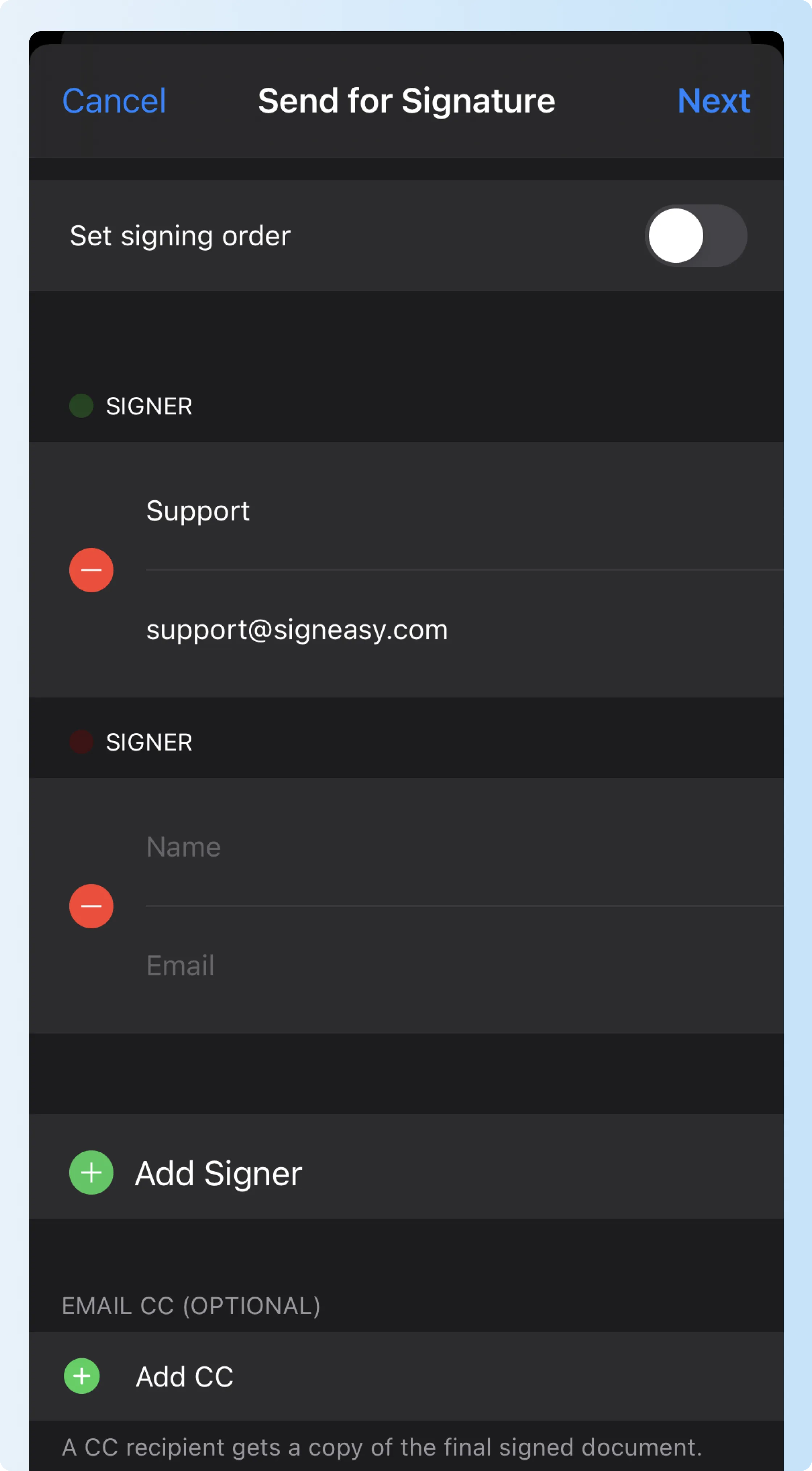
Signeasy’s iOS and Android apps support sending and signing away from a desk, so teams can keep signature requests moving when they are working on-site or away from a computer.
Security and signer authentication
Security requirements should follow the risk of the documents being signed. Relevant controls include tamper evidence, audit trails, encryption, two-factor authentication, recipient verification, SSO, identity verification, digital certificates, access controls, and support for frameworks such as ESIGN, UETA, and eIDAS.
These controls become especially relevant when comparing Dropbox Sign competitors for financial services, healthcare, government, or other workflows where signer identity and document integrity require additional verification.
How do Signeasy and Dropbox Sign compare for growing teams?
Signeasy and Dropbox Sign both cover core electronic signature workflows, but their plan structures differ around templates, SharePoint, mobile work, and API packaging. Signeasy's Business plan focuses on unlimited team sending, while Dropbox Sign separates several workflow capabilities across its Essentials, Standard, Premium, and API plans.
The main differences are easier to compare side by side.
See how these differences apply to your existing Dropbox Sign workflow.
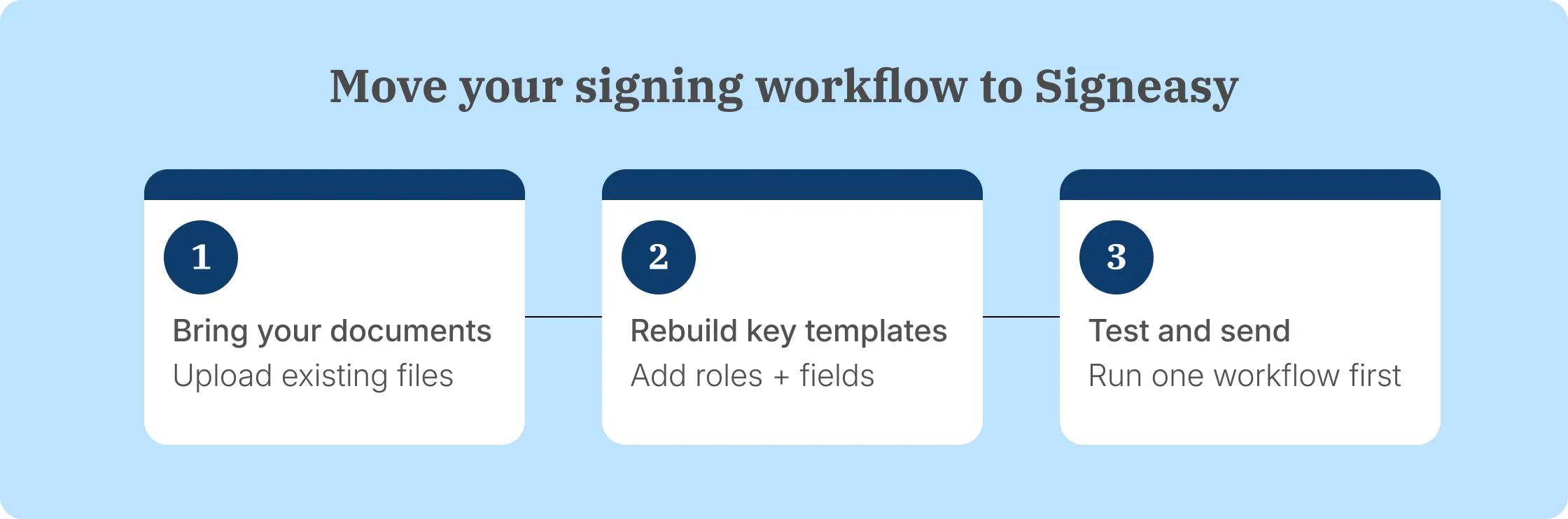
Signeasy Business costs $20 per user per month with annual billing and includes unlimited document sending and 5 reusable templates. Business Pro costs $30 per user per month and adds unlimited templates, signer verification, team permissions, SharePoint, and other business integrations.
Signeasy Business Pro adds unlimited templates, native SharePoint workflows, signer verification, team permissions, and broader business integrations. Signeasy also supports mobile sending and signing on iOS and Android, while Dropbox Sign’s mobile workflow limits a signature request to one signer.