



Physicians continue to spend one-sixth of their working hours on non-clinical tasks instead of patient care.
In fact, the American Medical Association survey suggests that reducing documentation and administrative workload is the top area where health systems are applying automation.
This burden extends beyond physicians. Nurses and administrative staff manage intake packets, consent forms, insurance authorizations, discharge paperwork, and follow-ups, often across disconnected systems.
An eSignature solution for healthcare directly addresses this problem. Solutions like Signeasy help streamline these workflows so staff can focus less on forms and more on patient care.
Through this blog post, let’s understand the benefits of using an eSignature solution for healthcare organizations.
What is an eSignature solution for healthcare?
A standard electronic signature tool focuses on basic document signing — uploading a file, adding a signature field, and sending it out.
That may be sufficient for sales agreements or internal approvals, but healthcare documents routinely contain protected health information (PHI), must meet HIPAA security and record-retention standards, and often require sequential or role-based signing by patients, witnesses, clinicians, and administrators. Missed steps or incomplete audit data can create compliance risk.
An eSignature solution for healthcare handles those realities. It supports secure access controls, detailed audit logs, and data protection measures that align with healthcare compliance requirements.
Plus, healthcare eSignature must work wherever care is delivered — at the bedside, in the waiting room, during a telehealth visit, or on a patient’s personal device at home. That means supporting mobile-optimized signing, secure remote access without account setup for patients, and integrations with electronic health record (EHR) and practice management systems where patient records already live.
In short, a healthcare eSignature solution makes paperwork safer, faster, and better suited to the way healthcare teams and patients actually work.
Benefits of using an eSignature solution for healthcare companies
From keeping the staff healthy with contactless signing to adhering to compliance, the benefits expand across the patients, providers, and the staff.
1. Keep staff healthy by facilitating contactless signing
Healthcare teams move constantly between wards, clinics, and hospitals. An eSignature for healthcare supports fully contactless signing on phones, tablets, and computers, reducing reliance on shared surfaces like clipboards, printers, and scanners.
In practice, contactless signing looks like:
- Patients signing consent forms on a tablet at the bedside
- Visitors completing paperwork on waiting-room devices
- Staff approving documents remotely without returning to an office
Dhore Anunciado, Executive Director at the San Diego Eye Bank, says:
“We have a lot of our staff going in and out of hospitals all day. We don’t want them coming into the office and increasing our risk. Signeasy has helped us reduce our exposure.”
2. No more choosing between patients and paperwork
Healthcare organizations using digital consent workflows report up to 75% faster form processing, significantly reducing follow-ups and delays.
A healthcare esignature allows teams to digitize high-volume documents such as:
- Patient intake and registration forms
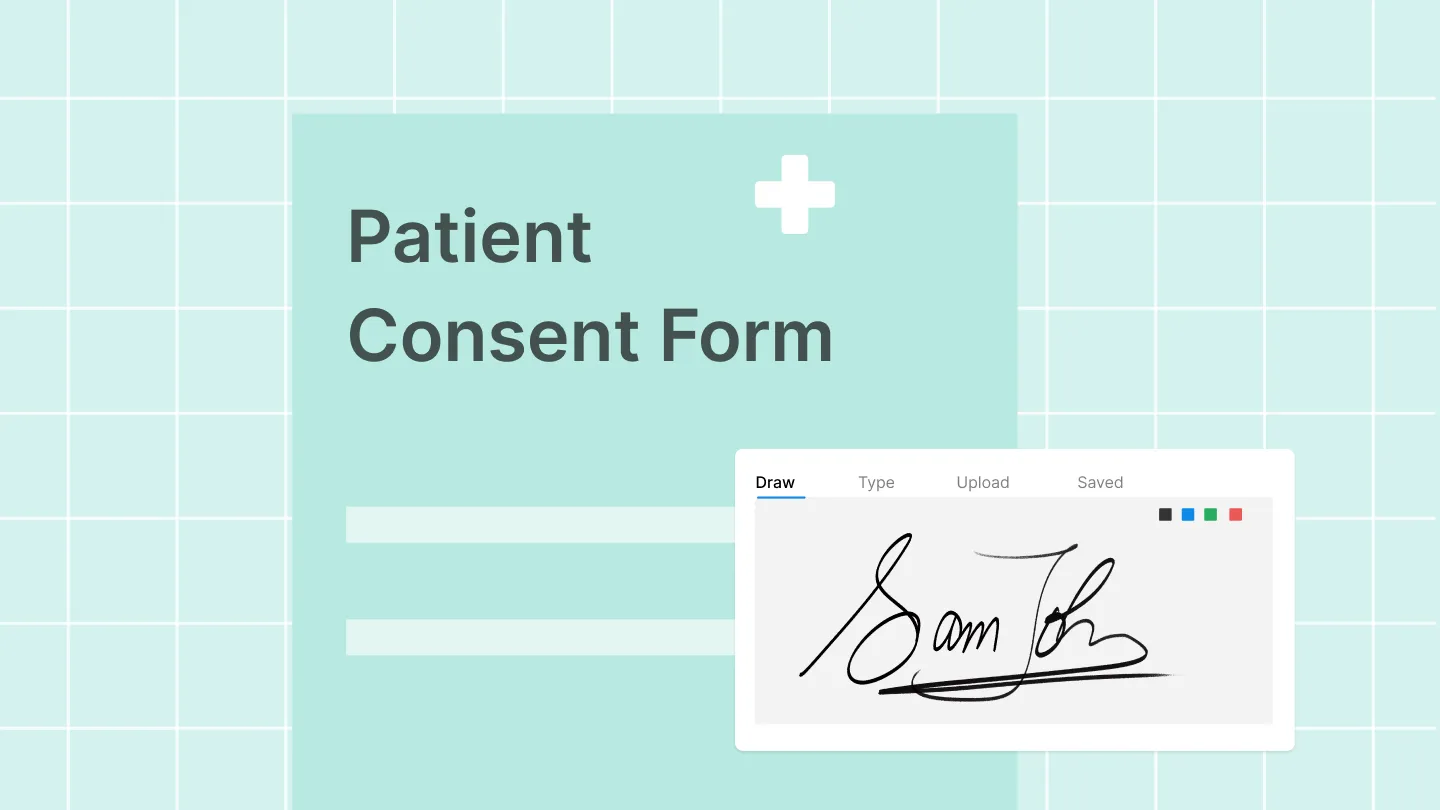
- HIPAA authorizations and consent forms
- Discharge instructions and follow-ups
- Prescription and internal approvals
How a digital intake workflow works
- Patient receives a secure link via email or SMS
- Form opens on any device
- Fields are pre-filled using existing data
- Patient signs electronically
- Signed documents sync with patient records
API-based integrations even allow signed documents to flow directly into EHR systems. Patients can securely sign documents online, accelerating critical paperwork like admissions and consent forms:
- Approve and share timesheets, prescriptions, and discharges across departments
- Save and manage medical records on the cloud
- Conduct a fully digital onboarding process, from offer letter to training docs
3. Stay compliant with key regulations
Compliance is one of the biggest concerns when healthcare organizations evaluate digital documentation. Any eSignature solution for healthcare must support strict safeguards for handling protected health information (PHI), not just basic document signing.
A typical HIPAA-compliant electronic signature workflow includes:
- Encryption of data in transit and at rest
- Comprehensive audit trails showing who signed, when, and from where

- Access controls and role-based permissions
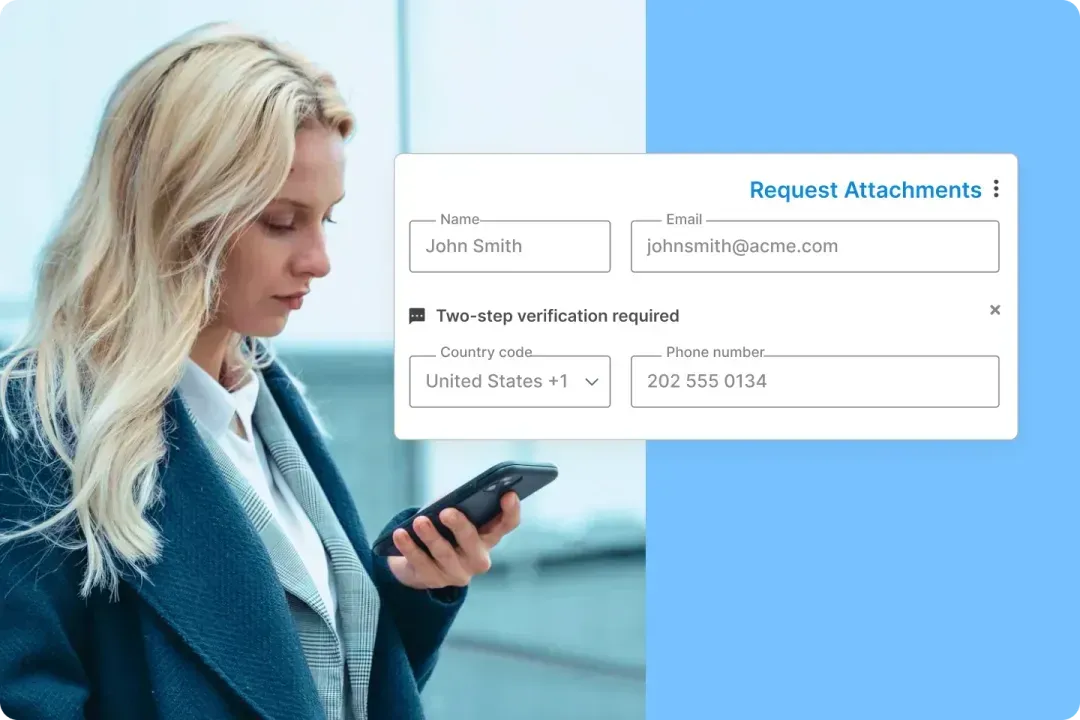
- Two-factor authentication (2FA) for additional account security
- Tamper-proof records to maintain document integrity
For FDA-regulated environments, electronic signature workflows may also align with 21 CFR Part 11, which governs electronic records and signatures used in clinical trials, life sciences, and regulated research.
4. Access important records from anywhere
Once a document is completed, Signeasy will store it safely in the cloud, so that there is no chance of misplacing it. This also makes it easy for staff to retrieve or forward these files from anywhere and anytime, whether they’re on desktop or mobile.
5. Improve patient experience
Long queues, rushed paperwork, and unread forms create frustration for patients. For patients and their caregivers, the convenience of being able to sign pdf online free of charge or complex software requirements vastly improves their overall experience.
A healthcare esignature removes friction by allowing patients to:
- Sign in without creating an account
- Receive documents via SMS if email isn’t available
- Review and sign on any device
- Complete pre-filled forms using existing data
Patients receive the link, open it on their phone, review, and sign documents within minutes.
Additionally, consent and insurance forms can even be signed via the hospital’s electronic health care record (EHR) system, thanks to Signeasy’s open API. (See how Truepill (now Phlo) uses the esign API.)
6. Make telehealth consults the new normal
How can physicians send signed prescriptions to remote patients? What about things like securing consent or accessing patients’ medical records?
Telehealth requires the same documentation standards as in-person care.
An electronic signature healthcare solution supports:
- Remote consent before or after virtual visits
- Treatment plan approvals
- Prescription signing for remote care
Signed documents can be automatically linked to patient records through EHR integrations. Since the best electronic signatures for healthcare are as legally binding as physical signatures, they enable the long-distance exchanges of medical documents with ease. As a HIPAA-compliant eSignature platform, Signeasy is a perfect fit for healthcare institutions.
Chupik Counseling, a mental health treatment facility in the US, decided to deliver therapy sessions over video calls to maintain social distance during the pandemic. At the same time, they decided to try out Signeasy to remotely secure consent from patients. As of today, our eSignature tool is helping them collect 50-100 tele-consents per week!
7. Reduce administrative and storage costs
Switching to eSignatures can significantly lower operational costs associated with paper-based processes. Healthcare facilities no longer need to spend on items like paper, ink, and printing, which can quickly add up. Studies show organizations save around $28 per document by switching to electronic signatures.
Savings come from:
- Reduced printing and paper usage
- Lower mailing and courier costs
- Eliminated physical storage
- Less staff time spent scanning and filing
Digital workflows also reduce paper waste, supporting sustainability goals.
Healthcare use cases for eSignatures
A modern eSignature for healthcare fits into everyday clinical, administrative, and operational workflows, which helps you reduce delays while keeping sensitive information protected.
Patient intake and registration
Documents involved: consent forms, demographic details, insurance verification, HIPAA authorization
Patient intake is often the first bottleneck. Moving these forms online allows patients to complete and sign them before arriving, cutting wait times and reducing front-desk workload.
In practice, intake forms are shared securely, signed on any device, and stored centrally for easy access.
Informed consent for procedures
Documents involved: surgical consent, treatment authorization, anesthesia consent
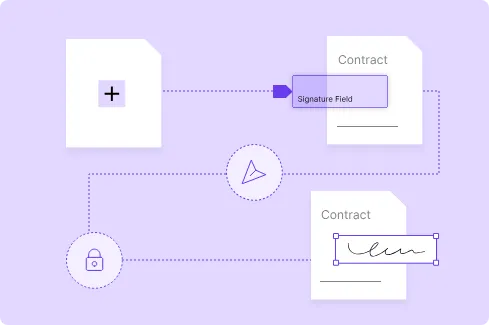
Consent workflows frequently require multiple signatures, such as the patient, a witness, and the provider. A healthcare esignature solution supports sequential or parallel signing while maintaining a clear audit trail.
Digital consent helps reduce missing or incomplete forms, a common cause of procedural delays in hospitals and outpatient centers.
Telehealth and remote care
Documents involved: tele-consent, treatment plans, prescription approvals
Remote care depends on fast, secure documentation. An electronic signature healthcare solution allows consent and approvals to be completed before or after virtual visits, without requiring patients to visit a facility.
Telehealth providers increasingly rely on electronic consent to keep virtual workflows moving and avoid follow-up calls for missing paperwork. API-based integrations allow signed documents to flow into existing systems.
HR and staff onboarding
Documents involved: employment contracts, credentialing documents, training acknowledgments
Healthcare HR teams manage high document volumes, especially during rapid hiring or seasonal staffing. Digitizing onboarding paperwork allows new hires to complete documents remotely and gives administrators a clear record of signed credentials and acknowledgments.
Bonus read: 5 ways to improve virtual onboarding for growing teams in 2025
Vendor and supplier agreements
Documents involved: procurement contracts, service agreements, Business Associate Agreements
Hospitals and clinics work with vendors that may access or process protected health information. Executing contracts and HIPAA BAAs electronically speeds up procurement while maintaining accountability through audit logs and secure storage. Teams managing high contract volumes can explore healthcare contract management software that automates the full lifecycle from drafting and signing through renewal and storage.
Clinical trials and research
Documents involved: participant consent, protocol agreements, research documentation
Clinical research requires accurate, traceable consent records. Electronic consent helps research teams collect signatures faster while maintaining documentation needed for audits and regulatory reviews.
Digital consent has also been linked to improved participant understanding and fewer administrative delays during trial enrollment.
HIPAA compliance requirements for eSignatures
HIPAA does not approve or certify electronic signature tools, as compliance depends on how electronic signatures are used to safeguard protected health information (PHI).
1. What HIPAA requires for electronic signatures
HIPAA compliance for eSignatures is guided by two core rules:
- HIPAA privacy rule: Requires PHI to be accessed, used, and disclosed only by authorized individuals and for permitted purposes.
- HIPAA security rule: Requires administrative, physical, and technical safeguards to protect electronic PHI (ePHI), including controls around access, transmission, and storage.
The U.S. Department of Health & Human Services (HHS) explicitly states that no specific standards exist under HIPAA for electronic signatures. What matters is whether the system protects PHI appropriately.
2. What makes an eSignature HIPAA-compliant
A HIPAA-compliant electronic signature solution typically includes:
- Encryption of data in transit and at rest
- Access controls to limit who can view or sign documents
- Audit trails that record signer identity, timestamps, and document activity
- Tamper-proof records to preserve document integrity
- Business Associate Agreement (BAA) availability
3. What Is a Business Associate Agreement (BAA)?
A BAA is a legal contract between a healthcare organization and a vendor that handles PHI. It defines responsibilities for protecting patient data and is required under HIPAA when PHI is processed on behalf of a covered entity.
4. Signeasy compliance credentials
To support HIPAA electronic signature use cases, Signeasy offers:
- HIPAA-aligned security safeguards
- Business Associate Agreement (BAA) availability
- SOC 2 Type I and Type II audited controls
- Data encryption in transit and at rest
- Two-factor authentication (2FA) and role-based access controls
- Detailed audit trails for signed documents
Together, these measures help healthcare organizations meet HIPAA obligations when using electronic signatures, provided the solution is configured and used correctly.
Key features to look for in a healthcare eSignature solution
Healthcare workflows involve protected health information (PHI), regulated processes, and multi-party approvals. This checklist highlights the features that matter most when comparing options, especially for teams seeking a HIPAA-compliant eSignature.
- HIPAA compliance and BAA availability: The solution should support HIPAA-aligned safeguards and offer a Business Associate Agreement (BAA) for handling ePHI. (Source)
- EHR / EMR integration (API access): Look for API-based integration so signed documents can connect to EHR or EMR systems without manual uploads. (Source)
- Audit trails & tamper protection: Every signature includes a secure log of who signed, when, and where, with protection against edits.
- Mobile-first signing: Secure signing on phones and tablets for bedside, waiting room, and remote use for iOS, and Android devices both.
- Healthcare form templates: Ready-to-use templates for intake, consent, and authorization forms.
- Multi-party workflows: Supports sequential or parallel signing by patients, witnesses, and providers.
- Identity verification: Optional authentication and verification checks to strengthen trust.
- No patient accounts needed: External signers can complete documents without creating an account.
- Automated reminders & tracking: Real-time status updates and reminders for pending signatures.
- Secure cloud storage: Easy access, sharing, and long-term retention of signed documents.
Why choose Signeasy for healthcare
Healthcare teams need an eSignature solution for healthcare that balances compliance, usability, and speed. Signeasy supports real-world healthcare workflows without the complexity often associated with large enterprise tools. It supports:
- HIPAA-compliant eSignature workflows with BAA availability
- independently audited with SOC 2 Type I and Type II controls
- GDPR-ready, supporting global healthcare organizations
Patients or external signers don’t need to create an account, and Signeasy is recognized as a top 100 business app, supporting phones, tablets, and desktops. It’s simple to adopt, easy to scale, and suitable for small practices, growing clinics, and distributed healthcare teams.
If you need a healthcare eSignature solution that meets compliance needs without slowing teams down, Signeasy offers a practical starting point. Request demo today!