




Key takeaways
- Knowing how to sign an email document starts with identifying the request. A signing link opens a service that collects electronic signatures through a guided workflow, while an attached PDF file or Word document generally needs a signing tool before you can return it.
- A signing link usually removes the download-and-reply step. After checking the sender, open the request, review the document, complete the required fields, and select the final signing action. The service manages delivery of the completed agreement.
- If the sender accepts electronic signing, you do not need paper signatures. Open the PDF document or Word attachment in a compatible tool, add your signature, save the signed version, and reply in the original thread.
- For electronic documents, the return copy matters as much as the signature. Keep the unsigned original, check that the signature and dates appear in the exported file, and retain the completed agreement and any signing record for future reference.
- Signeasy connects email attachments with a tracked signing workflow. The Gmail and Outlook integrations let users sign documents or request signatures from the inbox, then access completed documents and follow up on pending requests.
To learn how to sign an email document, check whether the message contains a signing link or an attachment. Open a legitimate signing link, review the agreement, and finish the requested fields. For an attached PDF or Word file, add your signature using a compatible tool, save the signed copy, and reply to the sender. These digital processes let Gmail, Outlook, and phone users sign without printing and rescanning sheets of paper.
How to sign an email document based on what you received
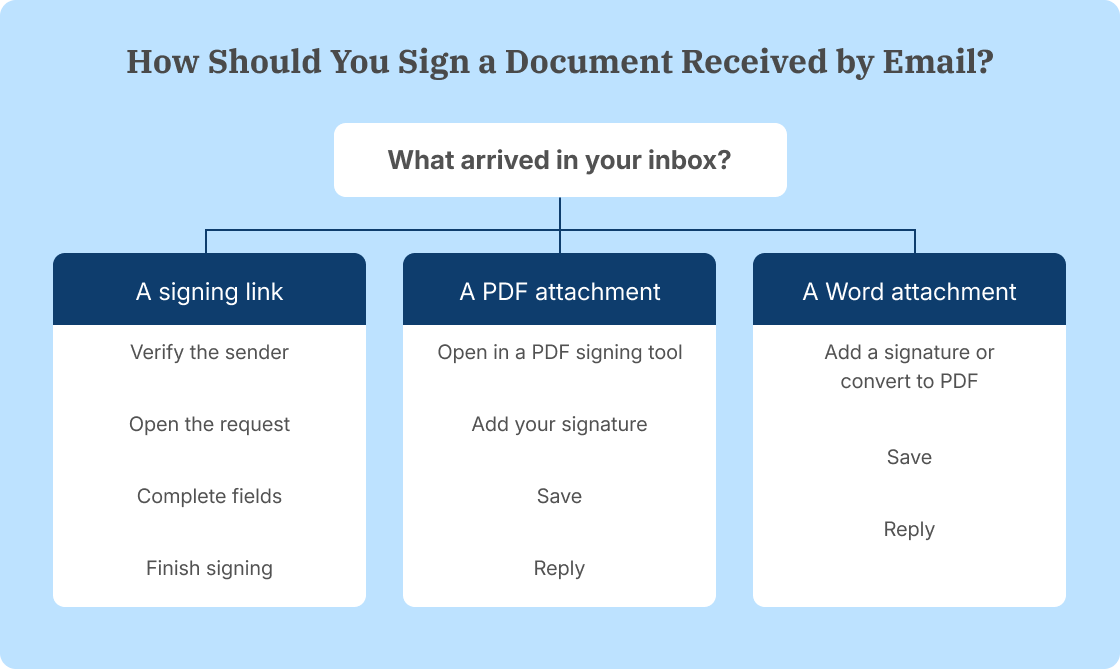
How to sign an email document depends on the signing method the sender provided: a secure link or an attached file. Offer letters for a new job, lease agreements, and new bank account forms can arrive either way. Sender verification plays an important role when a request contains sensitive documents. Before opening a link or downloading an attachment, check the sender's full email address, the document name, and any instructions. If the request is unexpected, confirm it through a contact method you already trust.
How to sign an email document from a signing link
To sign a document sent by email through an eSignature service, open the legitimate request link, fill out the required fields, and finish the signing session. You typically do not need to download the agreement or email a signed attachment back.
- Open the email and confirm you recognize the sender and expected agreement.
- Select the signing action, such as Review and Sign or Review Document.
- Read the complete document and accept the electronic-signature disclosure if prompted.
- Select the assigned signature field. Draw, type, or upload your signature as supported by the service.
- Complete any required initials, dates, checkboxes, or text fields.
- Select Finish Signing, Finish, or the equivalent final action, and complete any required confirmation.
With Signeasy, invited recipients can sign as guests without creating a free account or purchasing a paid plan. They can draw, type, or upload their signature, and a completed copy is delivered once all required parties finish signing. The sender's invitation should identify the document and who requested it; verify any unexpected link before opening it. You generally do not need a free Docusign account to complete an emailed Docusign request, although some senders require account login or other authentication.
Sign a PDF attached to an email
To sign a PDF attached to an email, download or open the file in a PDF signing tool, place your signature on the appropriate line, and save the signed version. This method is useful when the sender expects an attachment in reply rather than an eSignature request.
- Download the PDF from the email or open the attachment with your preferred signing app.
- Use Sign, Fill & Sign, or the available signature tool.
- Choose a signing method: draw, type, or upload your signature, then place it on the document.
- Complete any missing name, date, or other required fields.
- Save the completed document as a separate signed PDF.
- Reply to the original email with the finished file attached.
If you are the only signer, Signeasy's free online PDF signer provides a browser-based option for a one-time attachment. If you're comparing what happens when a signature is inserted versus when a request is sent to another person, see how to electronically sign a PDF. A visible signature alone should not be confused with an audit trail or independent identity verification.
How to sign an email document sent as a Word file
To sign a Word document sent by email, use Word's signature or drawing tools, or upload the DOC or DOCX file to a signing tool and download a completed PDF. Word and PDF are common document formats for emailed requests, so confirm whether the sender needs an editable Word file or a finalized signed document.
- Download the Word attachment and read the document.
- If a simple visible mark is sufficient, add a signature image or use the drawing tools available in Word.
- If you need a finalized signed PDF, upload the Word file to a service that supports DOC and DOCX files.
- Add your signature and complete the remaining fields.
- Save the signed version and reply with the format the sender requested.
Signeasy's free Word document signing tool lets you upload a Word file and download the signed result as a PDF. For more Word-specific methods, see how to insert a signature into a Word document. Converting the document to PDF before signing can also help preserve its layout.
For an occasional form, signing and returning the attachment is enough. Growing businesses managing recurring agreements or several signers need to identify the latest version and track outstanding signatures. Signeasy's email integrations let teams start signing requests from the inbox and monitor completion without collecting separate edited attachments.
How to sign an email document in Gmail
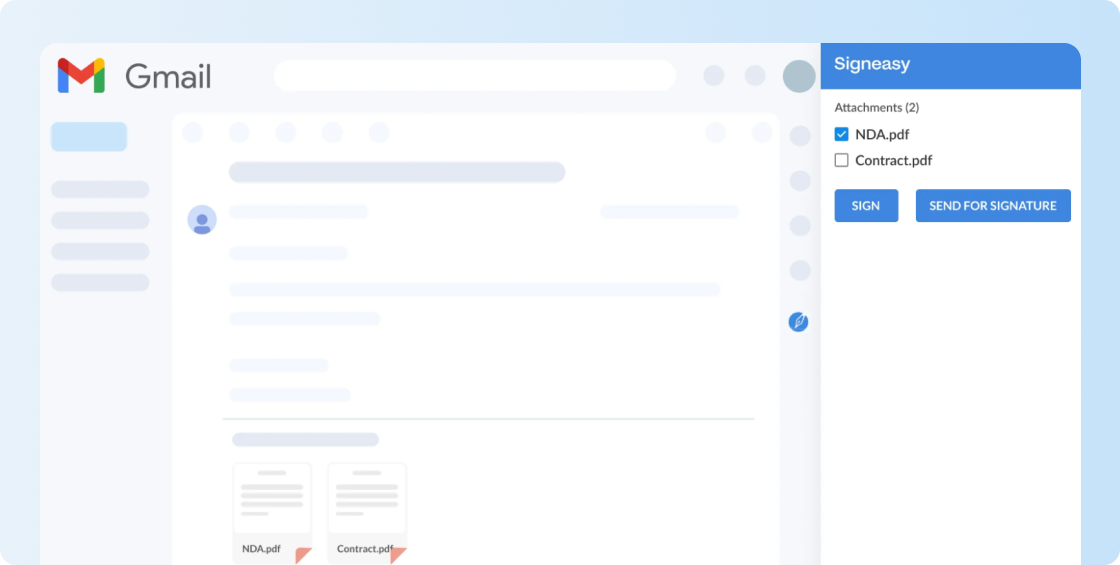
To sign an email document in Gmail using Signeasy, install the Google Workspace add-on, open an email with an attachment, and choose Sign Yourself. Signeasy opens the selected document in a new browser tab for signing and returns you to Gmail when you finish.
Install the Signeasy add-on in Gmail
The Signeasy Gmail integration works through a Google Workspace add-on, so installation is needed before you can sign attachments from the Gmail sidebar.
- Open Gmail on a desktop browser and click the + icon in the right-hand sidebar to open Google Workspace Marketplace.
- Search for Signeasy and select the add-on.
- Click Install and review the requested Google account permissions.
- Select the Google account you want to use and complete the installation.
- Return to Gmail, open the Signeasy sidebar, and sign in or connect your Signeasy account.
Once connected, the add-on can access attachments from the message you're viewing. The wider Signeasy Google Workspace integration also supports document workflows in Google Docs, Sheets, and Drive, which is useful when an attachment begins as a shared Google file.
Sign a Gmail attachment without downloading it
To sign an attachment in Gmail, open the message, select the file through the Signeasy sidebar, choose Sign Yourself, and finish the document in Signeasy.
- Open the email containing the PDF or other supported file.
- Click the Signeasy icon in Gmail's right sidebar. The add-on displays the attachments from the open email.
- Select the document and choose Sign Yourself.
- In the Signeasy tab, draw, type, or upload your signature and complete the required fields.
- Click Finish. After signing, Signeasy returns you to Gmail, where you can download or attach the completed document to the existing thread.
This is how to sign a document in Gmail without repeatedly downloading an attachment, uploading the same file elsewhere, and searching for the correct reply. Signeasy's add-on can also show recent documents and pending requests, so the inbox remains connected to work still awaiting a signature.
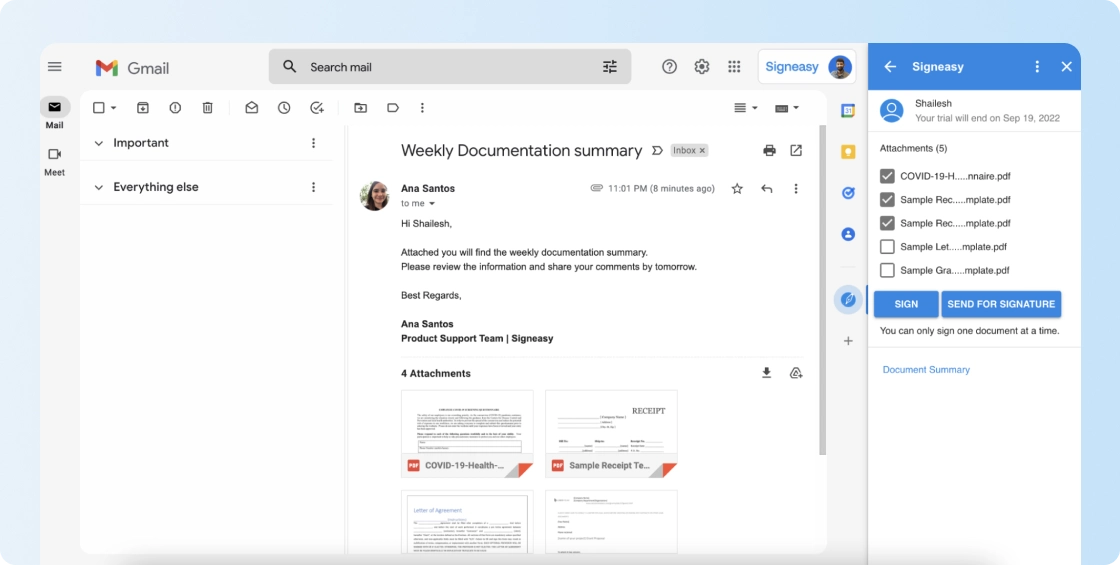
The same add-on can start a signature request when someone else must sign. Select Request Signature instead of Sign Yourself, add the recipients and fields in the Signeasy tab, and send the request. For documents originally created in Google Drive, the Signeasy Google Drive integration provides another route into a signing workflow.
Need Gmail signing to work across a team rather than one inbox? See how Signeasy handles attachments, signature requests, and follow-up actions with a guided demo.
How to sign an email document in Outlook
To sign an email document in Outlook, open the attachment with a signing tool or use the Signeasy for Outlook add-in to sign and send documents from your inbox. The add-in supports Microsoft Outlook workflows on the web and supported desktop apps.
- Install Signeasy for Outlook from Microsoft AppSource or Outlook's add-in catalog.
- Open the email containing the document you need to sign.
- Select the Signeasy icon in the Outlook toolbar or add-ins menu.
- Sign in and choose the document to sign, or select the option to request a signature from another recipient.
- Complete the signature fields in Signeasy, finalize the document, and attach or send the completed version as appropriate.
With the Signeasy Outlook integration, users can also prepare documents for other signers, track progress, and send reminders. Outlook's button placement varies between desktop and web versions, so look for the Signeasy add-in rather than a fixed menu location.

If you're wondering how to electronically sign an email message, rather than an attached contract, Outlook's ordinary email-signature settings only add sender details or a signature block. They do not sign the attached document. An email footer isn't a cryptographic digital signature and doesn't replace signing an attached document. Learning how to sign an email document means identifying which action the sender actually needs.
Do contracts arrive through both Gmail and Outlook? A Signeasy walkthrough can show the two integrations and the steps required to return signed agreements.
How to sign an email document on your phone
To sign an email document on a mobile device, open the attachment in a compatible electronic signature app, complete the required fields, and share the signed file by email. If the message contains a signing link, you can usually open it in your phone browser instead.
How to sign an email document on Android
On Android, open the attachment in Signeasy or another compatible PDF signing app, add your signature, and reply with the completed PDF. If the email contains a signing link, open the request in your phone's browser and complete the sender's authentication steps. For detailed attachment instructions, see how to sign a PDF on Android.
If the file does not appear in the open-with options, download the attachment to your device first and import the saved file. Check that the document was finalized before you select the signed copy for sharing.
Sign an email attachment on iPhone
On iPhone, open a PDF attachment with the Files app or a compatible signing tool, add your signature using the available markup or signing options, and share the signed PDF in your reply. For a document requiring an audit trail or multiple signers, open the emailed request link or use a dedicated eSignature service rather than relying only on a handwritten annotation.
Signeasy's online document signer is another option for a one-off file when you're using a browser. The mobile app is more relevant when you frequently manage saved documents and signature requests from your phone.
How to sign an email document and send it back
To send a signed document back by email, save and check the completed file, then attach it to a reply in the original thread. If the sender used an eSignature request, finish through the signing service instead of attaching a separate copy unless requested.
Save the final signed file
Save the completed PDF with a clear filename, such as Vendor_Agreement_Signed.pdf, and reopen it to check each signature, date, and initial. If you need the file for professional purposes, keep the signed copy and unsigned original in clearly named folders for easy access and later comparison.
If you used Signeasy to complete a formal request, download the completed agreement and any available signing record when needed. Signeasy's certificate of authenticity guide explains how to retrieve the audit trail for a signed document.
Reply in the original email thread
Replying to the original thread keeps the signed document with the sender's instructions and earlier versions. If the document was completed in Signeasy, the PDF sharing workflow shows how to retrieve the finished file. Attach the signed PDF, check its filename, and state briefly that the completed copy is included.
If the email included a secure signature-request link, confirm the signing page shows completion. The sender generally receives the finished document through that service, so there is no need to email a second signed attachment unless requested.
Fix common email-signing problems
Most email-signing problems can be resolved by finding the step that failed: opening the file, placing the signature, or receiving the request. Use the problem to choose the next action:
- Attachment won't open: Confirm the file type, download the attachment, and try a compatible viewer or signing tool. Request a fresh file if the attachment is damaged.
- Signature is missing from the saved PDF: Reopen the exported file, check whether you selected the final save action, and complete the signing session again if necessary.
- Document is password-protected: Ask the sender for authorized access instead of trying to bypass the restriction. See how to sign a secured PDF.
- Signing email hasn't arrived: Check spam or junk folders, confirm the recipient address, and ask the sender to resend or check request status.
- Wrong version was sent: Correct the file before the recipient acts. If an eSignature request has already been issued, use the service's appropriate correction or voiding controls rather than silently changing the signed PDF.
If you are learning how to sign a document sent by email and return the result, remember that a hosted signing link and a completed PDF serve different purposes. Preserving the original, signed version, and audit trail where applicable helps resolve questions about what was signed.
Want to see how completed documents and signing records stay connected? Review the Signeasy workflow for downloading finished files and tracking outstanding requests.
How Signeasy helps teams sign and track documents sent by email
Signeasy connects emailed agreements with recipient assignments, signature requests, completion tracking, and stored signing records. Teams can collect signatures from several people without exchanging separate document copies. Invited recipients complete their assigned fields through an emailed signing link without creating a Signeasy account.
For teams handling several signers, a tracked request is often a better way to manage approvals than collecting edited email attachments. Three parts of the workflow matter:
- Send to the correct recipients. Add each recipient's name and email address, assign the required fields, and set a signing order if approval must happen sequentially.
- Know when action is needed. Track pending signatures, review document status, and send reminders rather than relying on a chain of follow-up emails.
- Retain the completed record. Retrieve the signed agreement and its audit trail so the team has a record of the signing process beyond an attachment with a drawn signature.
These capabilities belong to Signeasy's eSignature software, not a basic PDF editor. The signing record can document timestamps, while available authentication controls should match the agreement's requirements. Signeasy's Trust Seal adds cryptographic tamper evidence for completed documents; a drawn signature alone does not provide that protection. In the United States, the Electronic Signatures in Global and National Commerce Act (ESIGN Act) generally prevents an agreement from being denied legal effect solely because it is electronic. Its legal status still depends on applicable contract requirements.
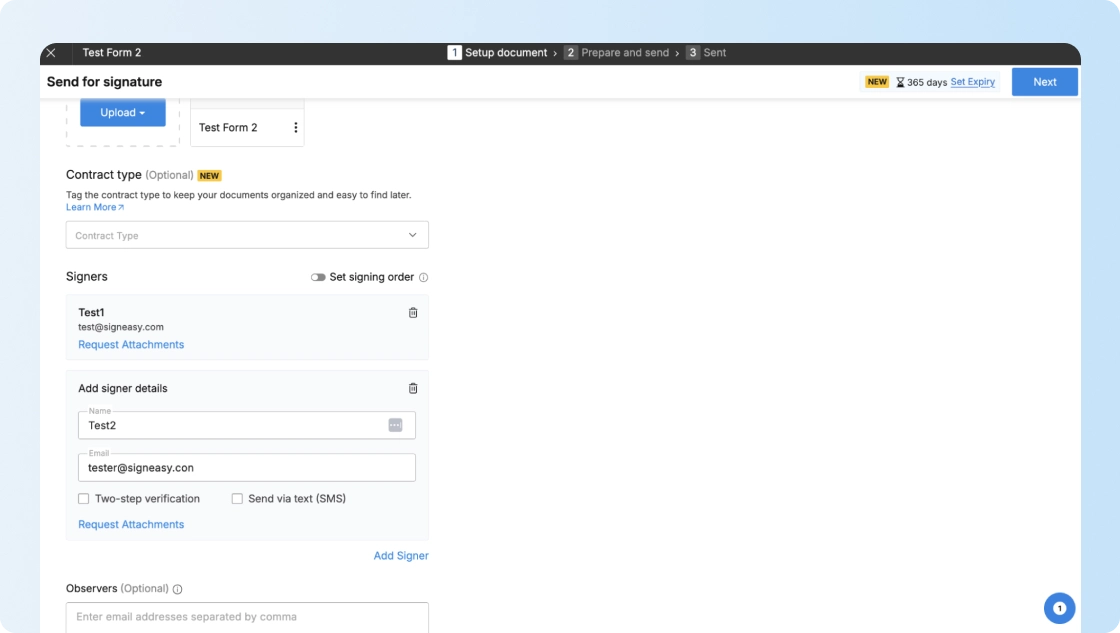
Signeasy's Google Workspace and Outlook integrations support document-signing workflows in their respective email environments. Both integrations are available with the Personal, Business, and Business Pro eSignature plans. Teams with multiple senders should compare per-seat pricing, monthly signature-request allowances, and workflow features on the Signeasy pricing.
For a one-time attachment, signing and replying may be enough. For recurring approvals, understanding how to sign an email document includes what happens afterward: who still needs to sign, where the final copy lives, and which records are available. This avoids reverting to paper processes or searching old email threads when the agreement needs review.
What are the benefits of eSignatures?

Easy eSigning workflows
Upload your document, set up signers and signing order, and send it ahead for signatures within minutes.

Legally compliant
eSign Act & eIDAS compliant. Much safer than traditional documents with signer verification, and audit trails.

Remote-friendly
Easily sign documents from anywhere, from any device, across geographies.

Faster turnaround times
Sign off and close business deals in seconds. eSignatures provide flexibility in time-sensitive scenarios.

Affordable
Physical paperwork can be expensive. Electronic signatures save you valuable money and effort.

Environment Friendly
No paper wasted. No trees butchered. Ecosystems saved.
Frequently asked questions
How do you sign an email document?
Open the email and check whether the sender included a signing link or an attachment. For a signing link, review the agreement and finish the requested fields. For an attached file, use a compatible tool to add your signature, save the signed copy, and reply with the document.
How can I sign an email document for free?
You can sign an email document for free using a built-in PDF markup tool or a free online signer such as Signeasy's PDF signing tool. If someone sent an eSignature request, you can usually sign as an invited recipient without paying for a sender account. Some services reserve advanced sender features for a premium plan, but that does not mean invited signers need one.
How to sign a document in Gmail?
Install the Signeasy Google Workspace add-on, open the email with the attachment, and select Sign Yourself in the sidebar. Complete the document in the Signeasy tab, select Finish, and return to Gmail to attach or download the signed copy.
How to electronically sign an email?
To electronically sign an email attachment, open the attached document in a signing tool and add your signature. If you mean the email message itself, rather than an attached contract, an ordinary email footer is not the same as a document eSignature. You can save or import the message as a document and sign that file if the recipient requires a signed record.
How to sign a document in an email without downloading it?
Use an email signing integration such as Signeasy for Gmail or Outlook. Open the message, choose the attached file through the add-on, and follow the signing steps. Signeasy opens a browser tab for completing the document and then returns you to the inbox.
How do you sign a document on an email if it's a Word file?
Download the Word document and add a signature with a compatible tool, or upload the DOC/DOCX file to Signeasy and download the completed signed PDF. Return the format the sender requested, since a signed PDF and an editable Word file are not interchangeable.
Can I sign a document received by email on my phone?
Yes. Open the emailed signature link in your browser, or open the attachment in a compatible signing app on Android or iPhone. Complete the fields, save the document if required, and share the signed version through the original email thread.
How to sign a document sent by email safely?
Confirm the sender and the expected agreement before opening a link or attachment. Check the destination of a signing link, complete all required fields in the signing service, and keep the completed copy or audit record. If a request seems unexpected, verify the details through a known contact channel.
Do I need a Signeasy account to sign an emailed request?
No. An invited recipient can sign through Signeasy as a guest without creating a free signing account. The signer may still need to verify their email address or complete authentication configured for the request.


