


Contract management without a legal team: A practical guide
The nature of contracts a business signs day-to-day varies greatly. For instance, a supplier agreement carries very different risks from an employment contract, which looks nothing like a SaaS subscription or an office lease.
This variety is precisely what creates problems when there's no lawyer in the room.
Because each contract has its own obligations, renewal windows, and hidden clauses, there’s a risk of missing critical deadlines or accepting unfavorable liability terms.
But most contracts, such as routine NDAs or standard vendor agreements, don’t even need legal oversight. This makes it impractical for most organizations to have expensive, time-consuming legal teams.
In this guide, we discuss:
- What simple contract management is and why it matters
- How to build a central repository for your contracts
- How to create reusable templates
- How to track deadlines effectively
- When to bring in outside counsel
What does contract management without a legal team look like?
When there is no in-house legal team, contract management responsibilities tend to be scattered among whoever is closest to the work. Each department may have its own set of contracts and approval steps. The result is fragmentation, leading to different processes and standards across departments.
Contract management without legal support can also be risky because teams may use outdated templates or miss important clauses, such as renewal deadlines. They may even sign off on agreements without fully understanding what they have committed to.
But this does not mean every contract in your organization needs legal review. For most everyday contracts, such as signing a new vendor or a standard NDA, departments can manage their own contracts without legal help.
The key is to manage these contracts well, with
- clear ownership, with information about those who sign
- organized storage and a reliable way to track what has been signed
- Understanding what is coming up for renewal.
This is something a contract management software like Signeasy makes possible. Signeasy gives teams without legal support a simple, centralized way to create, send, sign, and track contracts, so no contract detail is missed.
Our AI assistant lets you extract key terms and flags critical clauses in easy language. Further, automated reminders can alert you about renewals before they sneak up.
What’s better is that every agreement lives in a searchable, audit-ready repository. Signeasy integrates natively with Google Workspace, Microsoft 365, HubSpot, and more; it fits into how your team already works, not the other way around.
Why are more businesses managing contracts outside the legal department
Waiting days for legal teams to review routine agreements slows down deals. At the same time, paying high attorney fees for template-based contracts also isn’t practical for many companies.
Moreover, as businesses grow, contract volume increases faster than legal teams can keep up.
So many teams now handle routine contracts themselves. Here are more reasons why it’s a more feasible alternative.
1. Hiring in-house legal teams isn't realistic for most growing businesses
Building an in-house legal team simply doesn't make financial sense for many growing businesses. For perspective, a typical corporate lawyer may cost anywhere from $250 - $1000 per hour. Moreover, comprehensive legal coverage requires multiple specialists across different areas of law.
Another challenge is workload variability. A company might need intensive legal support during a fundraising round or major partnership deal, but have minimal needs for months afterward.
The problem with in-house counsel is that you're always paying full-time salaries regardless of demand, which leads to overpaying or stretching a small team beyond its capabilities.

Source
2. Business teams can't always afford to wait on legal for routine agreements
Legal teams slowing down business teams is nothing new:

Source
Legal review timelines can often clash with operational deadlines. Consider a sales team that needs a contract signed before quarter-end. A traditional legal review process can take multiple days or even weeks, which makes involving them a difficult choice.
The bottleneck also forces workarounds that undermine legal protection entirely. When legal review becomes a bottleneck, teams begin making unilateral decisions about which agreements warrant scrutiny or circumvent the review process entirely. This can expose the organization to liabilities that could have been avoided.
3. Most routine contracts don't require strict legal oversight
Contracting teams spend over 40% of their time and budget on low-complexity work. However, these agreements pose no legal risk. Standard vendor agreements, renewal forms, and template-based contracts follow known patterns that business teams can handle independently.
Organizations recognize this imbalance and route routine contracts through operations or procurement instead. Doing so reserves legal resources for complex negotiations and high-value agreements.
4. Self-serve contracting has become the norm
Sales, procurement, and HR teams can now generate routine agreements without involving legal at most scaling organizations. These workflows use pre-approved templates and clauses vetted by legal teams.
You can select the appropriate template, fill in the basic details such as names and dates,s and route the contract for signature.
5. Many businesses use consultants or contractors instead of lawyers and legal teams
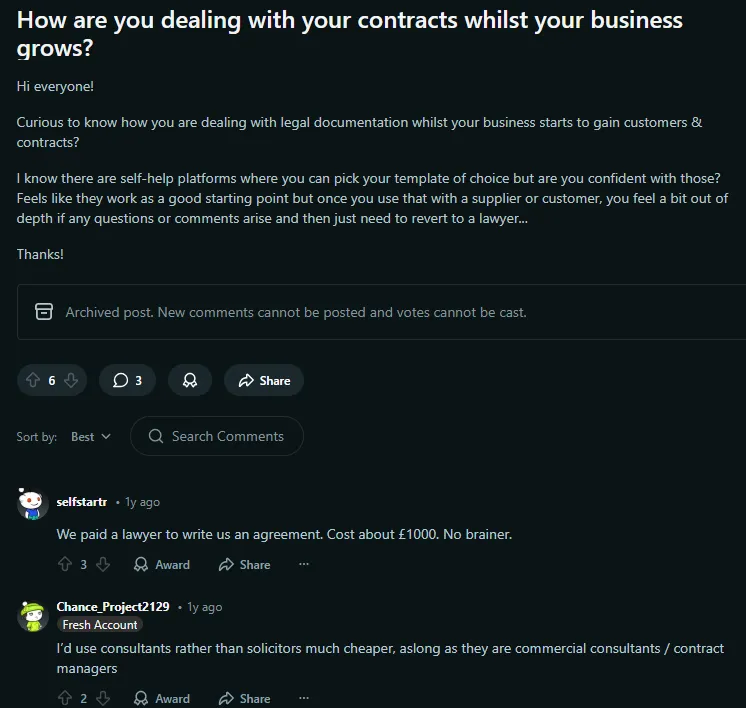
Organizations often turn to alternative legal service providers (ALSPs) or contractors for contract handling rather than relying solely on lawyers or legal teams. Several corporate legal departments use ALSPs to handle tasks like contract review, drafting, and management.
Source
These providers, often experienced lawyers who work independently or through specialized firms, deliver legal services at lower rates than traditional law firms. Companies use them for high-volume, routine contracts or during peak periods when permanent staff cannot keep pace with demand.
However, contract management without legal oversight isn’t always a good idea and can present risks, as you’ll see now.
Common challenges of managing contracts without legal expertise
While managing contracts without legal advice is easier, it isn't without its issues. Most teams face trouble because contract risks are easy to miss if you don't know what to look for.
These are some common challenges businesses may face when managing contracts without legal expertise:
- Accepting one-sided liability terms: Contracts often include broad indemnification clauses that favor clients. These compel you to pay for legal claims you didn't cause. Lawyers, however, can identify these clauses and set boundaries. Without legal review, you might agree to cover unlimited losses that could sink your business.
- Creating unenforceable contracts: Generic form contracts may not be enforceable in your state or country. For instance, missing basic elements can make your entire contract worthless in court. When problems arise, you find out the agreement you trusted has no legal power.
- Missing protection when things go wrong: Lawyers often add clauses that limit your liability and let you exit bad deals. In the lack of such safeguards, you may face expensive lawsuits and no way out of failing partnerships.
- Breaking rules you didn't know existed: Each state and industry has different legal requirements for contracts. For instance, a noncompete that works in Texas might be invalid in California. If you ignore these rules, you might face fines or make important contract terms useless when you need them.
- Accepting bad terms without realizing it: Lawyers know which contract terms heavily favor the other side and which parts you can negotiate. Without this knowledge, you accept unfavorable payment schedules or long liability periods, and even restrictions that could have been removed or reduced.
Now, let’s look at some non-negotiables for managing contracts without a legal team.
Best practices for contract management without a legal team
Not having a legal team means building guardrails that would otherwise be covered by legal expertise. In fact, businesses lose an average of 8.6% of contract value due to missed obligations and poor contract management practices. These practices will not replace an attorney, but they will give you a process solid enough to catch most problems before they become costly.
1. Build a library of standardized templates for your most common contracts
Identify at least five agreements your business uses most frequently, like client contracts, vendor agreements, NDAs, and offer letters. You may have each one reviewed by an attorney once, and then use that vetted version as your baseline going forward.
This way, each new agreement rests on a solid foundation rather than something pulled from a random Google search. Revisit your templates annually or whenever your business model or regulatory environment shifts.
2. Define a clear internal approval workflow before contracts go out
Contracts may be executed with missing clauses or without internal sign-off when the legal team has not established clear rules. An approval workflow can address this issue.
Consider three key questions
- Who drafts the contract?
- Who should review it?
- Who has final authority to approve it?
Thresholds based on contract value and complexity should also be defined. A low-value vendor renewal might be handled by operations, while a high-value partnership agreement may require senior review or outside counsel.
3. Automate reminders for renewals, deadlines, and obligations
A signed contract starts your legal obligations, and those responsibilities continue long after signing. Payment due dates, renewal deadlines and cancellation notices all require action on specific days. This is where automated reminders become essential. They help people catch these important dates before they pass.
To stay ahead, set alerts at 90, 60, and 30 days before every renewal date. This kind of visibility matters because missed renewals are common. In one survey of in-house lawyers, 56% missed an automatic contract renewal and nearly half had missed one in the previous year.
4. Maintain a clean audit trail on every agreement
An audit trail is a timestamped record of everything that happened with a contract, including who drafted it, the changes made, and when each party signed. Most businesses only think about this when they find themselves in a dispute or need to show what was actually agreed upon.
Moreover, a clean audit trail supports compliance and due diligence during funding rounds or acquisitions. Organized records also keep your business looking professional.
5. Use contract management software
At low contract volumes, a spreadsheet and a shared drive might hold things together well enough. As the business grows, manually tracking versions, chasing signatures, and monitoring deadlines can become a real drain on whoever owns the process.
Signeasy handles the core contract workflow without the overhead of a full-scale CLM platform.
It lets you draft, send, eSign, track, and store agreements in one place, with a searchable repository that keeps every document accessible when you need it.
Signeasy also automates reminders to flag upcoming contract renewals and maintains a complete audit trail for every contract, without any manual input.
6. Know when to bring in a lawyer
Finally, managing contracts internally does not mean managing every contract internally. Some agreements will actually need attorney involvement, such as partnership deals with equity implications or situations where the financial exposure is significant relative to your business size.
You don’t have to avoid lawyers entirely, but understand when you actually need one.
How contract management software eliminates routine legal decisions
While contract management software does not replicate legal judgment, it can handle a significant portion of the operational work that a legal team would otherwise own. It helps you manage your everyday contracts more efficiently and securely.
Here is where it makes the biggest difference
- Centralized storage: Every signed agreement lives in one searchable place, so you are not hunting through email threads or shared drives when you need to reference a specific clause or prove what was agreed upon.
- Automated deadline tracking: Contract management software automatically tracks renewal dates and payment milestones well in advance. It removes the reliance on manual calendar entries or memory.
- Audit trails on every agreement: The software logs who drafted the contract, what changes were made, when it was sent, and when each party signed. As a result, you have an untampered audit trail.
- Standardized workflows: Approval processes can be built into the software, so contracts move through the right hands before they go out the door.
Signeasy is a contract management software that comes with all of these features. Let’s look at how it makes managing contracts without legal counsel a much more organized and secure process.
How Signeasy empowers teams to manage contracts without legal overhead
Most contract problems are process problems. Signeasy is built around that reality; it gives non-legal teams the structure they need to handle agreements confidently from start to finish.
Signeasy is rated an impressive 4.7 out of 5 on G2 reviews, backed by over 700 independent reviewers, which speaks for its abilities.

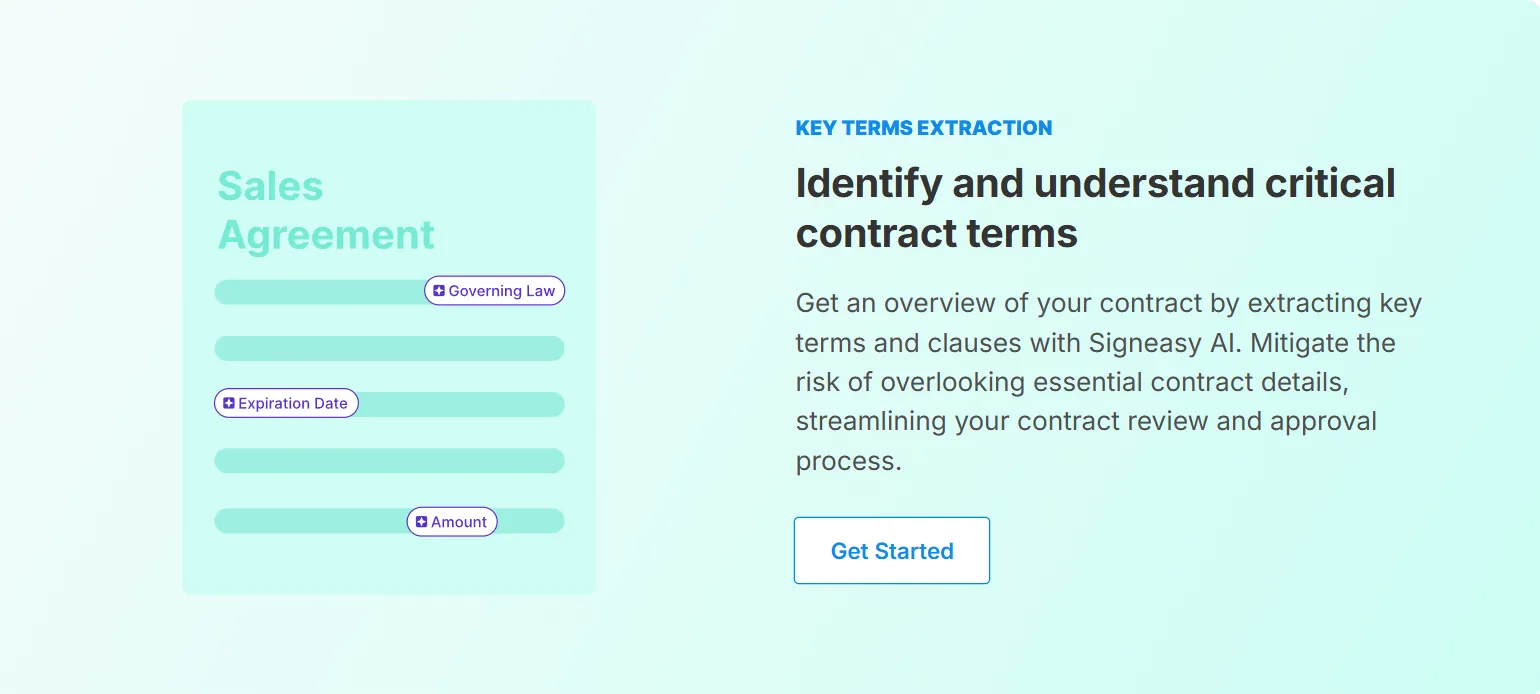
- AI contract summaries and key term extraction: Understand complex legal language without a lawyer. Get instant overviews of lengthy agreements and automatically spot critical clauses you might miss (like liability terms or auto-renewal triggers) in easy language to find answers buried in legal jargon.
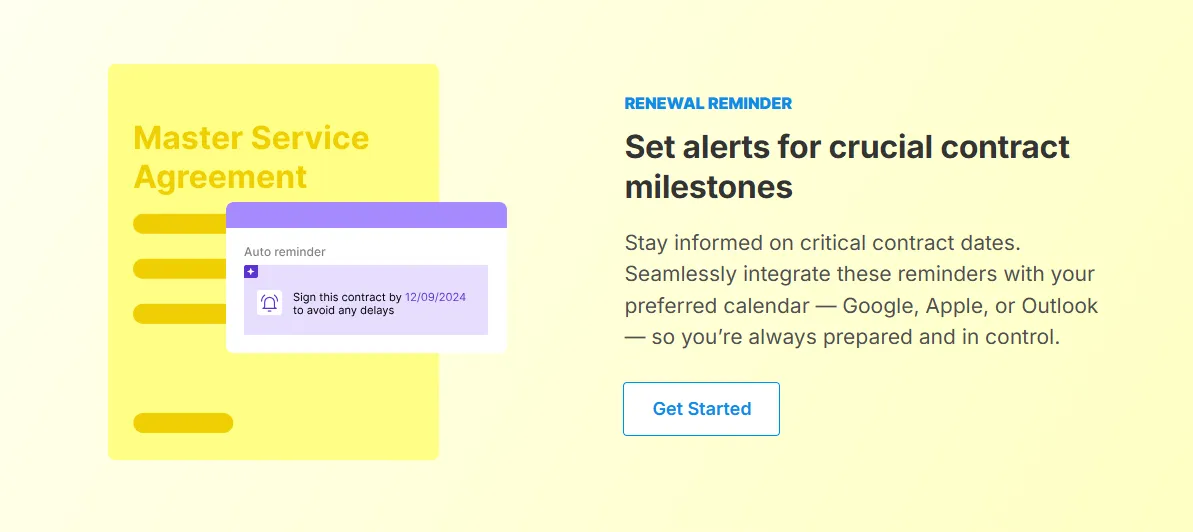
- Automated renewal reminders with calendar integration: Never miss important contract deadlines that could cost you money or trap you in unfavorable terms. The system automatically finds renewal dates and payment deadlines, then alerts you with enough time to review or renegotiate.
- Reusable templates you create: Build your own standard contracts once, then reuse them to ensure consistency. Save agreements that worked well in the past as templates so you include the same protective clauses every time and reduce the risk of forgetting critical provisions.

- Complete audit trails and real-time tracking. Build legal proof for disputes without attorney oversight. Detailed logs showing who viewed, signed, or declined documents provide the evidence courts require when someone claims they never received or signed a contract.

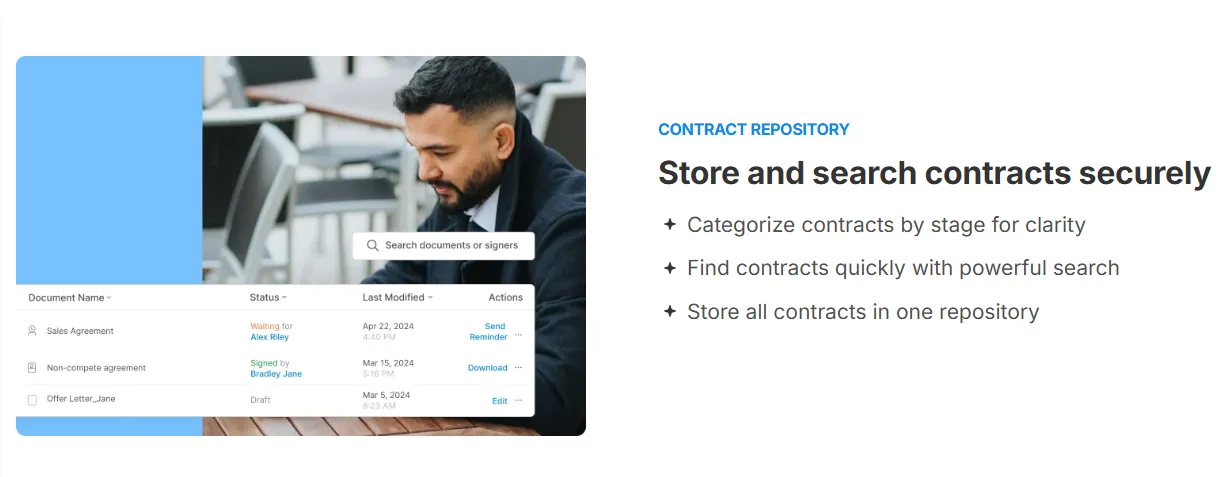
- Centralized contract repository with powerful search. Find critical contract terms instantly in cases of disputes or questions. Instead of digging through emails or filing cabinets when a vendor claims different payment terms, search your repository and pull the exact clause in seconds.
- Sequential signing workflows with role assignments. Enforce approval processes that prevent unauthorized contracts, even without legal review. Route agreements through managers or senior leadership automatically, ensuring someone with authority checks terms before you're legally bound.

How Mercure Hotel Dubai manages 10,000 contracts a month without a legal bottleneck
Mercure Hotel Suites and Apartments in Dubai handles a large number of agreements across its sales, procurement, and finance teams. Each contract typically requires around five signers, sometimes even more, which used to make coordination slow and difficult.
After switching to Signeasy, the hotel digitized its contract workflow. Teams can now send agreements, track signing progress in real time, and follow up automatically when approvals stall.
As a result, contract turnaround times dropped from weeks to days, and the team eliminated about 10,000 printouts per month while maintaining consistent, policy-aligned templates across departments.

Manage contracts easily without a legal team
Most contract issues arise because there’s no process, leading to renewals being missed or agreements sitting unsigned in an inbox.
The fix usually isn’t hiring a legal team; you have to put the right structure in place
That starts with a few simple things:
- consistent templates so every agreement starts from the same foundation
- a clear approval workflow so the right people review contracts before they go out
- a tool that handles sending, signing, tracking, and storage in one place
Once those pieces are in place, teams can send agreements more quickly and involve legal action only when something truly complex arises.
That’s what Signeasy is designed for.
With Signeasy, your team can create agreements from reusable templates, send them for signature in minutes, and track their status.
Signeasy also keeps pricing simple and transparent. Plans start at $15 per user per month, with a free plan for small teams. Unlike many contract tools that charge based on document volume, Signeasy lets you send and sign unlimited contracts. You pay exactly what you see, without hidden usage fees.
Paid plans also include AI-powered contract review, team management controls, and integrations with tools like HubSpot and SharePoint. All of this combined makes it very easy and cost-effective to manage contracts across your existing workflow.
It’s trusted by 48,000+ businesses in over 100 countries and holds a 4.7/5 rating on G2 and Capterra.
Start your free 14-day trial and see how much easier contract management can be with Signeasy.