



Contract compliance has shifted from administrative work to a core business priority. A signed agreement is just the starting point. Organizations face weeks, months, or years of obligations that directly affect business performance and outcomes.
Contract compliance tracking monitors obligations, deadlines, and performance throughout a contract's lifecycle. It reduces legal risk and prevents revenue loss.
Manual methods work for small volumes but break down quickly. Compared to automated platforms like Signeasy, they lack the scalability and real-time oversight businesses need.
In this guide, you'll learn:
- What contract compliance tracking is and why it matters
- The cost of non-compliance (legal, financial, operational)
- How to maintain contract compliance: (Step-by-step)
- Common challenges and practical solutions
- Best practices for scalable compliance management
- How Signeasy automates and simplifies compliance
What is contract compliance tracking?
Contract compliance tracking is the ongoing process of monitoring whether every party involved in a contract is meeting its documented obligations at each stage of the agreement. This includes tracking deadlines, service levels, payment terms, renewal dates, approval requirements, and performance commitments from the moment a contract is executed until it expires or is renewed.
It requires ongoing oversight because contractual obligations unfold over time. Deliverables are completed in phases, payments follow schedules, and renewal or termination windows are often time-bound.
Regular check-ins ensure obligations are met as planned, risks are identified early, and stakeholders remain accountable throughout the contract’s lifecycle.
Key aspects include:
- Monitoring performance: Tracking whether milestones, delivery dates, payments, and obligations are met.
- Reporting: Generating visibility into compliance levels via dashboards and reports.
- Auditing: Keeping detailed records to show what happened, when, and by whom.
- Risk mitigation: Identifying non-compliance or variations early so corrective actions can be taken.
- Documentation: Maintaining a secure repository for contract versions, signed copies, and any attachments.
The compliance lifecycle
Contract compliance tracking and reporting follow a defined lifecycle that progresses alongside the contract itself. Each phase focuses on a specific set of activities that help teams capture obligations early and monitor execution in real time.
These activities also surface actionable insights for stakeholders, support timely resolution of deviations, and enable informed decisions at renewal.
- Setup phase: Document all obligations, assign owners, and establish tracking mechanisms
- Active monitoring: Continuously check performance against contractual requirements
- Reporting: Generate regular compliance reports for stakeholders
- Issue resolution: Address non-compliance quickly before it escalates
- Review and renewal: Assess performance before renewing or renegotiating terms
A structured compliance lifecycle turns contracts into actively managed assets, with clear ownership, timely visibility, and consistent accountability across every stage of the agreement.
Why maintaining contract compliance matters
Maintaining contract compliance ensures that agreements deliver their intended legal, financial, and operational value over time. Contracts define responsibilities, timelines, and outcomes.
Consistent compliance tracking turns these commitments into measurable, enforceable actions that support business stability and growth.
1. Legal confidence and risk control
Contract compliance tracking strengthens the legal foundation of every agreement by ensuring obligations, approvals, and amendments are followed and recorded as defined. Clear visibility into compliance activity supports enforceability, reinforces governance standards, and enables teams to address deviations promptly.
This creates stronger contracts that stand up to scrutiny and support long-term business relationships.
2. Financial accuracy and revenue protection
Compliance tracking aligns payments, deliverables, and renewal terms with contractual timelines. This ensures revenue is recognized as planned, penalties are avoided, and budgets remain predictable.
By monitoring financial obligations closely, teams maintain tighter control over cash flow and prevent value leakage across the contract lifecycle.
3. Operational clarity and execution speed
Contracts often involve multiple stakeholders across legal, finance, sales, and operations. Compliance tracking assigns ownership, tracks milestones, and keeps timelines visible, helping teams coordinate work efficiently.
Clear accountability reduces back-and-forth communication and keeps contract execution moving smoothly from start to finish.
4. Performance insight and strategic decision-making
Compliance data reveals how contracts perform in real-world conditions. Tracking fulfillment patterns, timelines, and outcomes helps teams identify high-performing agreements, recurring bottlenecks, and improvement opportunities.
These insights support better contract structuring, informed renegotiations, and stronger vendor or customer strategies.
5. Trust, accountability, and transparency
Shared visibility into contract status builds confidence across internal teams and external partners. When responsibilities, deadlines, and outcomes are clearly tracked, collaboration becomes more predictable and reliable.
Strong accountability reinforces trust and strengthens long-term working relationships.
6. Audit readiness and governance assurance
Consistent compliance tracking creates a complete, time-stamped record of approvals, signatures, changes, and actions taken throughout the contract lifecycle. This documentation supports smooth audits and simplifies compliance reviews while demonstrating adherence to internal and regulatory standards.
Audit readiness becomes an outcome of everyday contract management.
How to maintain contract compliance: Step-by-step
Building an effective contract compliance tracking system requires clear structure, defined ownership, and consistent oversight.
The following steps outline a practical process for maintaining visibility, accountability, and control across the entire contract lifecycle.
Step 1: Centralize contracts in one repository
Contract compliance begins with full visibility into every agreement. Centralizing contracts creates a single source of truth where teams can access, review, and manage documents throughout their lifecycle.
A secure, searchable repository ensures contracts remain accessible and actionable at all times.
What this looks like:
- Store all contracts in a central repository — not scattered across email inboxes, file cabinets, or individual computers
- Use cloud-based storage that your entire team can access
- Organize contracts by type, department, vendor, or date for easy retrieval
- Ensure version control so everyone works from the latest agreement
Before Signeasy, SOHAR Port and Freezone relied on paper-based, in-person contract workflows, which slowed approvals and increased risk of missed deadlines. After implementing Signeasy, 62% of their documents are completed within 24 hours, improving visibility and centralizing contract processing across teams.
Pro tip: Modern contract management platforms automatically organize and index your contracts, making them searchable by any term, date, or party involved.
Step 2: Document all obligations clearly
Once contracts are centralized, the next step is translating contract language into actionable requirements. Extracting and documenting obligations ensures that responsibilities, timelines, and conditions are visible and trackable.
Create a compliance checklist that includes:
- Who is responsible for what (internal and external parties)
- Specific deadlines and milestones
- Payment terms and schedules
- Performance standards and metrics
- Renewal and termination dates with notice periods
- Regulatory requirements that must be met
This checklist serves as the operational reference for each contract. It allows any stakeholder to understand requirements quickly and execute responsibilities with confidence.
Step 3: Assign ownership and accountability
Clear ownership drives consistent execution. Assigning responsibility for each obligation ensures monitoring, follow-ups, and issue resolution happen on schedule.
Best practices:
- Assign a primary compliance owner for each contract
- Clearly define roles: Who monitors? Who approves? Who escalates issues?
- Document contact information for all internal stakeholders
- Include backup owners in case the primary contact is unavailable
Defined ownership ensures obligations progress as planned and accountability remains clear across teams.
Step 4: Set up automated reminders and alerts
Automated reminders support timely execution by aligning people with deadlines and required actions. Alerts ensure obligations, renewals, and reviews receive attention at the right moment.
What to automate:
- Payment due dates and invoice schedules
- Deliverable deadlines and milestone reviews
- Renewal dates (with 60, 30, and 7-day advance notices)
- Compliance check-ins and audit schedules
- Expiring terms or clauses that require action
Reminder schedule template:
Contract compliance tracking software can send automatic reminders to the right people at the right time, so nothing gets missed.
For example, Calastone automated its contract notifications using Signeasy, helping teams stay on top of deadlines, reduce missed obligations, and improve overall compliance.

Step 5: Conduct regular compliance audits
Routine audits provide structured checkpoints to validate execution against contract terms. These reviews help teams confirm progress, identify deviations, and document corrective actions.
Schedule these audit activities:
- Monthly spot-checks on high-value or high-risk contracts
- Quarterly comprehensive reviews of all active contracts
- Annual performance assessments against contract terms
- Ad-hoc reviews when contracts are modified or issues arise
Documenting findings and corrective actions creates a reliable audit trail that supports governance and regulatory reviews. For teams working under federal agreements, this also means meeting the documentation standards outlined under government contract compliance, where gaps can trigger penalties or contract termination.
Step 6: Monitor performance with metrics
Performance metrics translate compliance activity into measurable outcomes. Tracking these indicators provides visibility into execution quality and process effectiveness.
Important metrics to monitor:
- On-time delivery rate: Percentage of obligations met by the deadline
- Compliance rate: Percentage of contracts fully compliant vs. those with issues
- Average resolution time: Time taken to resolve compliance issues
- Cost of non-compliance: Financial impact tied to missed obligations or penalties
- Renewal accuracy: Percentage of contracts reviewed and renewed on schedule
These metrics highlight execution trends and guide continuous improvement efforts.
Step 7: Implement contract compliance reporting
Compliance reporting turns tracking data into shared insight. Regular reports keep stakeholders aligned and support informed decision-making.
Create reports that show:
- Current compliance status across all contracts
- Upcoming deadlines and action items
- Non-compliance incidents and their resolution
- Trends and patterns that need attention
Share these reports with legal, procurement, finance, and executive teams to support oversight and strategic planning.
Signeasy's contract reporting feature builds these views automatically, from real-time contract status to member-level activity.
Step 8: Use technology to scale your efforts
As contract volumes increase, technology enables consistent execution at scale. Contract compliance tracking software supports growing teams by standardizing processes and centralizing oversight.
Look for platforms that offer:
- Automated workflow management
- AI-powered contract analysis and risk detection
- Real-time alerts and notifications
- Centralized document storage with advanced search
- Customizable compliance dashboards and reporting
- Integration with your existing business tools
Technology streamlines routine compliance activities and allows teams to focus on higher-value strategic work.
Challenges in maintaining compliance and how to overcome them
Contract compliance tracking presents operational and organizational challenges as contract volumes grow and stakeholders multiply. Below are common compliance challenges and how Signeasy supports teams in addressing them.
1. Lack of visibility
A common challenge in contract compliance is limited visibility into where contracts are stored and what stage they are in. Many organizations manage agreements across emails, shared drives, spreadsheets, and individual systems, which makes it difficult to maintain a consistent, organization-wide view.
This fragmentation leads to missed obligations, outdated versions circulating internally, and teams working with incomplete or inconsistent information. Clear visibility is essential for tracking performance, managing risk, and responding to issues in a timely manner.
Centralizing contracts in a secure repository addresses this challenge by consolidating documents, standardizing labeling, and maintaining version control.
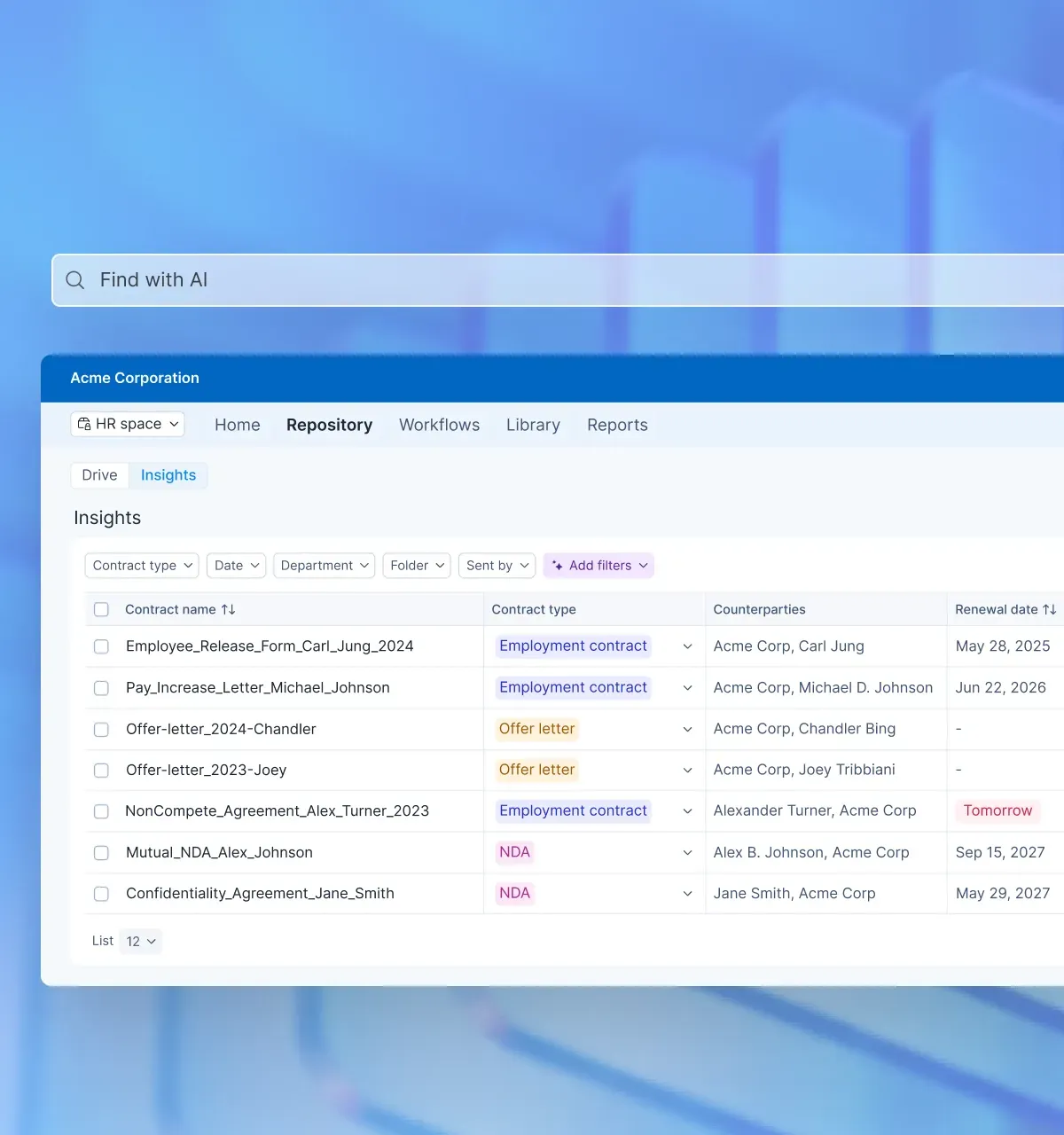
Signeasy supports this approach by providing centralized access to signed and in-progress contracts, along with search and categorization capabilities that help teams locate documents quickly and track their status.
2. Missing critical deadlines
Contract compliance depends on timely action across renewals, payments, and deliverables. When key dates remain buried in contract text or tracked manually, deadlines are easy to overlook, leading to unintended renewals, delayed payments, or unmet obligations.
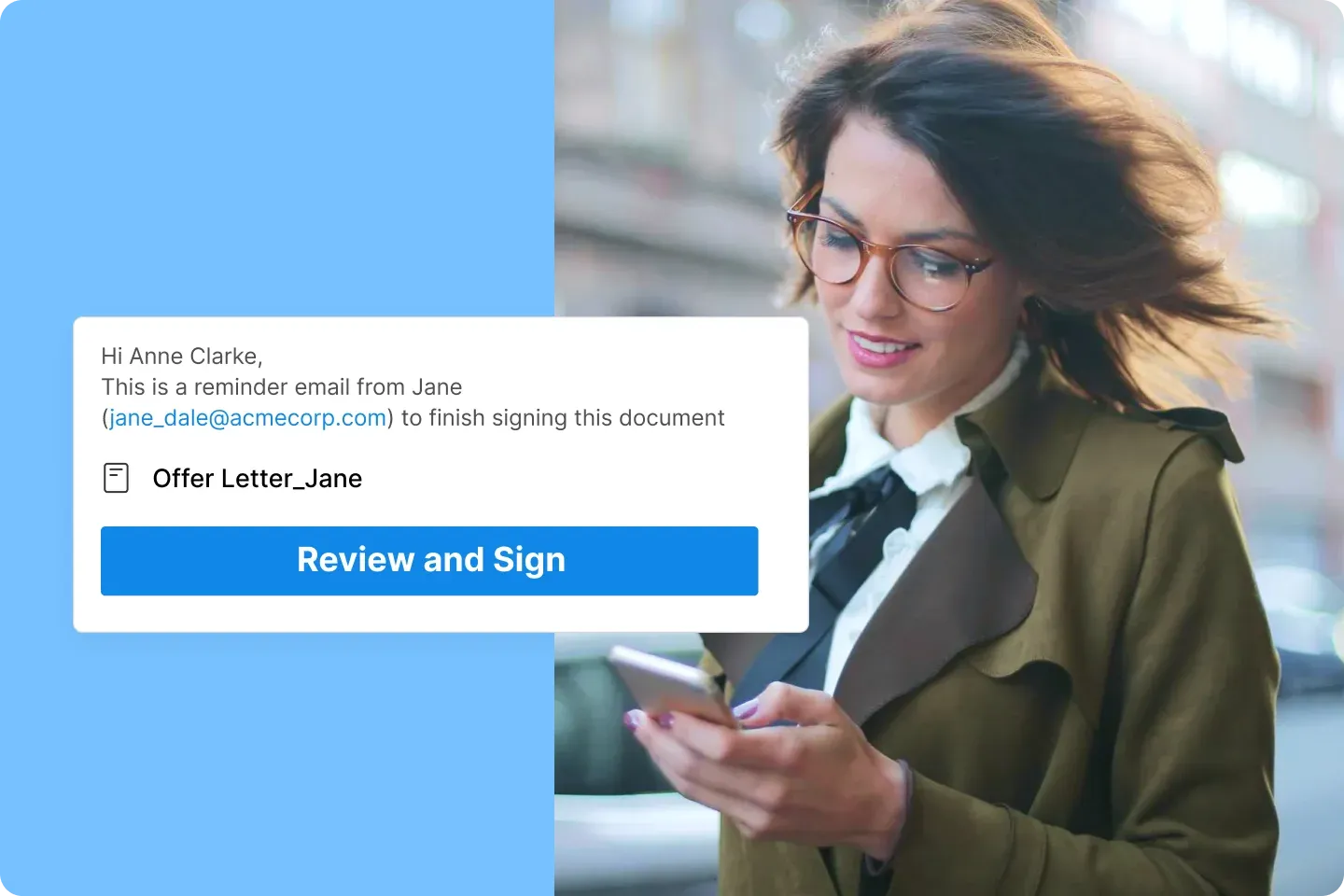
Signeasy addresses this challenge through automated reminders and notifications. Teams receive alerts ahead of renewal dates and key milestones, along with escalation workflows when actions remain pending. This ensures contract events stay visible and actionable throughout the lifecycle.
3. Working from outdated or wrong contract versions
Compliance issues frequently arise when teams reference outdated contract versions that contain expired clauses or superseded terms. Multiple copies shared across emails and drives increase the risk of decisions based on incorrect information.
Signeasy maintains centralized version control so teams always access the latest approved agreement. Earlier versions remain archived and clearly identified, providing historical context without creating ambiguity around enforceable terms.
4. Security and unauthorized access
Contracts contain sensitive information such as pricing, financial terms, and personal or confidential data. Secure access controls play a critical role in compliance, particularly when documents are shared across departments or external parties.
According to IBM’s 2024 Cost of a Data Breach Report, the global average cost of a data breach reached approximately USD 4.88 million, underscoring the importance of strong document security practices.
Signeasy supports secure contract management through role-based access control (RBAC), single sign-on (SSO), and two-factor authentication. These controls ensure only authorized users can view, sign, or modify documents, strengthening compliance and data protection efforts.
Learn more about Signeasy’s security standards here.
5. Audit gaps
Audits require clear evidence of who signed, approved, viewed, or modified a contract and when those actions occurred. Without structured audit trails, teams often spend significant time assembling documentation from emails and disparate systems.
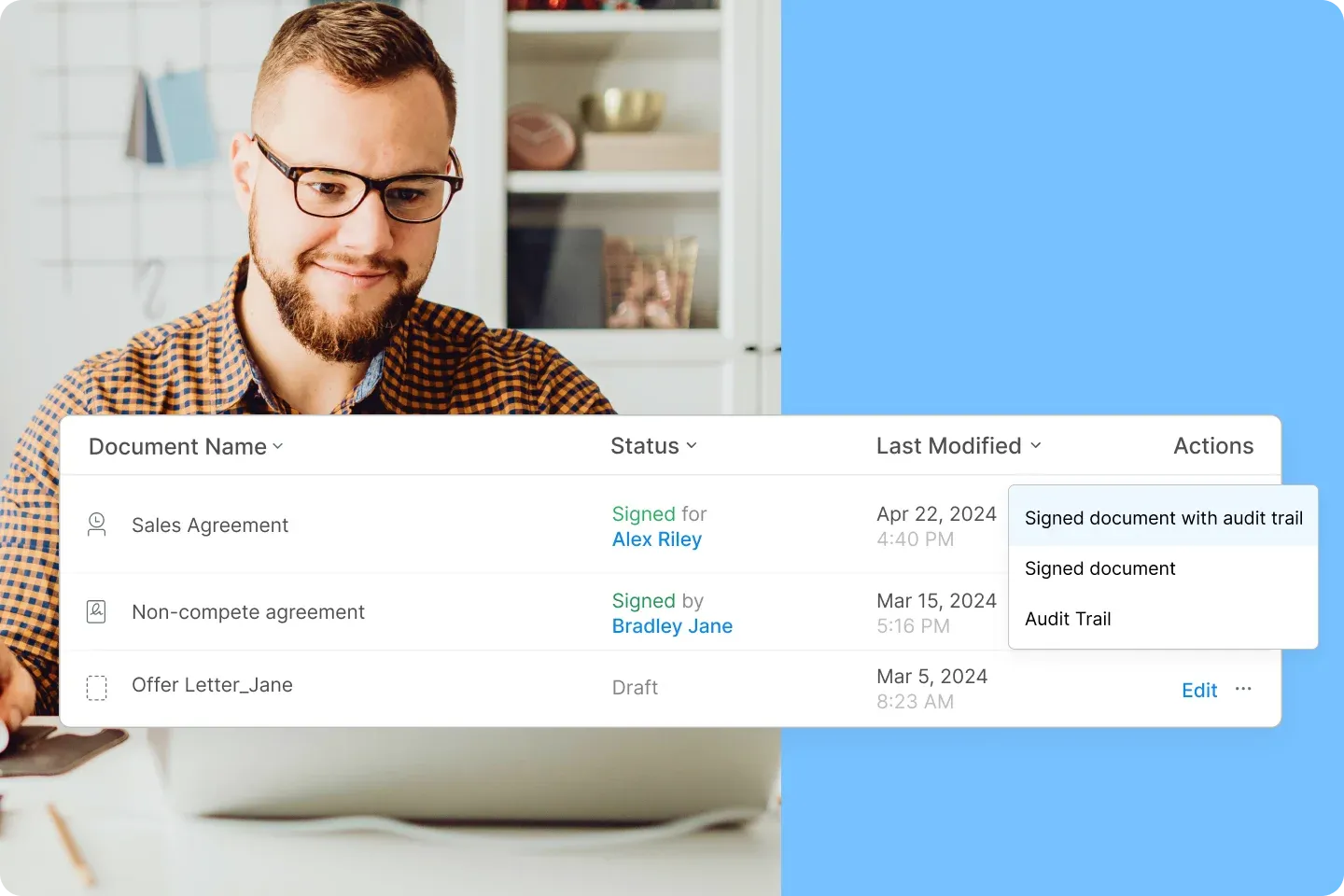
Signeasy automatically records detailed audit trails for every contract action, including signature timestamps and document activity. These tamper-resistant records provide auditors with clear, defensible evidence and support accountability across the contract lifecycle.
6. Risk of document tampering
Unauthorized edits to signed contracts create serious legal and compliance risks. Traditional file-sharing methods allow documents to be copied or altered without clear detection, increasing exposure to disputes or fraud.
Signeasy applies tamper-evident protections through its Trust Seal, which breaks if any changes occur after signing. This ensures document authenticity and helps organizations maintain confidence in the integrity of executed agreements.
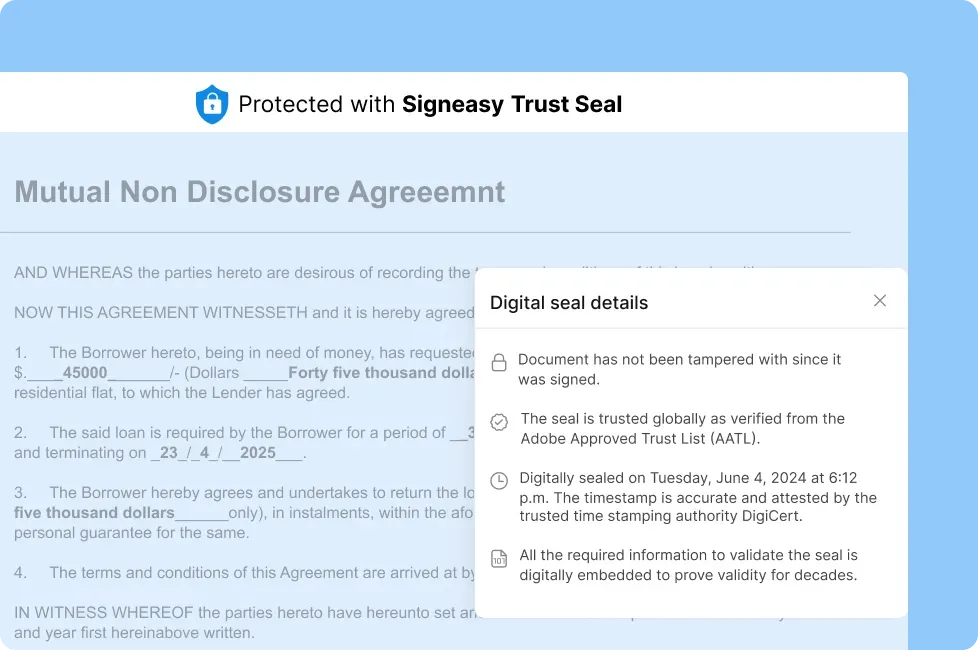
Learn about Signeasy's Trust Seal
Tips and best practices for strong contract compliance
Once the foundations of contract compliance are in place, the focus shifts from setup to consistency and improvement. These best practices help teams sustain compliance at scale and adapt as contract volumes, regulations, and business needs evolve.
1. Establish clear contract governance
Define ownership across the contract lifecycle, including who approves changes, monitors compliance, and initiates renewals or audits. A documented governance model ensures decisions follow a consistent path and responsibilities remain clear even as teams or tools change.
2. Invest in continuous enablement
Contract compliance depends on how well people understand their role in the process. Ongoing training helps teams apply tools, templates, and workflows correctly, especially as contracts span legal, finance, procurement, and operations. This keeps execution aligned as organizations grow.
3. Standardize to reduce variability
Using approved templates and clause libraries creates consistency across contracts and simplifies downstream compliance tracking. Standardization shortens review cycles, improves accuracy, and makes obligations easier to interpret and monitor over time.
4. Design compliance for automation first
Automation delivers the most value when processes are intentionally designed around it. Structuring approvals, reminders, renewals, and reporting to run automatically reduces dependency on manual follow-ups and keeps compliance activities timely and repeatable.
5. Review performance, not just contracts
Audits and reviews become more effective when they assess how well the compliance process itself is working. Measuring cycle times, resolution speed, and renewal outcomes helps teams refine workflows and address systemic gaps rather than isolated issues.
6. Use AI to scale insight, not effort
AI-powered tools support faster understanding of obligations, risks, and patterns across large contract sets. By surfacing insights automatically, teams maintain visibility and control without increasing manual review effort.
7. Maintain alignment with evolving regulations
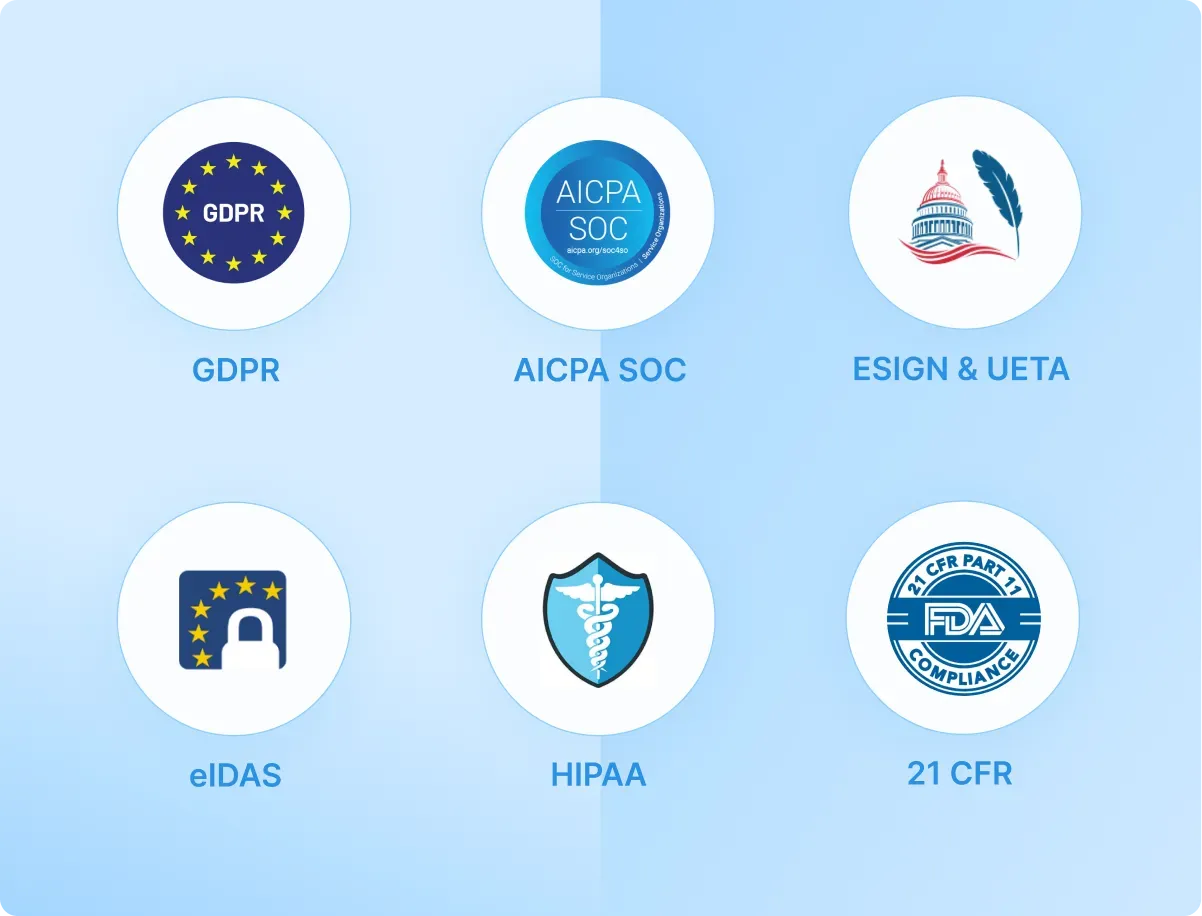
Digital contract compliance requires alignment with changing legal and security standards. Platforms that support frameworks such as ESIGN, eIDAS, SOC 2, and HIPAA help organizations maintain consistency, reduce review friction, and demonstrate compliance with confidence.
Why use Signeasy for contract compliance?
Effective contract compliance relies on visibility, accountability, and the timely execution of the contract from end to end. Signeasy brings these elements together in a single platform, helping teams manage obligations consistently as contract volumes grow.
Signeasy centralizes all contracts in a secure, searchable repository, giving teams a clear view of active, completed, and in-progress agreements. Automated workflows route documents for approval, send timely signature and renewal reminders, and track contract status in real time, ensuring critical actions stay on schedule.
Security and governance are embedded throughout the platform. Signeasy supports role-based access control, single sign-on, and two-factor authentication, and aligns with standards such as ESIGN, eIDAS, SOC 2, and HIPAA. Tamper-proof audit trails record every action, providing defensible records for internal reviews and external audits.
AI-powered insights extract key clauses and surface potential risks, helping teams review contracts faster and maintain oversight without manual effort. As organizations scale, these capabilities support higher contract volumes while preserving accuracy, control, and compliance.
By reducing administrative overhead and improving visibility across approvals and obligations, Signeasy helps organizations minimize risk, strengthen collaboration, and focus on higher-value work.