


Vendor negotiations rarely move in a straight line. Contract terms shift during review, clauses are redlined multiple times, and stakeholders introduce last-minute revisions just before approval. For teams handling only a few vendors, tracking revisions across email threads and document versions is already demanding.
Now imagine managing dozens of agreements, each with separate approvers and shifting timelines.
Negotiating terms is only one part of the workload. Teams must also manage document versions, track approvals, and ensure proper execution. As contracts pass manually between stakeholders, delays grow and visibility narrows.
Vendor contract management software creates structure where processes tend to stall. With centralized documents and guided approval flows, teams stay aligned through every revision.
Signeasy helps streamline contract updates, route agreements to the right stakeholders, and capture secure eSignatures without slowing momentum.
In this blog, you will learn:
- Practical best practices to manage vendor contracts efficiently
- How to reduce approval delays and process confusion
- How Signeasy supports faster, more controlled execution
What is vendor contract management?
Vendor contract management is the structured way an organization manages vendor agreements from first draft through renewal or exit.
In practical terms, vendor contract management helps your team stay in control of vendor commitments throughout the relationship. If a marketing agency contract defines delivery timelines and pricing terms, your team tracks those deliverables during the contract period and evaluates performance before deciding whether to renew.
Legal, procurement, finance, and business stakeholders all play defined roles in drafting, reviewing, approving, and overseeing vendor agreements.
To understand where breakdowns occur, it helps to look at how the lifecycle typically unfolds.
1. How vendor contract management works
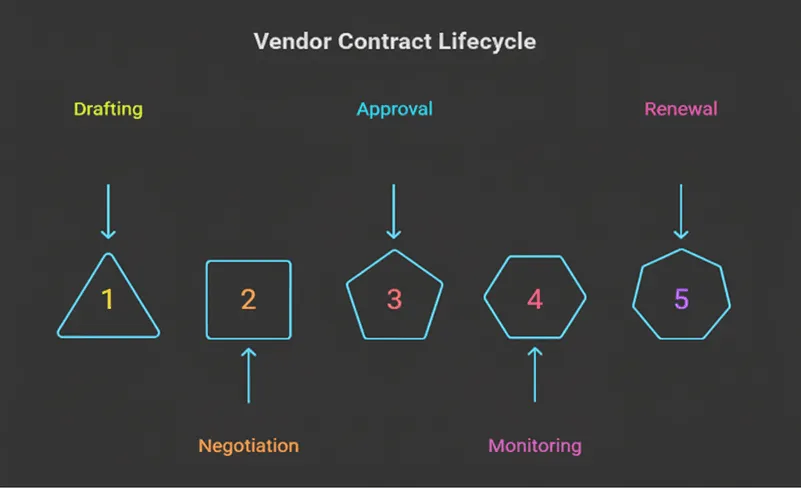
Effective vendor contract management moves through each stage of the contract lifecycle with defined ownership and accountability.
1a. Draft and structure the agreement
It starts with drafting. The team defines scope, pricing, service levels, responsibilities, and legal safeguards before negotiations begin. When the structure is clear early on, conversations stay focused and fewer issues resurface later.
1b. Negotiate and manage revisions
Next comes negotiation. Stakeholders review the terms, suggest edits, and work through redlines until both sides are aligned. Throughout this stage, someone keeps tight control of versions so everyone works from the latest draft and agreed changes stay protected.
1c. Route for approval and execute
Once the terms are settled, the contract moves to approval and signature. It goes to the right decision-makers, approvals are recorded, and legally binding signatures are collected so the agreement can take effect.
1d. Monitor performance
After signing, attention shifts to performance. Contract owners track deliverables, service levels, payment timelines, and compliance commitments to ensure the vendor delivers as expected.
1e. Plan renewal or manage exit
As the end date approaches, the team reviews performance and decides what comes next. They may renew, renegotiate certain terms, or plan a structured transition if the relationship is closing.
The lifecycle tends to follow this rhythm, while the structure and complexity of vendor contracts can vary depending on the vendor and the risk involved.
Read more: 8 Must-Have Features for Your Contract Management System
2. Types of vendor contracts
Vendor contracts are typically categorized based on pricing structure, risk allocation, and scope definition. The structure you choose affects cost predictability, flexibility, and how performance is measured over time.
Selecting the right contract type depends on how stable the scope is, how risk is shared, and how performance will be evaluated throughout the engagement.
Regardless of contract type, certain core elements should always be clearly defined.
3. Essential elements of a vendor contract
A well-structured vendor contract clearly defines commercial expectations, legal protections, and operational responsibilities. These elements create enforceability while reducing ambiguity during execution.
- Scope of work: Defines the services or goods the vendor will provide, including deliverables, timelines, and performance standards.
- Pricing and payment terms: Specifies cost structure, billing schedules, invoicing requirements, and payment timelines.
- Service levels and performance metrics: Establishes measurable benchmarks that determine whether obligations are being met.
- Roles and responsibilities: Clarifies ownership on both sides to prevent confusion during execution.
- Confidentiality and data protection clauses: Protects sensitive business information and outlines data handling obligations.
- Compliance and regulatory requirements: Ensures the vendor adheres to applicable laws, industry standards, and internal policies.
- Termination and renewal terms: Defines exit conditions, notice periods, and renewal structures to avoid disputes.
- Dispute resolution mechanisms: Outlines how disagreements will be handled, including governing law and jurisdiction.
Defining these elements clearly at the drafting stage streamlines negotiations and supports smoother contract management over time.
Even when contracts are well drafted, managing them at scale introduces operational complexity.
Challenges in vendor contract management
Even well-drafted contracts can drift off course once they enter daily operations. The issues rarely announce themselves. They surface quietly in small operational gaps.
Take document visibility. A pricing amendment gets signed, but only the legal team saves the updated version. Months later, finance processes invoices based on older rates stored in a shared folder. No one intended to overlook the change. The information simply lived in two places.
Approval flow creates a different kind of drag. A vendor agreement circulates for review, but one stakeholder is traveling and the contract sits untouched. There is no central view of where it stands. The vendor follows up. The internal team scrambles to trace the latest version.
Performance obligations also fade into routine. A contract may require monthly compliance reporting or defined service benchmarks. Without active tracking, those commitments become theoretical until something fails.
Renewals add financial exposure. An auto-renew clause with built-in price increases can pass quietly if no reminder surfaces before the notice window closes.
These challenges rarely stem from bad contracts. They come from manual coordination stretched beyond its limits.
Why do you need a vendor contract management software
Vendor relationships influence cost control, compliance exposure, and operational continuity. With a growing number of suppliers, oversight becomes harder to sustain through shared drives and manual tracking. Agreements carry pricing terms, service levels, reporting obligations, and renewal triggers that require continuous visibility. Software provides the structure needed to manage this complexity at scale.
- Improved vendor selection and decision-making: Centralized records and performance data help teams evaluate which vendors deliver value and which require renegotiation or replacement.
- Proactive risk and renewal planning: Automated alerts for key dates and obligations prevent overlooked renewals and support informed contract reviews.
- Clearer, standardized agreements: Template libraries and controlled drafting workflows promote consistency in scope, pricing, and compliance clauses.
- Stronger compliance oversight: Audit trails and obligation tracking ensure both parties uphold service commitments and regulatory requirements.
- Reduced rogue spending: Easy access to approved contracts discourages off-contract purchases and protects budget discipline.
- Operational efficiency across teams: Integrated workflows connect procurement, legal, and finance, reducing delays and improving execution accuracy.
Software supports execution, but process discipline still determines outcomes.
Best practices and tips for vendor contract management
Strong vendor contract management does not rely on policy documents alone. It depends on clear ownership, disciplined execution, and the right systems to reduce friction at each stage of the lifecycle.
The following practices address common breakdowns teams face as vendor relationships grow in volume and complexity.
1. Define ownership early to prevent decision bottlenecks
Assign a contract owner at the start of the process. That person does not need to draft every clause, but they coordinate reviews, track status, and push the agreement forward. If someone needs clarity on budget approval or if a sponsor has validated the scope, they know exactly who to ask.
Clear ownership reduces back-and-forth, prevents stalled approvals, and keeps contracts from sitting idle between departments.
2. Standardize templates to reduce negotiation drag
Before negotiations even start, standardization sets a clear foundation. Using approved templates and fallback clauses keeps baseline terms consistent and prevents repeated debate in every deal.
Instead of spending cycles rewriting indemnity or payment language, stakeholders focus on scope, pricing, and performance expectations. If your company frequently engages marketing agencies, a pre-approved master agreement allows you to plug in new scopes of work without reopening core legal protections each time.
3. Centralize contracts to eliminate version confusion
As vendor relationships scale, informal coordination exposes the organization to risk. It becomes harder to confirm who approved which terms, whether the signed version reflects negotiated changes, or whether access controls meet compliance standards.
A structured vendor contract management platform brings governance into the process. Teams maintain controlled access to documents, preserve a clear audit trail of revisions and approvals, and ensure the executed agreement matches the negotiated draft.
Instead of relying on inbox searches or shared drives, stakeholders work within a secure system designed for accountability.
Solutions like Signeasy support this structure by enabling secure, legally binding eSignatures and defined approval workflows. Teams can route contracts to the right signatories, track execution status in real time, and store completed agreements in a centralized repository.
That visibility strengthens compliance, reduces execution risk, and gives leadership confidence that vendor commitments are properly authorized and documented.
4. Monitor performance during the contract term
Execution alone is not enough. Strong teams monitor performance during the contract term, not just at renewal. If a vendor commits to specific service levels or delivery timelines, someone should compare actual performance against those commitments while the contract is active.
Addressing gaps early prevents small issues from compounding and strengthens your position when renewal discussions begin.
5. Approach renewal as a strategic review point
Finally, treat renewal as a strategic decision point rather than an automatic extension. Review vendor performance, pricing changes, and current business needs before confirming continuation. This deliberate review protects leverage and ensures the agreement still aligns with operational priorities.
When teams define ownership, standardize intelligently, use the right tools, monitor performance, and plan renewals intentionally, vendor contract management becomes less reactive and more controlled.
Suggested read: How to track contract compliance: A simple guide
How Signeasy supports vendor contract management
If you’re managing vendor contracts, the challenge is not only getting signatures. You need to prepare agreements consistently, route them correctly, collect supporting documents, maintain compliance records, and stay ahead of renewals. Signeasy supports this entire execution layer in a structured way.
1. Standardize how vendor contracts are prepared
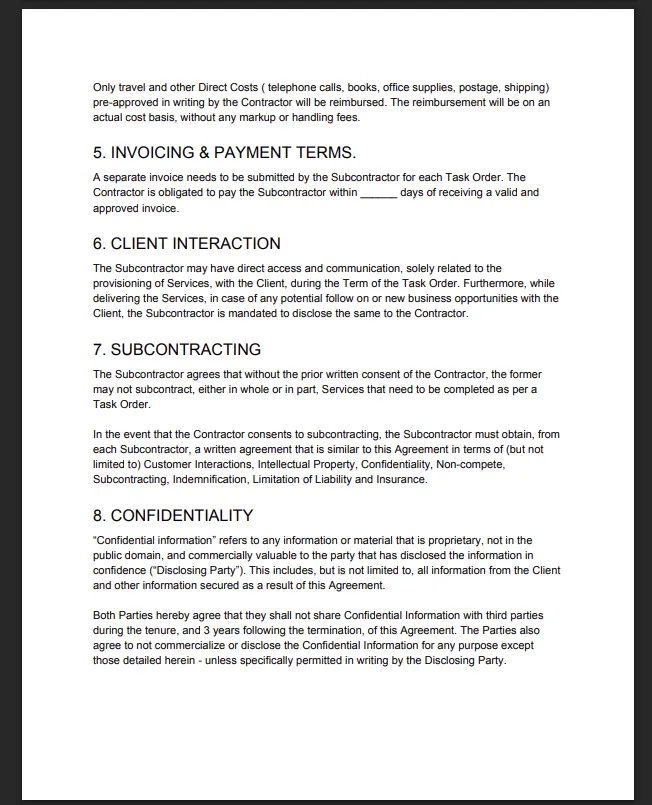
You can create reusable templates for recurring vendor agreements. Roles and fields can be predefined so contracts are sent with the correct signer order and required information already structured. This reduces drafting errors and eliminates version confusion across teams.
Source
Template sharing ensures everyone uses the latest approved format. Team members receive unique tracking links, so visibility remains centralized rather than fragmented across inboxes.
2. Control how contracts move between stakeholders
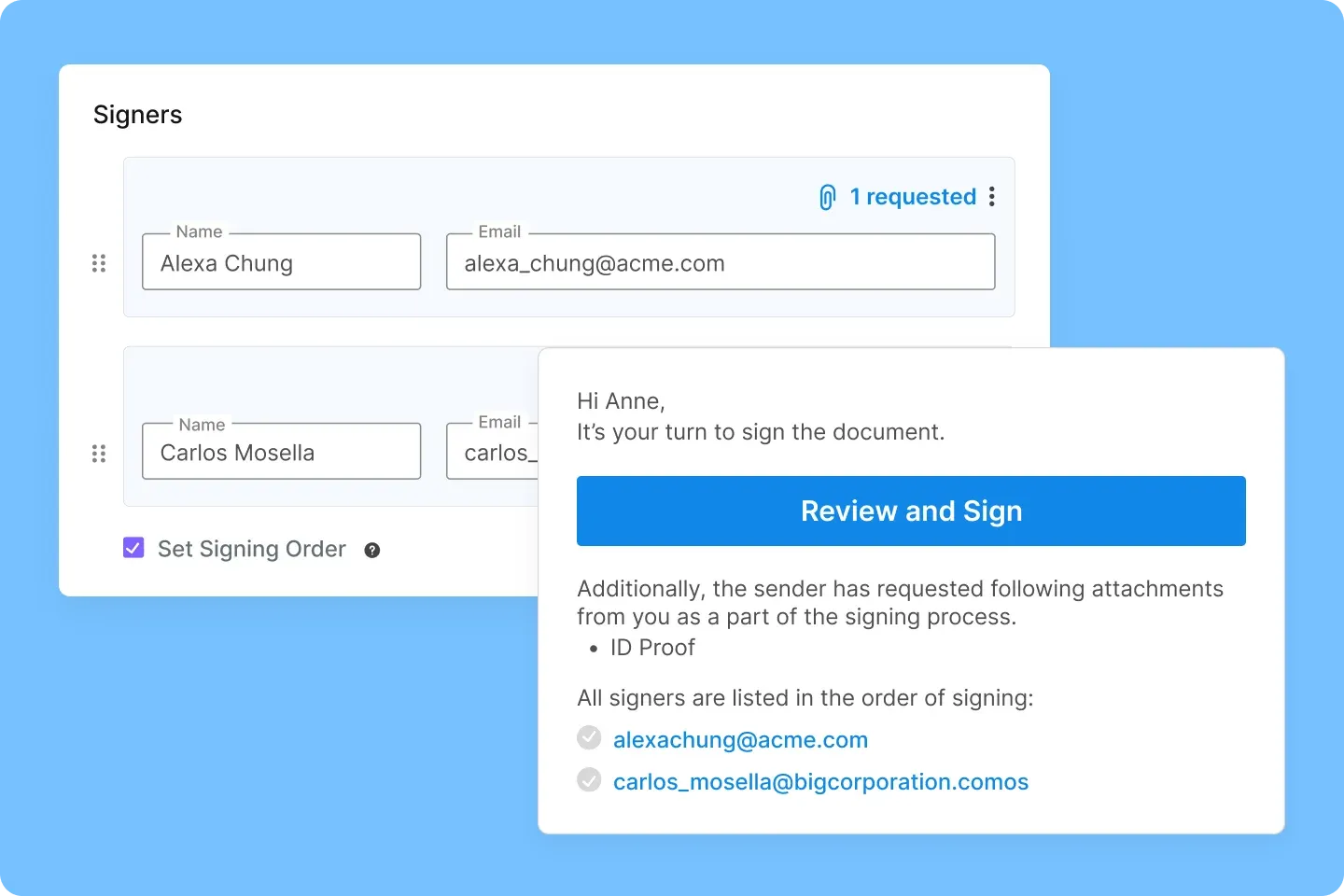
Vendor agreements often require multiple internal and external signers. With Signeasy, you can:
- Set signing order so documents follow the correct sequence
- Allow parallel signing when appropriate
- Add CC recipients for transparency
- Send automatic reminders on day 1 and day 7
Instead of manually coordinating follow-ups, the workflow handles routing and notifications. Real-time status tracking helps you identify bottlenecks without chasing updates.
3. Manage revisions without restarting the process
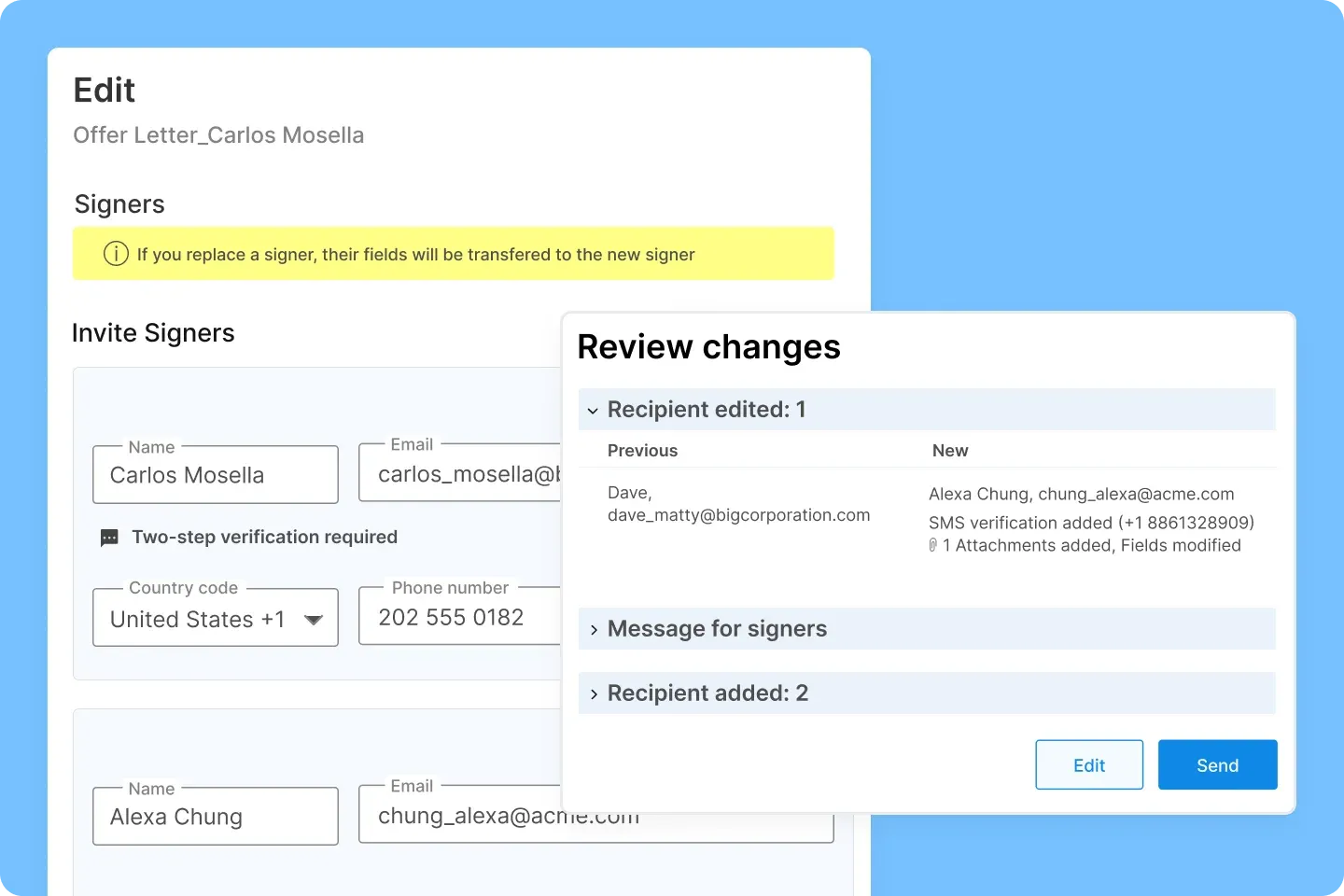
Vendor negotiations sometimes require changes after a document has been sent. Signeasy allows you to modify signer details or update contracts without starting from scratch. Any changes are logged in the audit trail, which preserves transparency and compliance.
This is especially useful when vendor contacts change or additional reviewers are added mid-process.
4. Collect more than just signatures
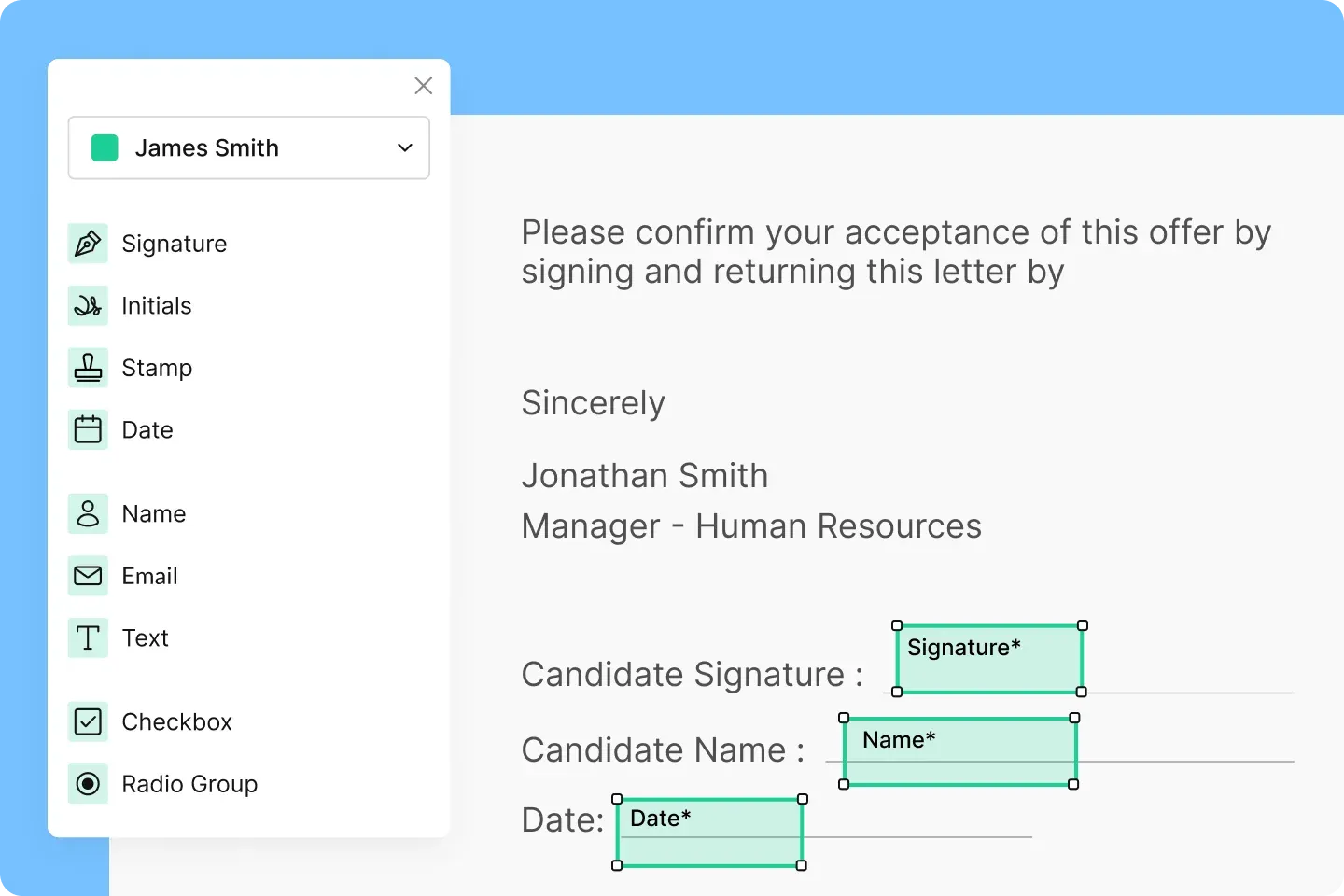
Vendor contracts often require supporting documents or additional confirmations. With Signeasy, you can:
- Capture initials, dates, emails, and text inputs
- Use checkboxes, radio buttons, and stamps
- Request supporting attachments from signers
This reduces separate email exchanges and ensures required documentation stays attached to the contract record.
5. Maintain compliance and audit readiness
Each document includes a detailed audit trail showing timestamps, signer identity, and activity history. Compliance with ESIGN, UETA, eIDAS, HIPAA, and SOC 2 standards supports regulated environments.
Security features such as:
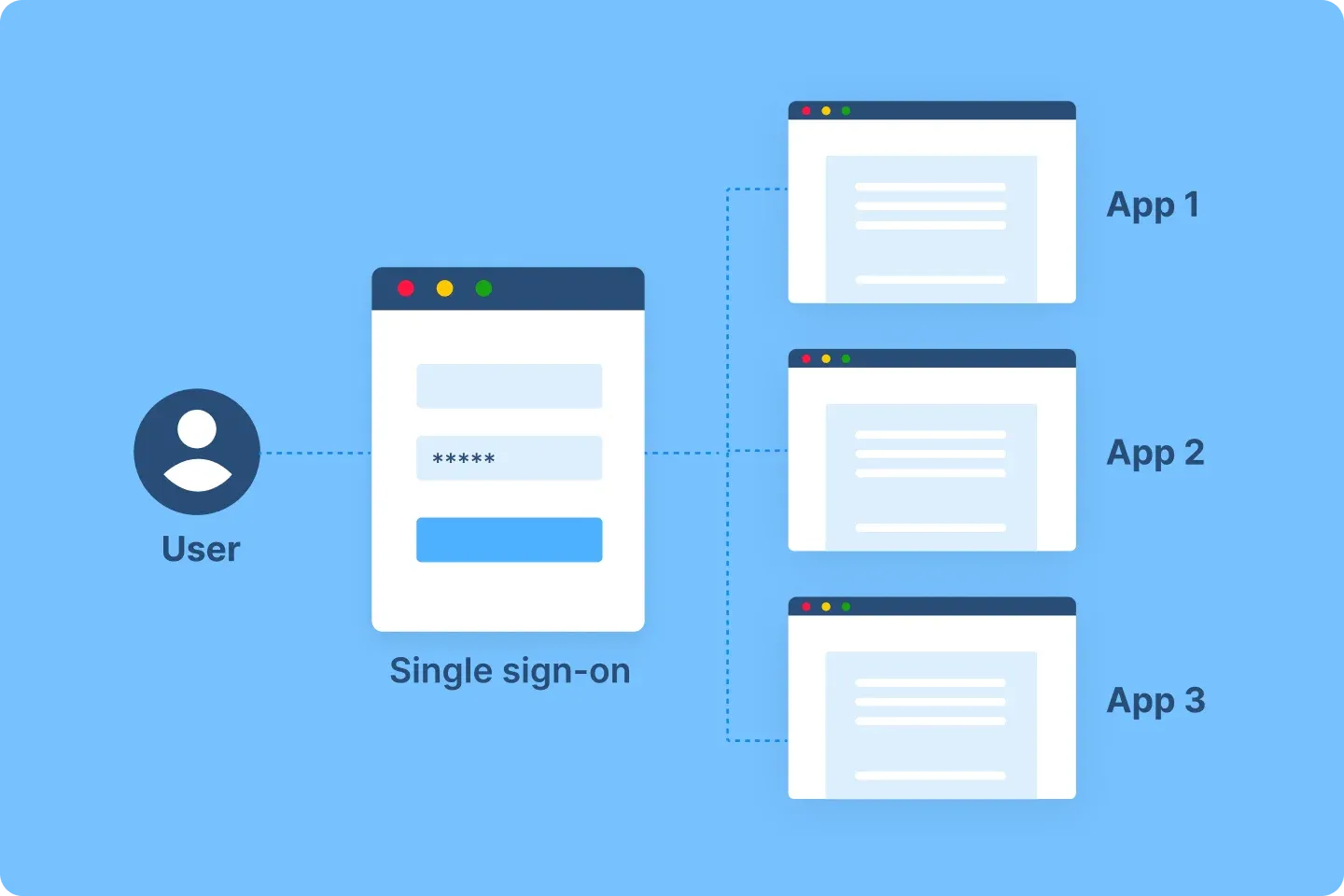
- Single Sign-On
- Role-based access control
- Two-factor authentication
- Trust Seal tamper detection
help ensure only authorized users can access or modify agreements.
6. Store and retrieve vendor contracts without friction
Signing a vendor contract is only half the job. The real test comes months later when someone asks, “Where is the latest version?” or “What were the agreed payment terms?” Without a structured repository, contracts get buried in inboxes or scattered across shared drives.
With Signeasy, executed agreements are automatically stored in a centralized contract repository. You can search by document name, vendor, signer, or status to retrieve contracts quickly. Instead of relying on memory or manual folder structures, teams can use built-in search and filters to locate agreements in seconds.
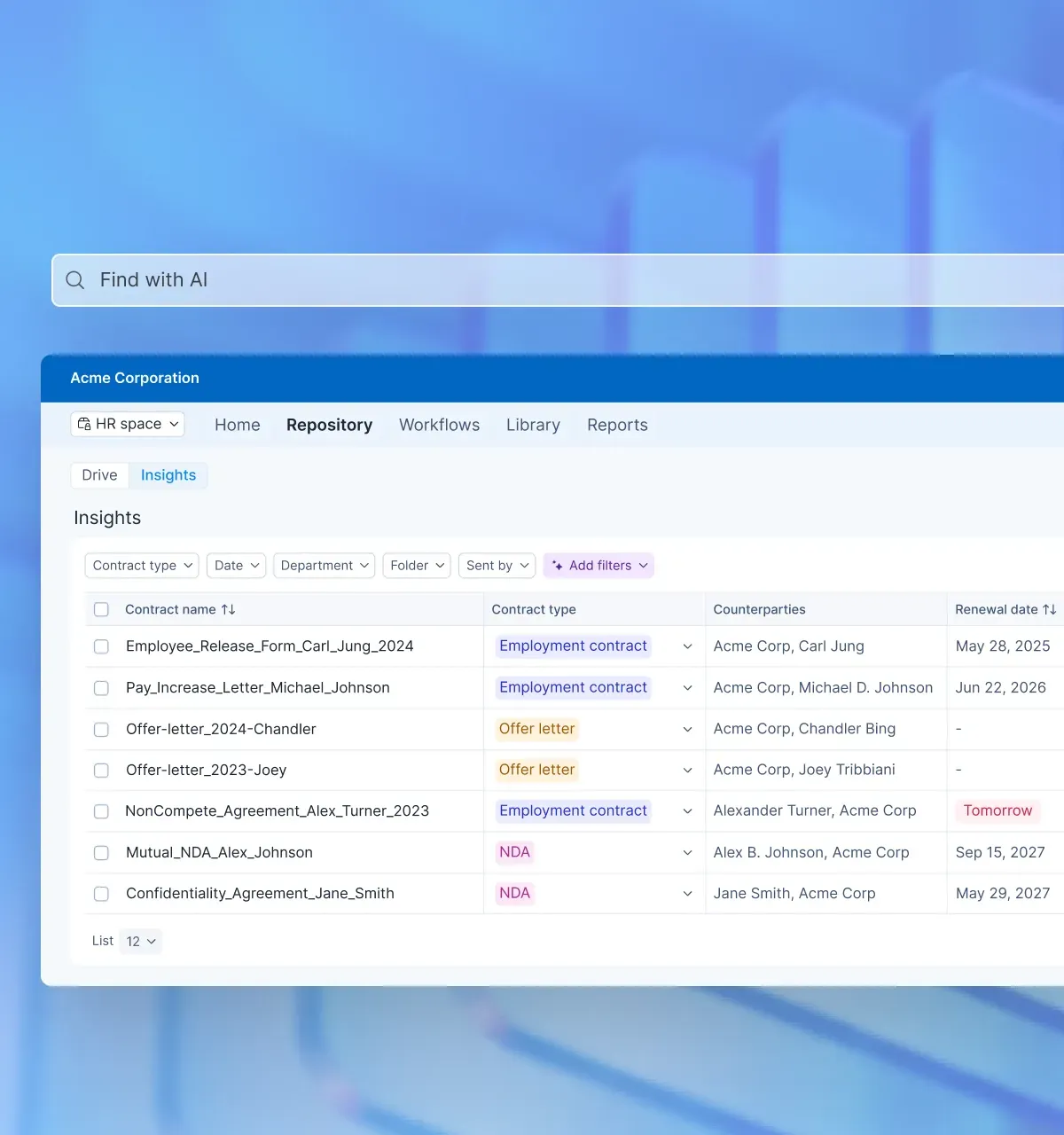
Contracts can also be categorized by stage, such as draft, sent, signed, or expired. This gives teams visibility into where each agreement stands and reduces confusion during audits or renewals.
7. Integrate with your existing systems
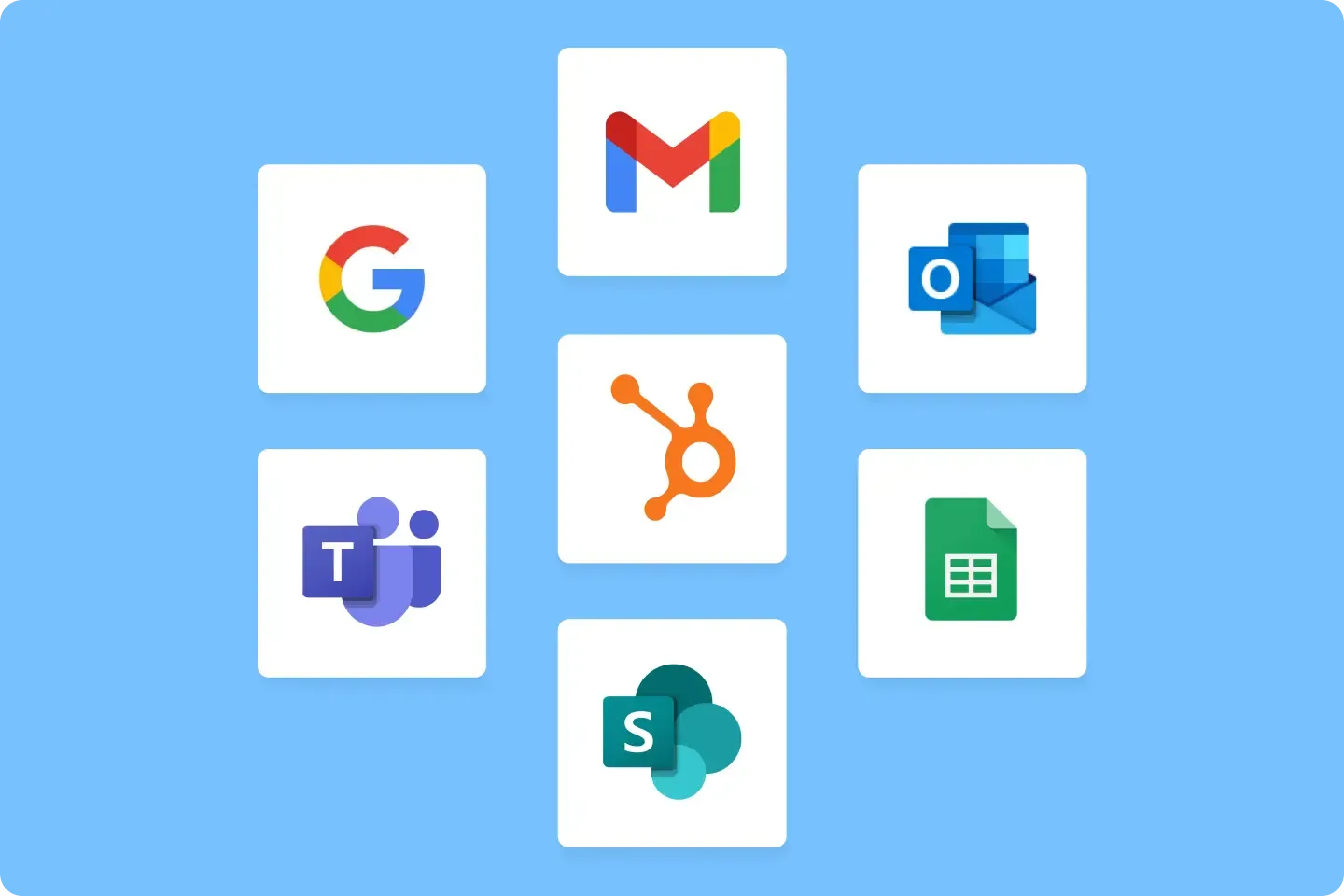
Signeasy integrates with tools such as Google Workspace, Microsoft apps, SharePoint, and HubSpot, allowing teams to send and manage contracts within the platforms they already use. Working in familiar environments supports adoption and keeps processes moving smoothly.
API access allows organizations to embed signing workflows into custom systems when needed.
Bringing structure to vendor contract management with Sigenasy
Managing vendor contracts well means staying in control as the workload expands. With more stakeholders and moving parts in play, a structured approach keeps agreements aligned with business priorities and manageable day to day.
Beyond the core tools you need to manage vendor contracts, Signeasy gives you practical advantages that support you as you scale.
You can manage agreements with confidence, knowing the platform aligns with global compliance standards like GDPR and established security frameworks that strengthen audit readiness and protect your data.
You get pricing that fits different stages of growth, starting at $10 per month for individuals and $20 per user per month for business teams. There is also a free plan for lighter use, plus free trials on paid tiers so you can test your workflows before committing.
As you roll it out, you have access to dedicated customer support to guide onboarding and help you adapt the platform as your operations expand.
Start your free trial today and experience a more structured, secure way to manage vendor contracts with Signeasy.