



“Why does every contract take longer than it should?”
“Why am I re-reading the same clauses across documents?”
“Why do simple approvals turn into week-long scavenger hunts?”
These questions show up everywhere — in legal Slack channels, in procurement forums, in Reddit threads where people admit they’re drowning in admin while trying to do “actual legal work.”
The problem isn’t the people. It’s the process. Too many versions to compare. Too many manual checks. Too many decisions being made without the full picture in front of anyone.
Generative AI in contract management interrupts that cycle. It reads with near-instant throughput, understands context without a meeting, and flags risks before someone accidentally approves them.
In this article, we break down exactly how generative AI reshapes day-to-day contracting, including:
- What generative AI is and how it differs from traditional AI
- How AI improves drafting, negotiation, review, and compliance
- The practical benefits AI delivers across legal, sales, finance, and procurement
- Key challenges and considerations when implementing AI
- Real-world examples of how teams use Signeasy AI to accelerate workflows
By the end, you’ll know where AI belongs in modern contract management — and how Signeasy AI helps teams move work forward with fewer errors and better oversight.
Overview of generative AI and its relevance to contract management
Most contract delays have nothing to do with complexity. They come from repetition — rewriting clauses, scanning for dates, chasing context across versions, or deciphering what changed since the last edit.
Generative AI matters because it absorbs that mental load. It turns contract work from interpretation into action.The best ai contract review software applies this same principle—replacing repetitive clause checking with intelligent, instant analysis that frees legal teams to focus on negotiation and strategic decisions.
1. What is generative AI?
Generative AI is a type of artificial intelligence that can create new content. Based on its learning from large data volumes, it can create text, summarize long documents, suggest clauses, and even propose redlines. Instead of only spotting issues, it can actually generate text or rewrite sections in a cleaner way.
For example, tools like ChatGPT, learn from patterns in data and generate language that feels natural and context-aware.
In AI contract workflow management, this helps teams produce clauses, refine wording, and summarize key terms in seconds.
2. What's the difference between generative AI and traditional AI?
Traditional AI works like a rule-based assistant. It analyzes patterns, flags risks, or predicts outcomes. For example, it might detect a missing signature, identify renewal dates, or highlight unusual clauses.
Generative AI goes a step further. It can write fresh clauses, summarize a 20-page agreement into a few readable lines, and suggest redlines that follow your organization’s policies.
2a. Generative AI vs. traditional AI in contract workflows
How generative AI is changing contract management
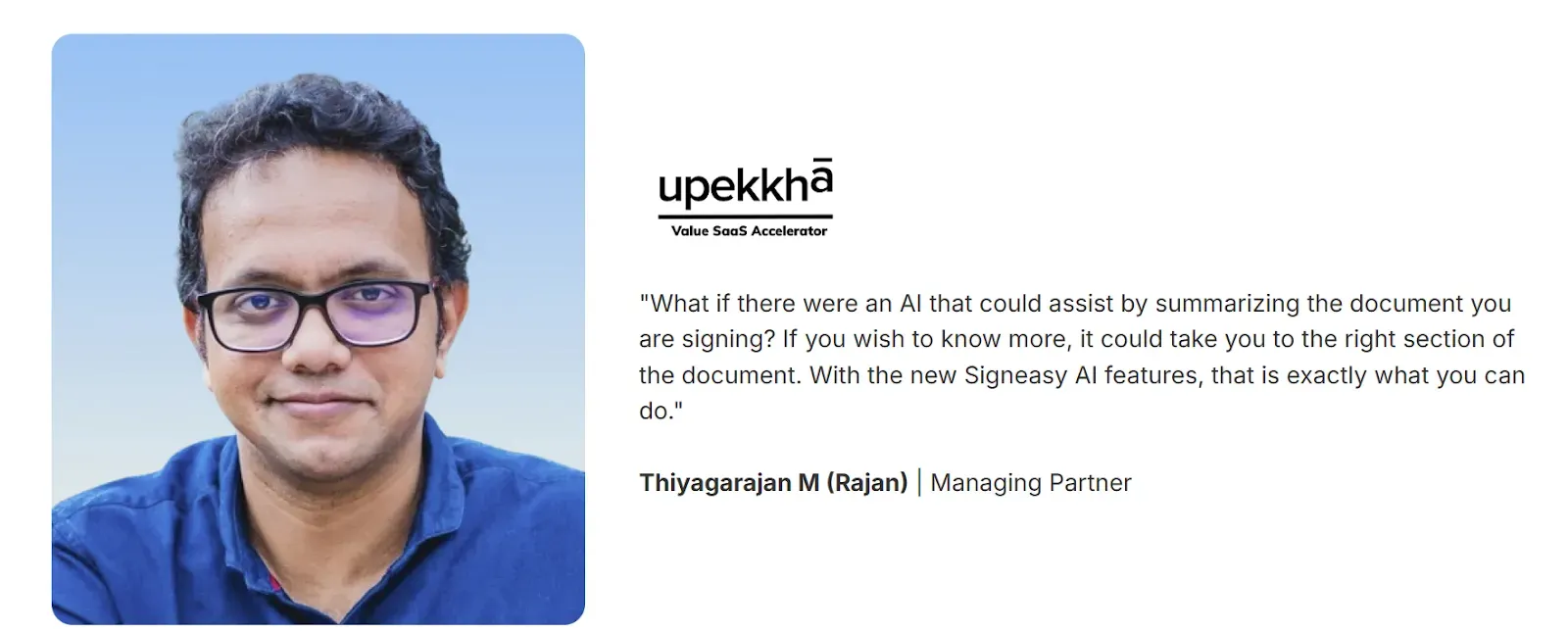
Generative AI is reshaping how teams interact with their documents. The shift is removing the slow, repetitive thinking that keeps contracts stuck in draft mode.
Signeasy brings this shift to life by combining AI-powered insights with an intelligent contract repository that keeps every agreement organized and easy to act on from day one.
Here’s what that looks like in practice:
- Instant summaries that condense long documents into the key points people actually need to review
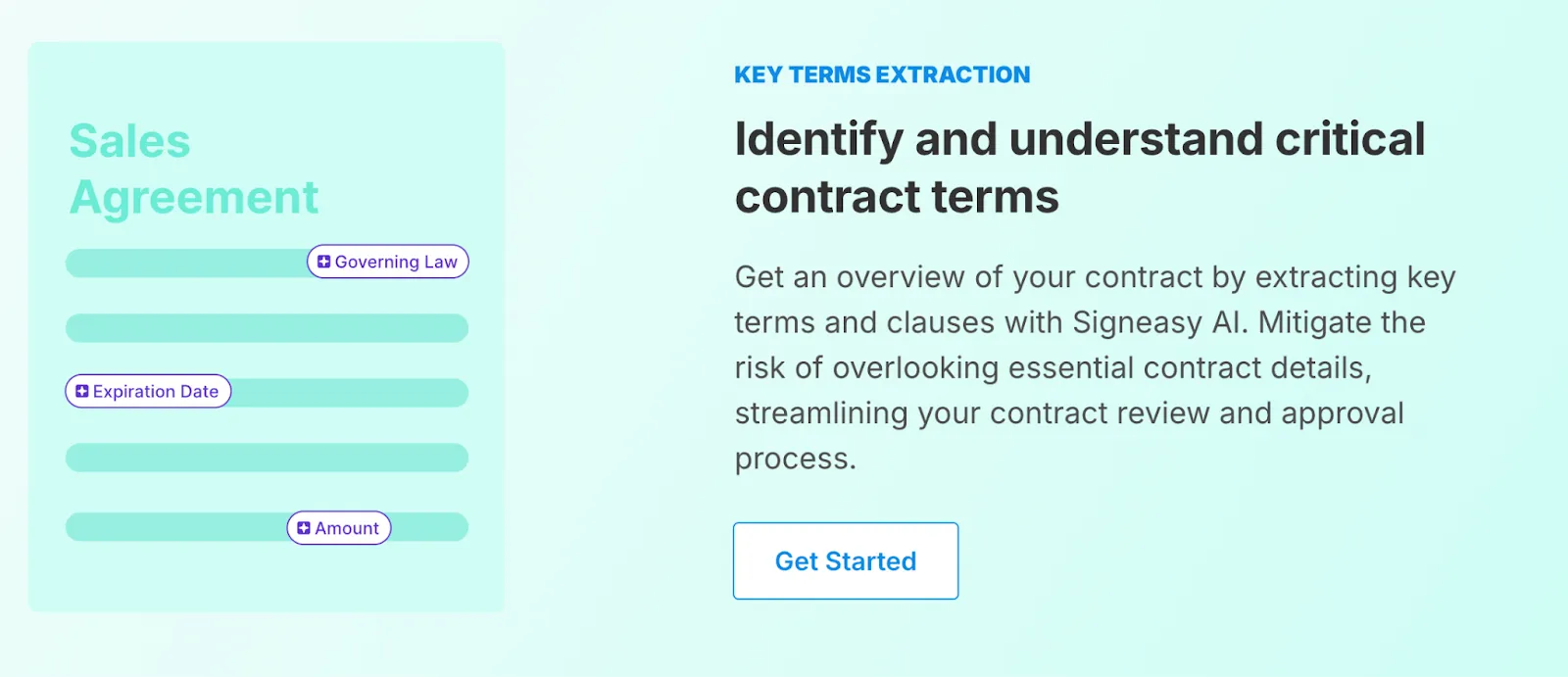
- Key term extraction that pulls out governing law, renewal dates, payment amounts, and other critical details
- Auto-reminders that prevent renewals or deadlines from slipping through the cracks
Together, these features act like a second brain for the contracting process — one that never loses context, never gets tired, and never misses a small detail buried deep in a PDF.
And it’s not just hype. McKinsey reported that 92% of companies plan to increase AI investment over the next three years, a sign that AI-supported contract workflows are quickly becoming the norm, not the experiment.
Signeasy AI makes that shift feel natural. Legal teams stay in control. Business users feel less stuck. And contract cycles finally start moving at the speed leadership expects.
Key applications of generative AI for contract management
Generative AI is most effective when it reduces the repetitive work that slows contract cycles. Across drafting, negotiation, review, and compliance, it gives teams practical tools they can use immediately.
1. Contract drafting
AI speeds up early-stage drafting by helping you build cleaner first drafts without starting from scratch. It can recommend clause options, rewrite confusing language, and align wording with approved internal standards.
It helps with:
- Creating draft language based on approved templates
- Maintaining consistent clause wording across teams
- Rewriting sections for clarity and tone
But AI-generated text still requires legal oversight to ensure accuracy and jurisdictional compliance.
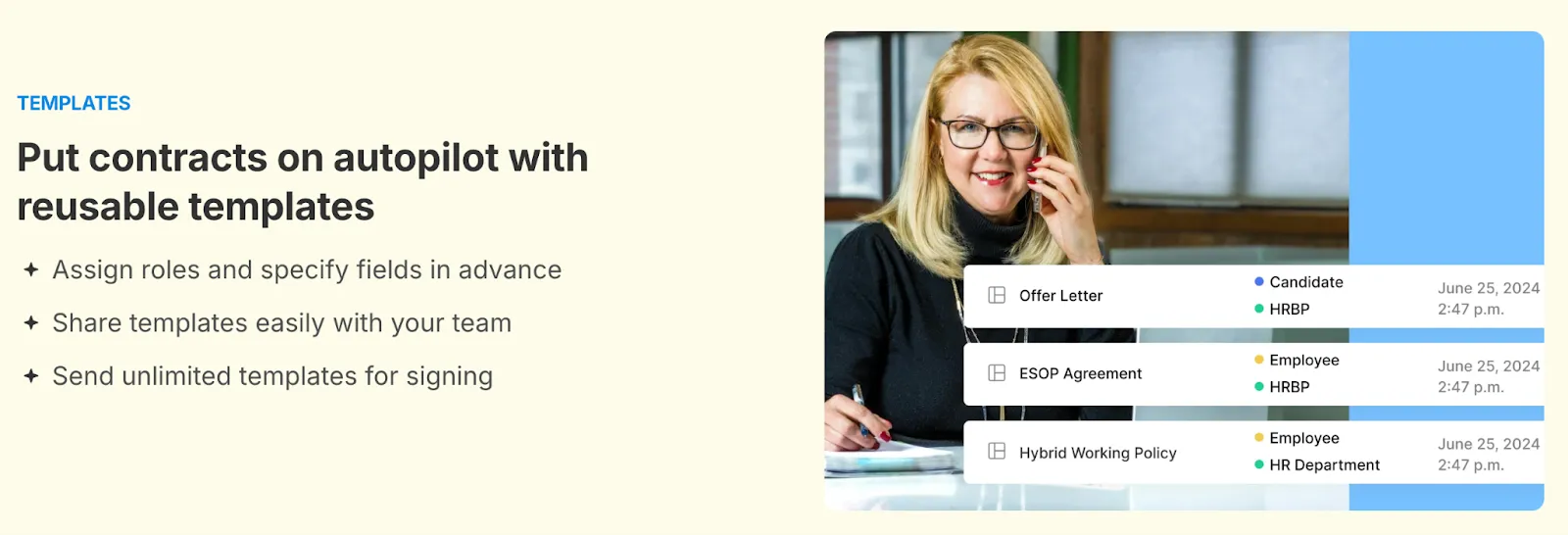
What you can do:
Create a complete partnership agreement for a marketing agency working with a fintech startup — without starting from a blank page.
How Signeasy AI helps
Signeasy generates first drafts from your approved templates, keeps language consistent, and updates clauses based on jurisdiction or context. It eliminates the “start from scratch” problem and reduces the hours teams spend rewording basic terms.
2. Contract negotiation
AI supports quicker negotiation cycles by assisting with redlines and clause comparisons. It presents side-by-side suggestions and a clear view of revisions.
It helps with:
- AI-assisted redlining and clause comparison
- Highlighting unusual terms or missing protections
- Spotting deviations from approved language or risk thresholds
What you can do:
Compare a vendor MSA with your internal template and instantly see every non-standard liability term that needs attention.
How Signeasy AI helps
Signeasy AI highlights terms immediately, so you don’t have to wade through the document line by line.
3. Contract review
“If I think where I see AI making a really good substantive impact, it is definitely in contract extraction and contract review.”
~ Lucy Bassli, founder and principal of InnoLaw Group
Uses of AI in contract management: Insights from Lucy Bassli
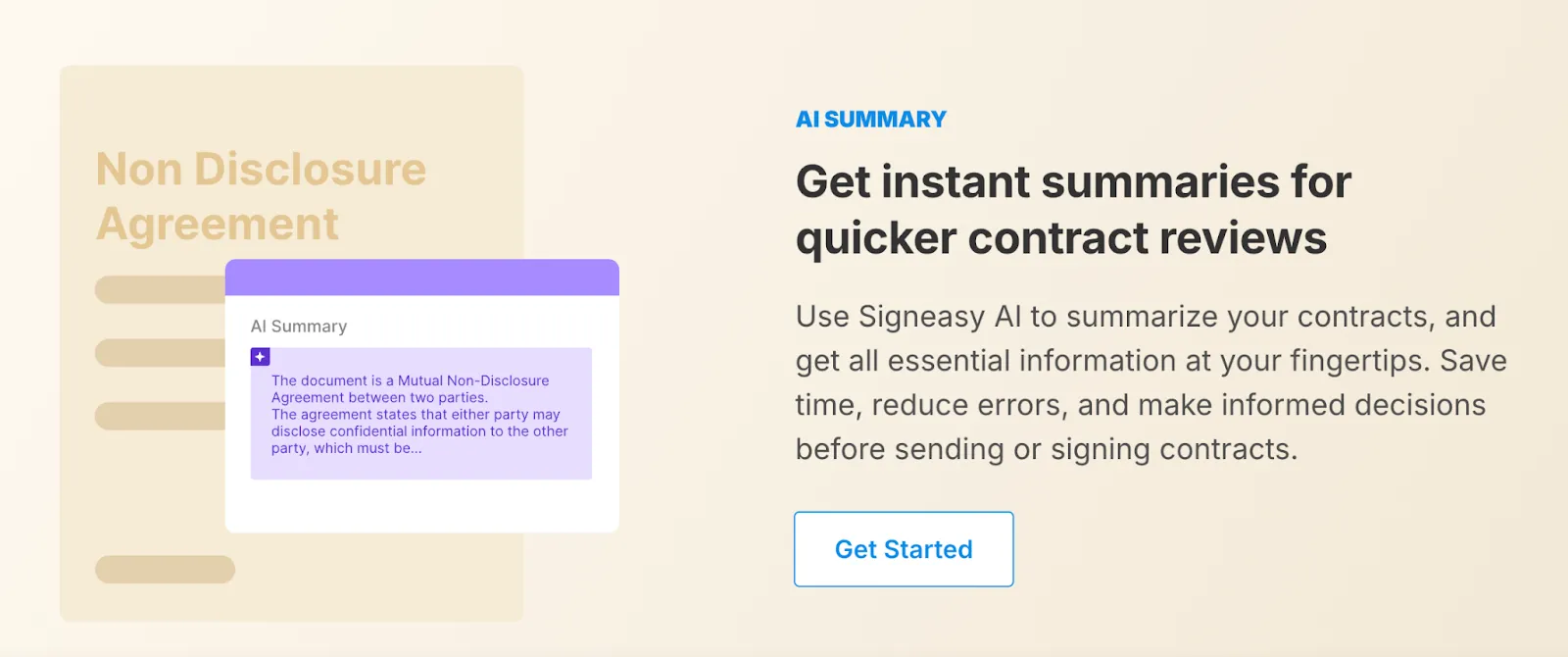
AI condenses long documents into clear, actionable summaries. It helps you:
- Pull out key obligations and renewal triggers
- Simplify due-diligence and audit prep
- Surface the points leadership actually needs to consider
What you can do:
Turn a 14-page agreement into a five-point summary you can share with stakeholders who don’t have time for a full read.
How Signeasy AI helps
It generates clean, readable summaries in seconds, highlights obligations, renewal triggers, and gives teams enough context to decide quickly.
4. Contract management
After a contract is signed, generative AI helps teams stay organized and proactive across the entire contract portfolio.
AI helps with:
- Tracking deadlines, renewals, and obligations
- Alerting users about upcoming actions
- Suggesting ways to optimize contract terms or renewals
What you can do:
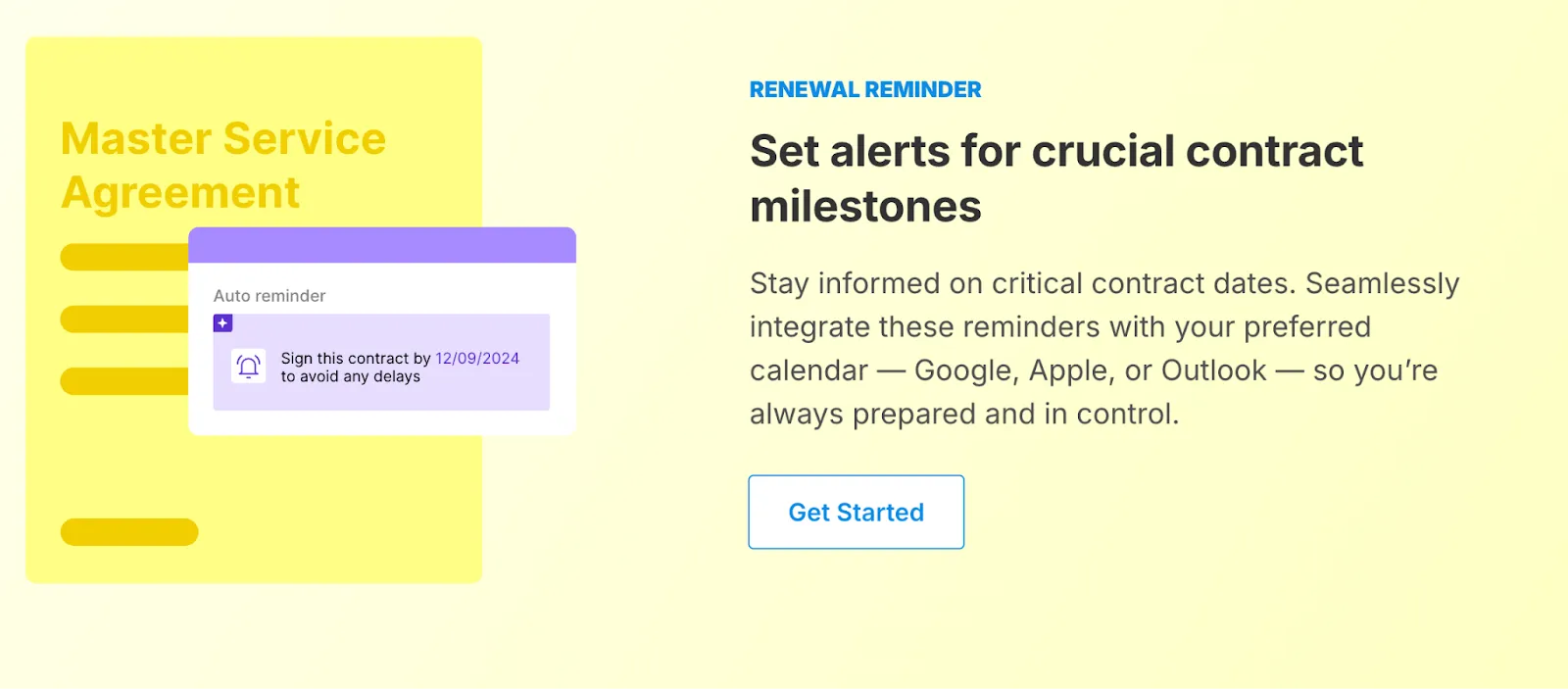
Set a reminder to flag a contractor agreement 30 days before renewal so nothing slips through the cracks.
How Signeasy AI helps
It tracks deadlines, flags upcoming renewals, and keeps every obligation visible.
5. Risk detection and compliance
AI adds a layer of continuous risk monitoring across every contract. It evaluates language, structure, and legal requirements to help teams stay compliant by:
- Detecting risky or irregular clauses
- Identifying outdated contract wording or missing disclosures
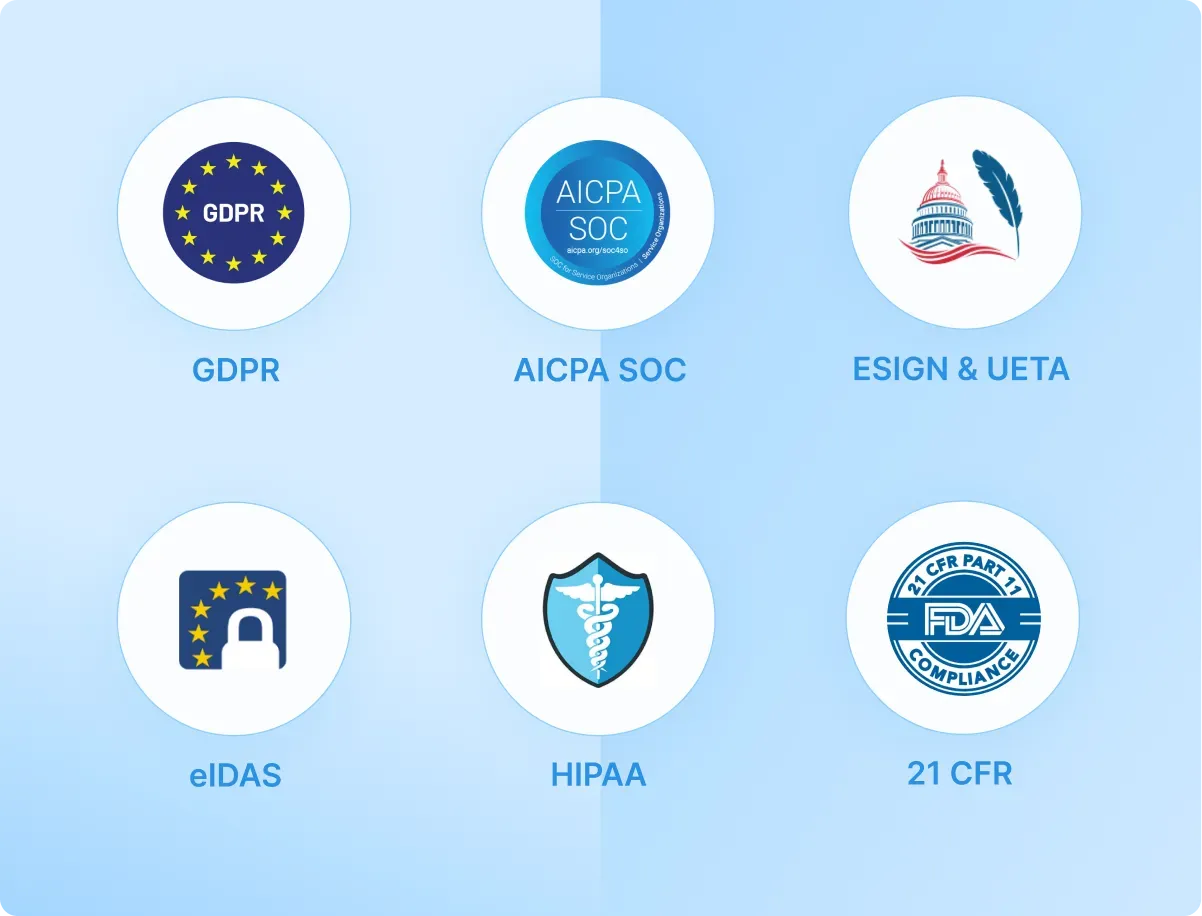
- Flagging compliance gaps across GDPR, HIPAA, and internal policies
- Supporting legal and risk teams with early warnings
What you can do:
Scan a contract for GDPR-related risks and instantly receive safer clause alternatives aligned with your internal standards.
Benefits of generative AI in contract management
When you hand over the grunt work to generative AI, contract management stops being a slog and starts becoming a strategic advantage. It cuts down on routine work, keeps language consistent, catches risks early, and reveals insights hidden in the details.
Here are some of the benefits of gen AI in contract management in detail:
1. Time and efficiency savings
Generative AI acts like a highly dependable teammate for repetitive work. It automates drafting, first-pass reviews, and report generation so contracts move through review with less strain on legal, procurement, finance, and operations.
2. Improved accuracy and consistency
Uniform clause language is one of the hardest parts of contract work. Humans can get tired, distracted, or simply miss details. AI helps by sticking to approved templates and applying the same logic every time.
This keeps contract wording uniform across teams and reduces the risk of unexpected deviations.
3. Enhanced risk management and compliance
Generative AI acts as an extra layer of protection by spotting gaps, missing disclosures, or risky language before the contract moves forward.
It spots outdated terms, unusual changes, or anything that might raise a compliance concern. Teams get early alerts that make compliance easier and more proactive.
4. Unlocking new business insights
Because AI can analyze hundreds or thousands of contracts at once, it uncovers patterns that teams usually don’t have time to investigate manually. It highlights pricing anomalies, renewal cycles, negotiation timelines, and vendor risk frequency.
These insights help organizations improve negotiation strategy, identify risk trends, or refine contract terms to get better outcomes.
Challenges and considerations
While generative AI offers incredible potential, it’s important to recognize a few key challenges. Understanding these early helps teams implement the technology safely, effectively, and with the right expectations.
1. Data quality and compatibility with existing systems
Generative AI relies heavily on the information it learns from. If contracts are inconsistent, outdated, or stored in scattered places, the AI’s output will reflect those gaps.
It’s also important for AI to work smoothly with your current tools. Integrating with CLMs, eSignature platforms, or document repositories ensures the AI can read, analyze, and improve contracts without disrupting workflows.
Make sure to:
- Organize templates and past agreements
- Maintain updated, approved language libraries
- Ensure integrations with eSign or contract systems are stable
2. Ensuring human oversight
Generative AI can speed up contract work, but it does not replace legal judgment. Human oversight keeps the process grounded, catches nuanced risks, and ensures final decisions reflect context that AI may not fully understand.
Best practices include:
- Reviewing AI-generated drafts before sending
- Approving AI-suggested clauses or redlines
- Setting clear rules for when human review is required
3. Legal and ethical considerations in AI implementation
Contracts contain sensitive details, so privacy and security always stay front and center. Organizations need to confirm that AI systems protect confidentiality, respect IP boundaries, and handle data responsibly.
What to consider:
- Data privacy expectations for internal and external documents
- Secure handling of confidential terms and attachments
- Alignment with GDPR, ESIGN, eIDAS, and regional regulations
How Signeasy applies AI to contract workflows
Signeasy provides instant high-level summaries for decision-makers on top of an intelligent contract repository, giving decision-makers fast clarity without digging through documents.
It sits inside existing workflows, helping teams progress without slowing down or risking compliance. There’s no new system to learn — the AI works inside the tools people already use.
1. Real-world use cases:
1a. AI-powered contract summaries
Signeasy AI can turn long agreements into clear, digestible summaries. Teams get instant clarity on obligations, key dates, and risks. This helps managers, approvers, and leadership get clarity quickly, without reading every page.
1b. Smart reminders or risk alerts
The Signeasy AI tool keeps an eye on deadlines, renewals, and compliance requirements. It can flag unusual language or point out missing elements in a contract before it’s sent for signature. This helps teams stay proactive ensuring nothing is forgotten in the day-to-day rush.
1c. Automated document workflows
From drafting to final signature, Signeasy AI removes repetitive steps across managing a contract. It helps prepare documents quickly, routes them to the right people, and keeps approvals moving with minimal back-and-forth.
This is especially helpful for HR onboarding, vendor contracts, partnership agreements, and finance approvals.
2. Signeasy’s focus on simplicity, security, and speed
Signeasy’s AI features sit on top of a foundation designed for real-world teams and not legal power users only.
- Simplicity: Clean UI, intuitive workflows, and easy to use AI with no training required
- Security: Privacy-focused workflows aligned with enterprise-grade privacy standards and secure data practices
- Speed: Designed to shrink drafting time and reduce effort spent on repetitive contract tasks, so decisions don’t sit idle.
A smarter way to manage contracts starts with Signeasy
Generative AI is reshaping contract work, but the real advantage goes to teams that can actually use it — without adding another complex system to their workflow.
That’s where Signeasy stands apart. It doesn’t overwhelm you with dashboards or force a CLM-level overhaul. A well-designed contract management dashboard brings AI summaries, renewal reminders, and risk checks into a single view your team can start using immediately—without a lengthy implementation or a steep learning curve.
With an intelligent contract repository at its core, it also ensures teams always have visibility into what’s signed, what’s active, and what’s coming next.
Teams feel the impact right away. Reviews move through sooner, version chaos settles, and stakeholders get context without waiting on legal to interpret every file. With less energy spent on repetitive checks, time shifts toward negotiations and decisions that actually drive progress.
If you want contract workflows that feel faster, clearer, and noticeably lighter, Signeasy AI is the simplest way to get there.
See it in action — book a free demo and experience how collaborative, AI-powered contracting should feel.