



Businesses understand that AI in contract management optimizes reviews and reduces manual work. Yet many resist uploading sensitive documents to external platforms.
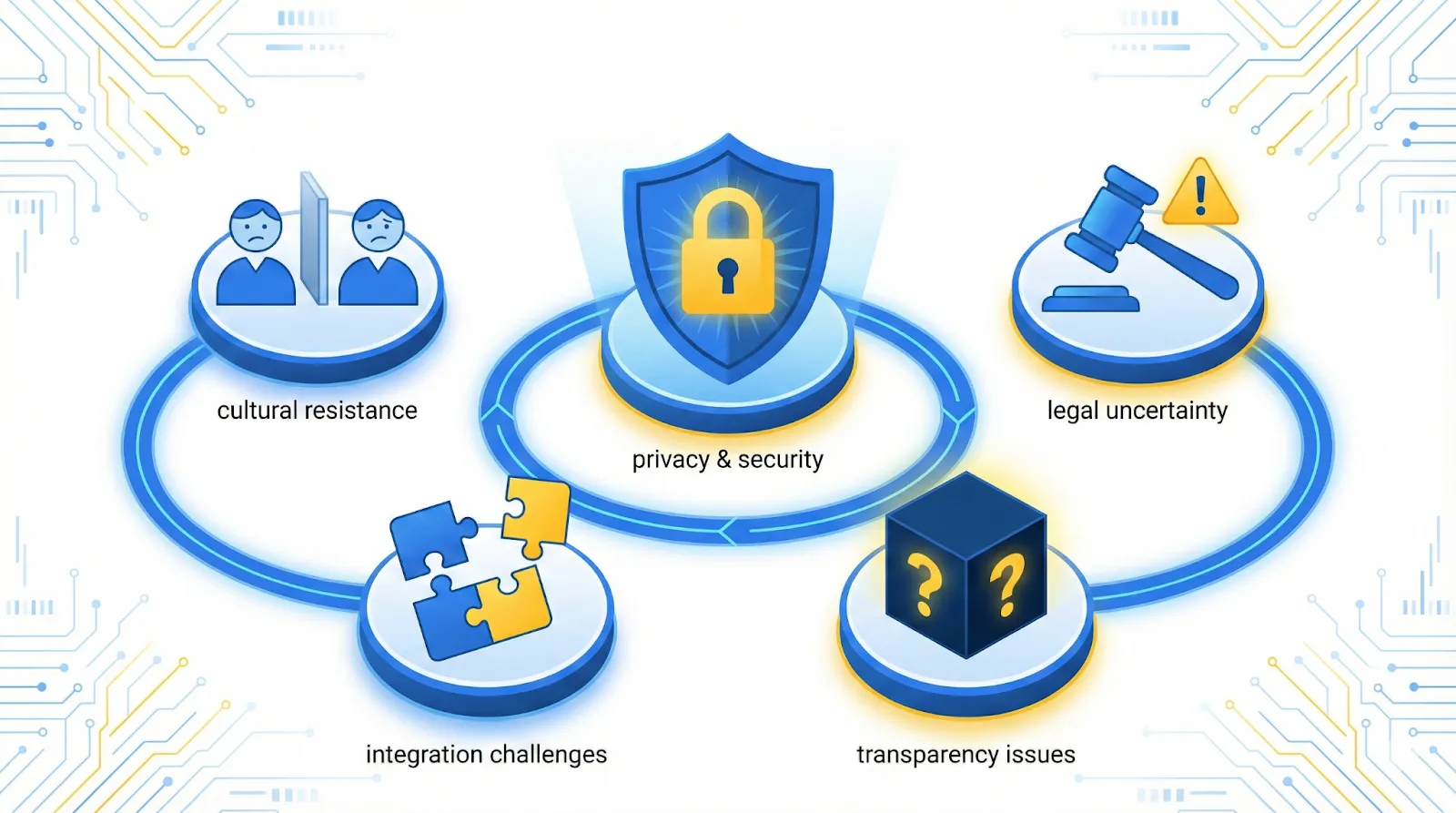
A recent Reddit discussion in the contract management community revealed five major barriers holding companies back:
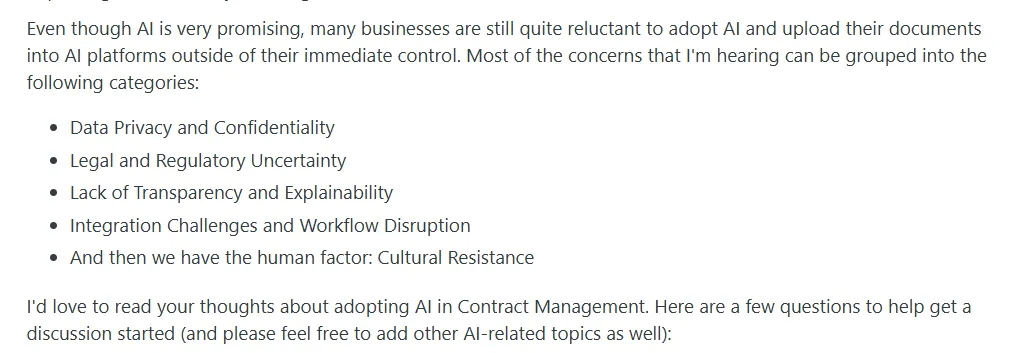
Source
All of this creates a strange standoff. AI vendors promise shorter review cycles, better risk detection, and significant cost savings. But organizations stay cautious, and for good reasons.
The standoff exists because most AI tools demand full platform adoption before delivering value. AI contract repositories break this cycle by adding intelligence to existing workflows.
This guide cuts through the marketing noise to address real concerns while showing where AI helps teams work more efficiently and accurately. We’ll cover:
- The role of AI in contract management
- Technology integrations and how they work
- AI applications throughout the contract process
- Concrete benefits backed by recent data
- Limitations and challenges to consider
- Practical steps for responsible implementation
What is AI's role in contract management?
Contract management covers everything from initial drafting and negotiation through execution, performance monitoring, renewal, and eventual termination.
Traditional contract management software helps organize these stages with document storage, workflow automation, and basic alerts for deadlines or milestones. You input data manually, set up workflows, and the system tracks what you tell it to track.
AI-powered contract management takes a fundamentally different approach. Instead of just storing and routing contracts, it reads, interprets, and learns from your agreements automatically — pinpointing insights you didn't know to look for.
- The technology breakdown:
AI-powered contract management relies on four core technologies working together.
- Natural language processing (NLP) analyzes contract language to extract key terms, obligations, and clauses regardless of how they're worded. For example, NLP identifies payment terms whether they're labeled "Net 30," "payment due within thirty days," or "invoices payable monthly."
- Machine learning (ML) spots patterns across thousands of agreements to flag unusual terms or predict which clauses typically get negotiated. For instance, ML notices that liability caps below $500K in vendor contracts consistently trigger legal review.
- Generative AI drafts new contracts and suggests alternative language based on your company's standards and past negotiations. For example, when creating an NDA, it pulls your standard confidentiality clause and adapts duration terms based on the counterparty type.
- Predictive analytics assesses risk by comparing contract terms against historical performance data and external factors. For instance, it flags suppliers with payment terms that previously correlated with cash flow issues.
2. Why you need organized contracts before AI can help
Many organizations manage contracts through email threads, shared drives, and manual spreadsheets rather than dedicated systems. Without baseline visibility into what contracts exist and what terms they contain, AI can't deliver meaningful insights.
You'd be automating fragmented processes rather than creating order.
The opportunity lies in tools that build this foundation while adding intelligence. AI contract repositories combine basic organization (centralized storage, search, alerts) with smart capabilities (automated extraction, risk flagging, insights).
This lets teams establish contract visibility and gain AI benefits simultaneously, without requiring perfect processes upfront.
With the fundamentals in place, let’s break down how AI performs and works in workflows.
How AI works in contract management
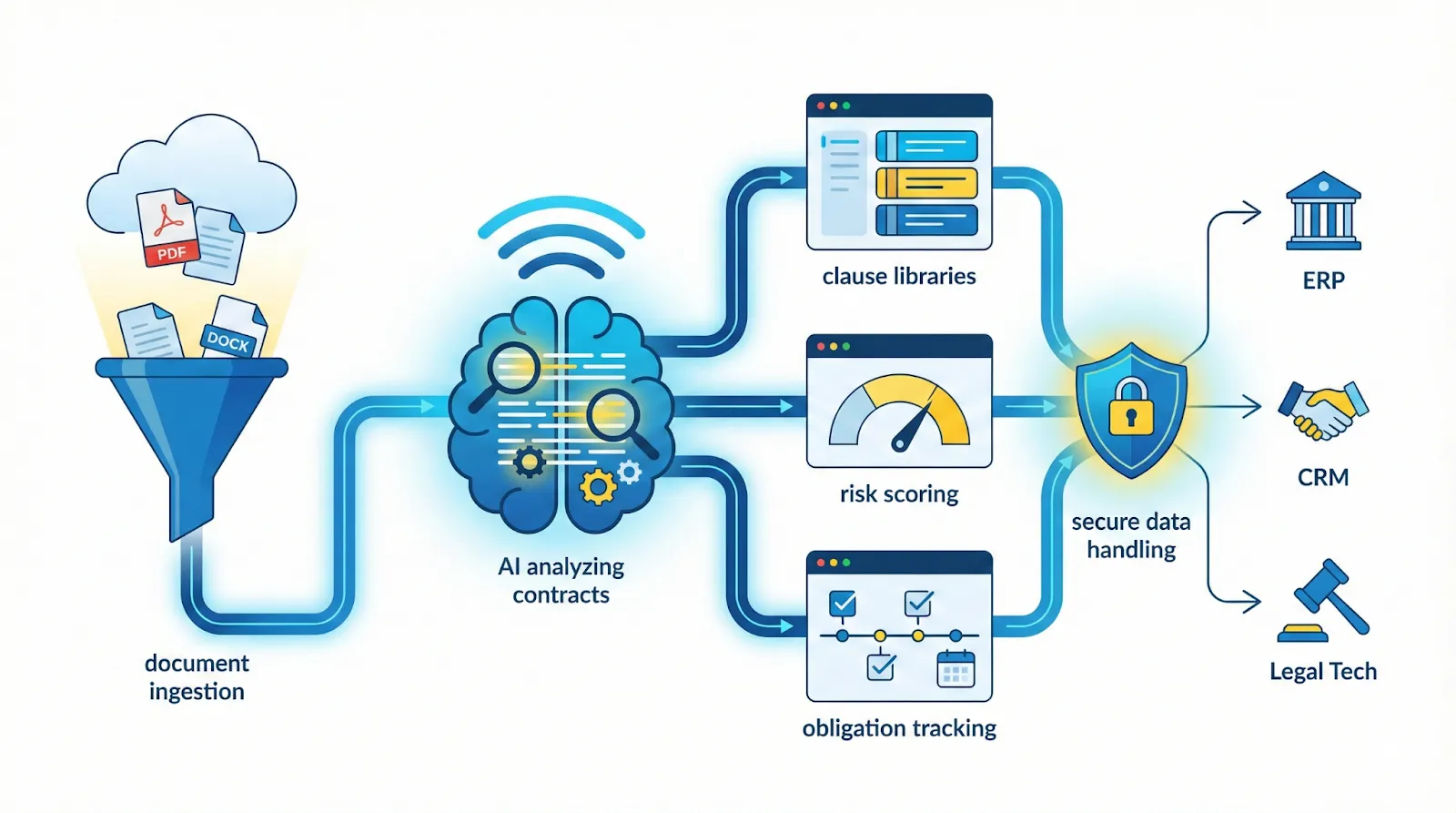
The technical foundation of AI in contract management works through several connected steps:
- Document ingestion: When you upload a contract, the system stores it while simultaneously reading every clause, identifying key provisions, and mapping relationships between terms. Data extraction converts unstructured PDFs or Word files into structured, searchable information.
- Pattern recognition: The AI compares your new contract against others in your portfolio, flagging terms that deviate from your standards or industry norms. Over time, it learns which clauses get negotiated most often, which suppliers accept certain terms, and where delays typically occur.
- Automated clause libraries: AI systems identify recurring language across your agreements and build reusable libraries automatically. When drafting new contracts, the AI suggests proven clauses without forcing teams to dig through old files or recreate language from scratch.
- Risk scoring: The system analyzes multiple factors simultaneously — payment terms, liability caps, termination rights, jurisdiction clauses — and assigns weighted scores based on your risk tolerance settings.
- Obligation tracking: AI reads through performance requirements, deadlines, and deliverables, then creates automated alerts before critical dates.
Integrating AI with your existing systems
Successful AI adoption in daily contract workflows depends on three key areas:
- Addressing the transparency problem
One Reddit concern centered on "black box" AI systems that make recommendations without explanation.
AI contract management tools counter this by highlighting the specific contract language that triggered each flag and displaying confidence scores that indicate how certain the AI is about its analysis. They also provide side-by-side comparisons that explain why one clause poses more risk than another.
Human reviewers can override AI suggestions, and those decisions feed back into the system to improve future recommendations.
- How systems connect
Most platforms integrate with ERP systems for financial data, CRM platforms for customer information, and legal tech tools to support compliance.
API-based integrations create data links between systems, while native integrations embed contract management functionality directly into tools teams already use.
Signeasy’s API lets teams embed eSignature workflows and brings key contract data directly into their applications, which reduces manual steps and improves access to agreements.
- Privacy and security architecture
Signeasy, like other leading AI contract management platforms, uses encrypted data handling throughout the entire process, protecting documents in transit and at rest.
Our approach also includes a critical privacy feature: the system doesn't train AI models on your documents, keeping contracts confidential and preventing them from being used to improve services for other customers.
Once you know how the engine runs, it’s easier to see where AI improves the lifecycle.
How AI supports each stage of the contract management
AI changes how contracts move from draft to signature to renewal. This section breaks down specific applications at each phase and shows where the technology solves actual workflow problems.
- Pre-award phase
AI automates intake by capturing requirements through simple forms or conversational interfaces, then recommends the right template based on contract type, counterparty, and risk profile.
During drafting, the system pulls appropriate clauses from your library and customizes them for the specific situation. The AI suggests language that's worked in similar deals while flagging clauses that typically trigger negotiations.
For example, Signeasy's intelligent contract management platform streamlines intake by organizing contract requests in dedicated Spaces with role-based access.
Teams can quickly locate and reuse approved templates through Smart Search, then customize standard clauses for specific situations — reducing drafting time from hours to minutes.
- Pre-signature review
Before execution, contracts require thorough review to catch risks and ensure terms align with business objectives. AI improves this traditionally time-consuming process.
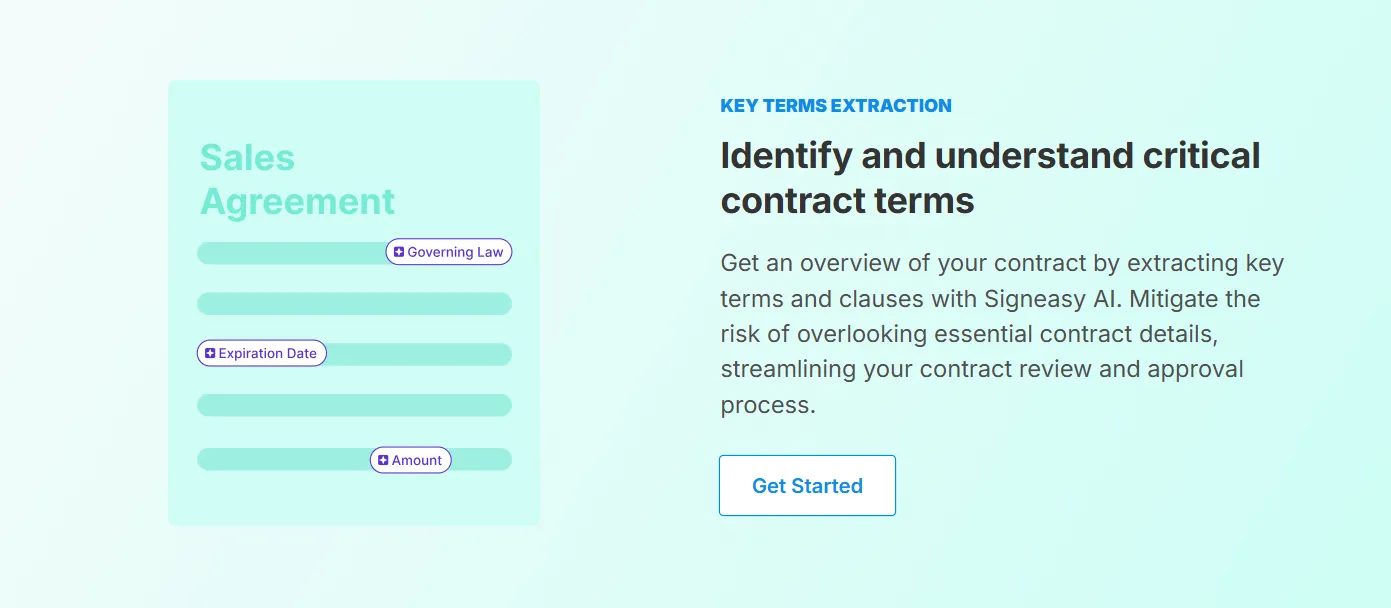
For example, Signeasy streamlines pre-signature review by identifying critical clauses through key terms extraction and condensing lengthy agreements into digestible AI summaries. Smart Q&A features also let teams ask questions and get instant answers about contract content before signing.
- Negotiation phase
Real-time support during redlining changes the negotiation dynamic. As the other party proposes changes, AI flags risky terms, suggests alternative language, and pulls historical data showing how you've handled similar requests before. Negotiators get better positioning without constant back-and-forth with legal teams.
Automated approval routing speeds decisions by sending contracts to the right stakeholders based on value thresholds, risk levels, or specific terms that require executive sign-off.
- Execution and mobilization
After signature, ai contracting software extracts obligations, deadlines, and deliverables from signed contracts. Signeasy's renewal reminder feature, for example, alerts teams about critical contract dates and integrates with Google, Apple, or Outlook calendars to keep stakeholders informed.
The post-signature phase sets the foundation for ongoing contract management by converting unstructured agreement text into actionable data points.
- Performance management
AI monitors compliance across entire portfolios simultaneously — something impossible to do manually at scale. The technology predicts potential breaches before they happen and alerts teams when spending approaches volume thresholds that trigger pricing changes.
AI helps organizations recover lost contract value by identifying renewal opportunities, flagging underutilized services, and surfacing contracts where renegotiation could improve terms.
- Analytics and optimization
Portfolio-wide risk assessment reveals patterns invisible in individual contract reviews.
AI benchmarks performance across similar agreements, identifying trends like: which payment terms correlate with faster collections, which liability caps lead to fewer disputes, or which termination clauses result in smoother exits.
Predictive insights for future negotiations draw on entire contract histories. The AI suggests starting positions more likely to succeed by analyzing patterns.
For instance, that certain suppliers consistently accept 60-day payment terms but resist 90-day terms, or that contracts with quarterly reviews have 30% fewer disputes than annual reviews.
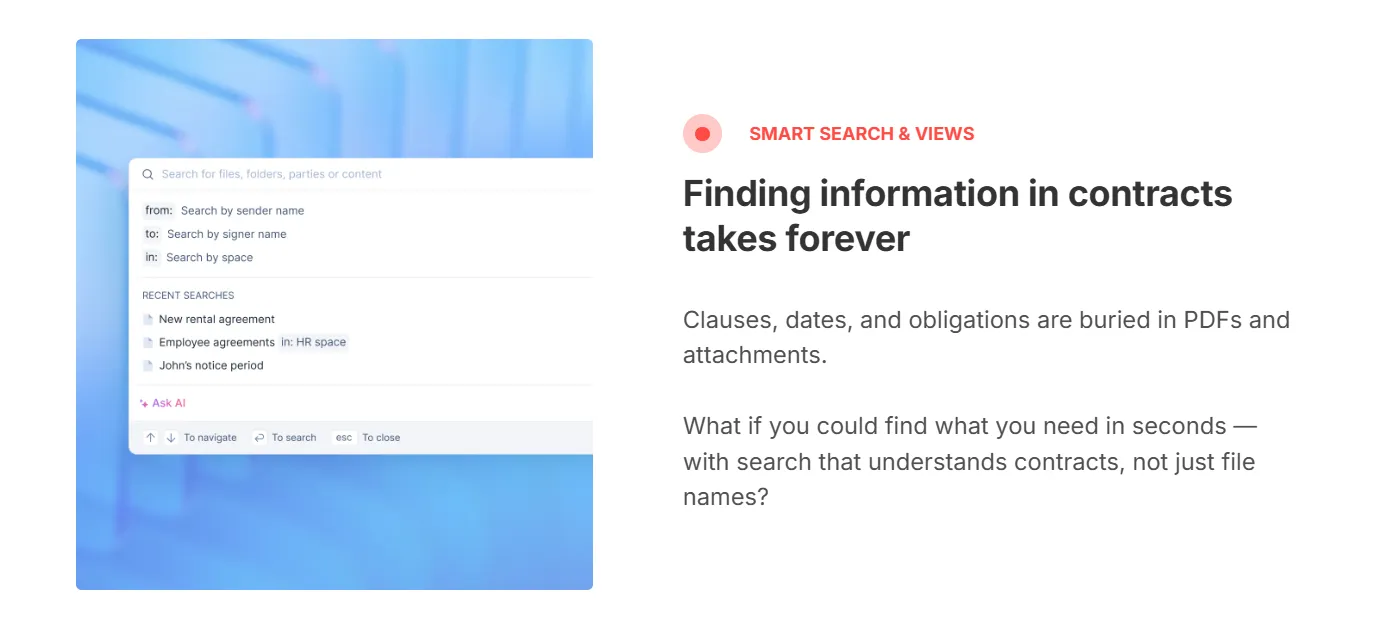
Signeasy's intelligent contract repository connects AI-powered search and insights across these phases, giving teams quick access to contract data that typically lives in disconnected systems.
Seeing AI in action naturally raises a question: what business impact does it deliver?
Key benefits of AI in contract management
AI is changing how teams manage contracts across five key areas. The table below shows the real improvements organizations are seeing day to day.
Speed and cost benefits materialize quickly — often within the first quarter of implementation. AI-driven contract drafting generates agreements using pre-approved templates and clauses in a fraction of the time manual creation requires, while automated reviews accelerate approval processes significantly.
Risk mitigation and strategic capacity improvements develop over time as systems learn from more contracts and teams adapt their workflows to utilize AI insights instead of just completing tasks with less manual effort.
Benefits aside, let’s address the legitimate Reddit concerns holding companies back.
AI contract management implementation best practices
The Reddit discussion about AI contract management adoption highlighted real concerns that deserve honest answers. This section briefly covers the most common issues teams face and focuses on best practices that resolve them during implementation.
Common challenges teams encounter
- Privacy and security concerns around sensitive contract data
- Legal and regulatory uncertainty, especially in regulated industries
- Transparency and trust issues with AI-generated recommendations
- Integration and workflow disruption caused by legacy systems
- Cultural resistance from legal and contract teams
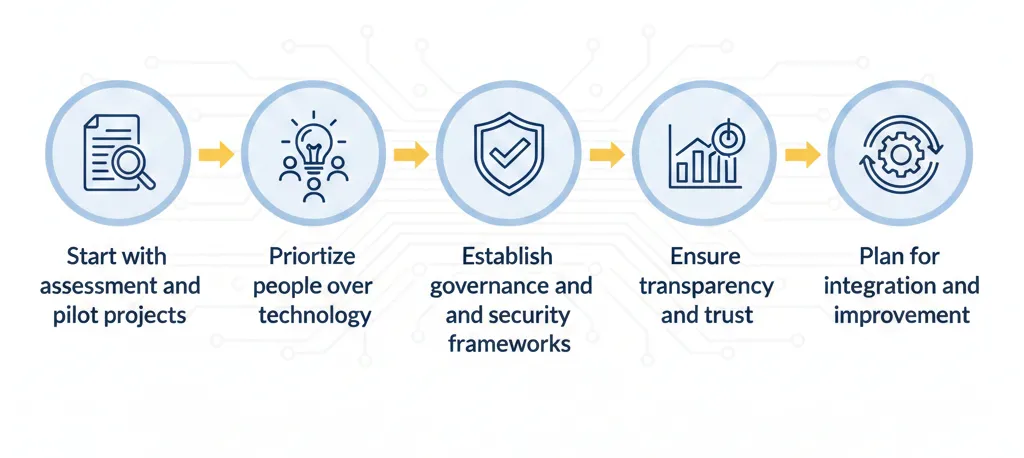
The best practices below are designed to mitigate these risks while supporting long-term adoption and value realization.
- Start with assessment and pilot projects
Begin with pilot projects targeting high-volume, low-complexity contracts. Early successes build confidence and surface integration issues before full-scale deployment.
Conduct a thorough pain point analysis, evaluate your data quality, and map current process inefficiencies before selecting vendors. The assessment will reveal where AI delivers the most immediate value and which workflows need refinement first.
- Prioritize people over technology
Successfully adopting AI depends on people, process, and organization rather than technology alone. Create comprehensive upskilling programs focused on prompt engineering, AI literacy, and change management strategies.
Address job displacement concerns directly — AI handles repetitive tasks so contract professionals can focus on negotiation and relationship management. Frame AI as a tool that elevates roles instead of replacing them.
Budget adequate time for change management. Teams need training not only on software features but also on new ways of working.
- Establish governance and security frameworks
Before selecting any AI platform, address privacy and security concerns:
- Evaluate vendor security protocols thoroughly
- Ask whether your contracts will be used to train AI models (some vendors do this, others don't)
- Determine if on-premise deployment options exist for highly sensitive agreements
- Verify that cloud-based solutions meet your security standards through encryption and access controls
Also set responsible AI principles that define when humans must review outputs and clarify who's accountable for final decisions. Build human validation checkpoints into workflows — AI should augment decisions, not make them autonomously.
For legal and regulatory compliance, maintain detailed audit trails showing human review of AI suggestions. Never send contracts based solely on AI recommendations without lawyer or contract manager approval.
Human oversight is required in regulated fields such as healthcare, finance, and government contracting, where each sector operates under specific compliance requirements.
- Ensure transparency and trust
"Black box" AI systems that make recommendations without explanation create adoption barriers. Look for platforms that show why they flagged specific clauses or how they arrived at risk scores.
Establish compliance monitoring and risk-tiered review processes from the start. Building trust takes time and grows as teams see concrete efficiency improvements.
- Plan for integration and continuous improvement
Legacy systems won't always connect smoothly with new AI tools. Compatibility issues lead to missing information and frustrating workarounds. Address integration challenges early in vendor evaluation.
Define clear success metrics from day one: track time savings, cost reductions, and user adoption rates. Use iterative development cycles with regular accuracy reviews, and stay current as AI capabilities evolve.
The aim isn't flawless implementation but responsible adoption that addresses your team's concerns and delivers workable results.
How you apply AI depends heavily on your industry's specific needs.
Industry-specific applications of Signeasy's AI contract features
Industries use AI contract management in very different ways. The following details show how industries apply AI contract management and where the biggest value comes into play.
Note for small businesses:
Artificial intelligence in contract management works for organizations of any size with proper scoping. Start with specific pain points — like subscription renewals or vendor agreement reviews — than simply trying to automate everything at once. Many AI contract management platforms offer tiered pricing and scaled feature sets that match smaller contract volumes.
Suggested Read: Top 11 Best Contract Management Software in 2026
All this context leads to one major question: how do you start responsibly?
Utilize artificial intelligence in contract management with Signeasy
Signeasy addresses the five critical barriers to AI adoption: data privacy risks, legal uncertainty, transparency concerns, integration challenges, and cultural resistance.
Our Intelligent Contract Management platform optimizes how teams organize, search, and extract value from contracts — combining foundational repository capabilities with advanced AI features.
- Intelligent repository and organization:
- Spaces provide org-level visibility with role-based access controls for Sales, Legal, Finance, and other teams
- Centralized contract storage brings together documents across inboxes and shared drives
- Version control helps teams work from the latest signed agreement
- Smart Search & Views understand contract context, not just file names — find clauses, dates, and obligations in seconds
- AI-Powered contract intelligence:
- Key terms extraction automatically identifies critical clauses like payment terms, renewal dates, and termination rights with direct links to source text
- AI summaries condense lengthy agreements into digestible overviews in seconds
- Smart Q&A lets you ask questions in natural language and get instant answers from your documents
- Automated reminders and alerts detect upcoming renewals and contractual obligations, integrating with Google, Apple, or Outlook calendars
- All capabilities work across desktop and mobile apps for on-the-go contract reviews
Signeasy processes AI on secure Azure/AWS servers with encrypted data handling. Our platform never trains models on your documents. Your contracts stay confidential and aren't used to improve services for other customers.
Signeasy also maintains SOC 2 Type 2 certification, HIPAA compliance for healthcare data, and meets eIDAS, ESIGN, and UETA standards for legal validity across jurisdictions. Every document includes tamper-evident trust seals and comprehensive audit trails.
Starting at just $20/month per user (Business plan), you get unlimited document sending, team collaboration over templates, automated reminders, AI-powered extraction and summaries, and 24/7 email support. Enterprise-grade AI becomes accessible to growing businesses.
Our platform includes sequential signing workflows, signer attachments for supporting documents, admin dashboards for team oversight, and seamless integrations with Google Workspace, Microsoft SharePoint, Outlook, and HubSpot-give AI contract platforms their operational edge. That connected visibility is what a mature contract management dashboard looks like when it is fully embedded in an organisation's existing tech stack.
Mobile apps for iOS and Android enable contract management anywhere. Reusable templates and bulk send capabilities scale with your volume.
Organizations gain a business edge by combining human judgment with AI through tools designed for practical adoption.
Start a free trial with Signeasy to test AI-driven contract insights on your agreements.