


A vendor negotiation is moving quickly when the other side asks a simple question: “What termination notice period did we agree on last year?” The answer should be straightforward. Instead, your team pauses. Someone starts searching through folders, opening a long contract, scrolling through clauses, and double-checking amendments. The information is somewhere in the document, but finding it takes time.
Moments like this are common when important contract details remain buried in lengthy legal documents. AI contract data extraction could have instantly surfaced the exact termination notice period from the contract, allowing your team to answer the question confidently without digging through pages of legal text.
Here we will discuss:
- What AI contract data extraction is and why it matters
- How AI identifies and extracts key contract data such as clauses, dates, and obligations
- The benefits of turning contracts into structured, searchable information
- Real-world use cases for AI-powered contract data extraction
- How tools like Signeasy help teams store, manage, and access contract information faster
What is AI contract data extraction?
AI contract data extraction refers to the process of using artificial intelligence to identify and capture important information from contracts and convert it into structured, searchable data. The idea behind this is to remove the need to manually read through long documents, as AI tools analyze the contract text and automatically extract key terms such as dates, obligations, pricing details, and clauses.
Usually, contracts are stored as PDFs, Word files, or scanned documents, and the information inside them is unstructured. AI contract data extraction takes this unstructured text and turns it into organized data fields that your internal teams and stakeholders can easily search, analyze, and track.
This capability becomes particularly valuable as operations, finance, legal, and HR teams take on more agreements without the overhead of a complex CLM system. AI can quickly surface critical information like renewal deadlines, payment terms, or termination clauses without requiring teams to manually review each document.
1. Key technologies behind AI contract data extraction
Several technologies work together to enable accurate contract data extraction.
- Natural Language Processing (NLP): Natural language processing allows AI systems to interpret legal language and understand the meaning of clauses, obligations, and contract terms.
- Machine Learning: Machine learning models learn patterns from large collections of contracts. Over time, they become better at identifying clause types, recognizing key entities, and improving extraction accuracy.
- Optical Character Recognition (OCR): OCR converts scanned contracts or image-based documents into machine-readable text so that AI systems can analyze the content.
- Intelligent Document Processing: Intelligent document processing combines AI, OCR, and workflow automation to capture contract data and organize it into structured formats that business systems can use.
2. What data can AI extract from contracts?
AI tools can extract a wide range of contract information depending on your organization’s needs.
2a. Contract Metadata
- Parties involved in the agreement
- Contract type
- Effective date
- Renewal terms
2b. Financial and Commercial Terms
- Payment obligations
- Pricing structures
- Service-level agreements (SLAs) and performance metrics (KPIs)
2c. Legal Clauses
- Termination clauses
- Liability terms
- Governing law provisions
Automatic extraction helps your teams to quickly locate critical information across large contract portfolios and track obligations more effectively.
To summarize
- AI contract data extraction converts unstructured contract text into structured, searchable information for faster analysis and decision-making.
- Technologies such as NLP, machine learning, OCR, and intelligent document processing enable automated extraction of key contract details.
- AI can identify metadata, financial terms, and legal clauses across large volumes of contracts.
- Structured contract data helps teams locate critical information quickly and manage contractual obligations more efficiently.
How AI contract data extraction works
AI contract data extraction may sound complex, but the process follows a clear sequence of steps. Each stage helps convert a static contract document into structured information that teams can easily search and analyze.
Step 1. Document ingestion
The process begins when contracts are uploaded into a system. These files can come in different formats such as PDFs, Word documents, or scanned images.
For example, a procurement team might upload a vendor agreement stored as a PDF, along with several older contracts that were scanned from physical copies. The AI system collects these files and prepares them for analysis.
Step 2. Text recognition
If a contract is scanned or saved as an image, optical character recognition (OCR) converts the visual text into machine-readable content.
For instance, a scanned supplier contract might contain a clause stating, “Payment shall be made within thirty days of invoice receipt.” OCR converts that sentence into digital text so the AI system can process it further.
Step 3. AI and NLP processing
Once the text becomes readable, AI models powered by natural language processing analyze the document to identify key entities and terms.
The system can recognize details such as company names, dates, clause headings, and monetary values. For example, it may identify:
- Party names like “ABC Logistics Pvt. Ltd.” and “Delta Manufacturing”
- Dates such as “Effective Date: 1 January 2025”
- Financial values like “$50,000 annual licensing fee”
Step 4. Clause identification and classification
After identifying the text elements, the AI system classifies sections of the contract into specific clause types.
For example, a paragraph that begins with “Either party may terminate this agreement with 60 days’ written notice” can be categorized as a termination clause. Similarly, a section describing liability limits may be classified as a liability clause.
This classification helps you find and compare similar clauses across multiple contracts.
Step 5. Data structuring
Finally, the extracted information is converted into structured fields that software systems can store and analyze.
Instead of remaining buried inside a long document, contract data becomes organized entries such as:
- Effective date: 1 January 2025
- Renewal period: 12 months
- Payment term: Net 30
- Termination notice: 60 days
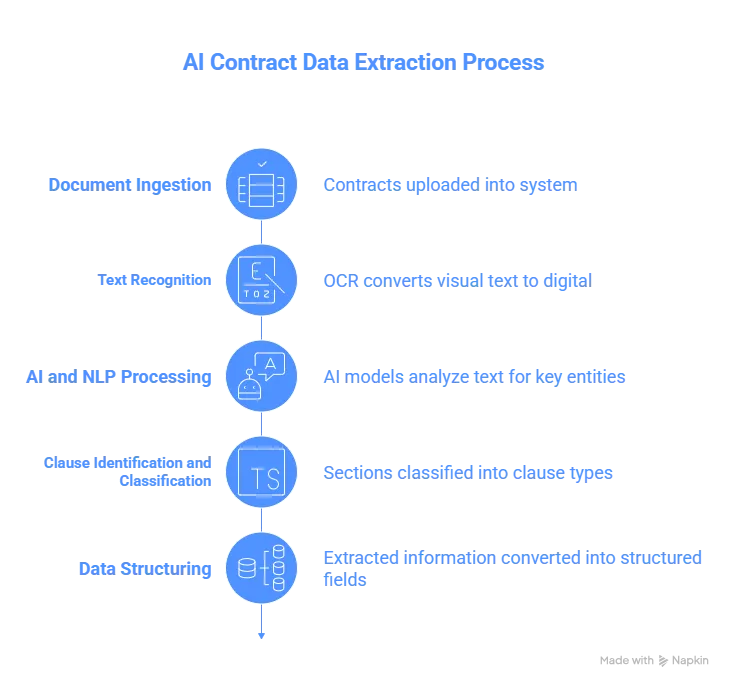
Once structured, this information can power search functions, contract dashboards, and automated alerts for renewals or obligations.
Why businesses need AI contract data extraction
More vendor agreements, procurement contracts, and partnership deals come with business growth — and so does the volume of legal documents that need tracking. Extracting important details manually from these contracts can slow down operations and increase the risk of oversight.
1. The limitations of manual contract review
- Time-consuming and expensive: Legal or operations teams often spend hours reviewing contracts to locate specific clauses or dates. This manual effort increases operational costs and delays decision-making.
- Difficult to scale with growing contract volumes: As contract portfolios expand into hundreds or thousands of documents, manual review becomes increasingly impractical and difficult to manage consistently.
- Risk of missed clauses or compliance issues: Important details such as renewal deadlines, termination terms, or regulatory clauses can easily be overlooked during manual reviews, which may expose your business to compliance risks.
2. The operational benefits of AI extraction
- Faster contract reviews: AI systems can analyze contracts within seconds, quickly surfacing important information such as renewal terms, payment conditions, or notice periods.
- Reduced human error: Automated extraction minimizes the risk of overlooking key clauses or misinterpreting contract language during manual review.
- Better compliance monitoring: Extracted data makes it easier to track obligations, regulatory clauses, and contract deadlines across multiple agreements.
- Improved decision-making through structured data: When contract details are organized into structured fields, teams can search, compare, and analyze contract information more efficiently.
AI-powered systems can extract specific clauses and key terms across thousands of contracts within seconds, allowing you to access critical information without reviewing each document individually.
How to implement AI contract data extraction
Implementing AI contract data extraction works best when you follow a structured approach. Instead of trying to extract every possible data point immediately, your teams should begin with clearly defined goals and gradually expand their extraction capabilities.
Step 1: Identify the contract data you need
Start by determining which contract details are most important for your teams to track. This may include renewal dates, termination notice periods, payment terms, liability clauses, or governing law.
For example, a procurement team may focus on vendor obligations and pricing terms, while a legal team may prioritize indemnity and compliance clauses.
Step 2: Centralize your contracts
AI tools work best when contracts are stored in a centralized, searchable repository. Instead of scattered files across email threads, shared drives, and local folders, contracts should be organized in one accessible system.
Centralizing contracts allows AI systems to analyze documents consistently and enables teams to search across their entire contract portfolio.
Suggested read: Contract database software: how to choose the right one
Step 3: Train or configure AI models
Next, configure the AI system to recognize the specific clauses and metadata you want to extract. Some platforms allow users to define extraction rules or train models using sample contracts.
For instance, the system can be configured to automatically identify phrases that indicate renewal terms, such as “This agreement shall renew automatically for an additional 12 months.”
Step 4: Integrate with business systems
Extracted contract data becomes more valuable when it connects with existing business tools. Integrating with CRM, ERP, procurement platforms, or contract management systems allows teams to use contract insights within their daily workflows.
For example, extracted renewal dates can trigger reminders in procurement systems or notify account managers before contracts renew.
Step 5: Continuously improve accuracy
AI extraction improves over time with monitoring and feedback. Teams should periodically review extraction results, correct inaccuracies, and refine clause classifications.
This ongoing process helps the system learn from real contracts and gradually improve the accuracy and reliability of extracted data.
Or, you can get Signeasy, which automatically extracts key contract data such as dates, clauses, and obligations while keeping your agreements organized in one place. With built-in automation, integrations, and compliance features, teams can quickly access contract insights and manage renewals without manual tracking.
Real-world use cases for AI contract data extraction
If your legal, procurement, finance, or operations team is still manually digging through contracts, AI data extraction can change that. By automatically capturing key information, you can manage obligations, monitor risks, and make faster decisions, without reviewing every document individually.
1. Contract management
AI can automatically extract key contract fields the moment a document is uploaded. Details such as contract parties, effective dates, renewal terms, and payment clauses become structured data that teams can search and track throughout the contract lifecycle.
For example, when a new vendor agreement is uploaded, the system can instantly capture the renewal date and trigger reminders before the contract expires.
Suggested read: Vendor contract management: Best practices for your team
2. Compliance monitoring
Regulatory and contractual obligations are often buried inside lengthy documents. AI extraction helps identify clauses related to compliance requirements, reporting obligations, or regulatory standards.
For instance, a contract may include a clause requiring a supplier to comply with specific data protection regulations. AI systems can flag and track these obligations across multiple agreements.
3. Risk management
AI tools can compare contract clauses against standard templates or preferred legal language to identify deviations that may introduce risk.
For example, if a liability clause in a vendor contract exceeds the organization’s standard liability cap, the system can highlight the variation so legal teams can review it.
4. Financial and procurement insights
Contracts often contain valuable financial data such as pricing structures, payment terms, and vendor commitments. AI extraction allows procurement and finance teams to analyze these details across large contract portfolios.
For example, you can track vendor pricing terms across multiple agreements to identify opportunities for cost optimization or renegotiation.
Challenges and limitations of AI contract data extraction
AI contract data extraction continues to improve, but some challenges remain. Complex legal language and non-standard contract structures can make clause identification difficult. Poor-quality scans may also reduce OCR accuracy, while sensitive contract data requires strong privacy and security controls.
Modern AI models are increasingly better at recognizing clause variations, understanding legal context, and improving extraction accuracy over time.
How AI contract data extraction fits into modern contract management
Contracts move through several stages during their lifecycle, from drafting and negotiation to signing, storage, and ongoing monitoring. AI contract data extraction plays an important role across this entire process by making the information inside contracts easier to access and use.
During contract creation and negotiation, teams often need to review existing agreements to check standard clauses, liability limits, or pricing terms. AI extraction allows you to quickly search previous contracts and retrieve relevant clauses without manually reviewing multiple documents.
Once a contract reaches execution, extracted data helps capture important fields such as effective dates, payment terms, and renewal conditions. This information can be automatically stored as structured metadata alongside the signed agreement.
In the storage and management phase, AI extraction becomes even more valuable. Instead of treating contracts as static documents, you can turn them into searchable operational records. Teams can quickly locate specific clauses, track obligations, monitor renewal deadlines, and analyze contract terms across their portfolio.
When your contract text is converted into structured data, you stop just storing agreements and start using them to drive everyday business decisions.
How Signeasy supports AI-powered contract workflows
AI contract data extraction delivers the most value when it sits within a system that helps teams create, sign, organize, search, and monitor agreements throughout their lifecycle. Signeasy brings these capabilities together so contract information remains accessible and actionable long after a document is signed.
1. Centralized contract management
One common challenge organizations face is that contracts often live across inboxes, shared drives, and local folders. This fragmentation makes it difficult to locate the latest version of an agreement or confirm what has already been signed.
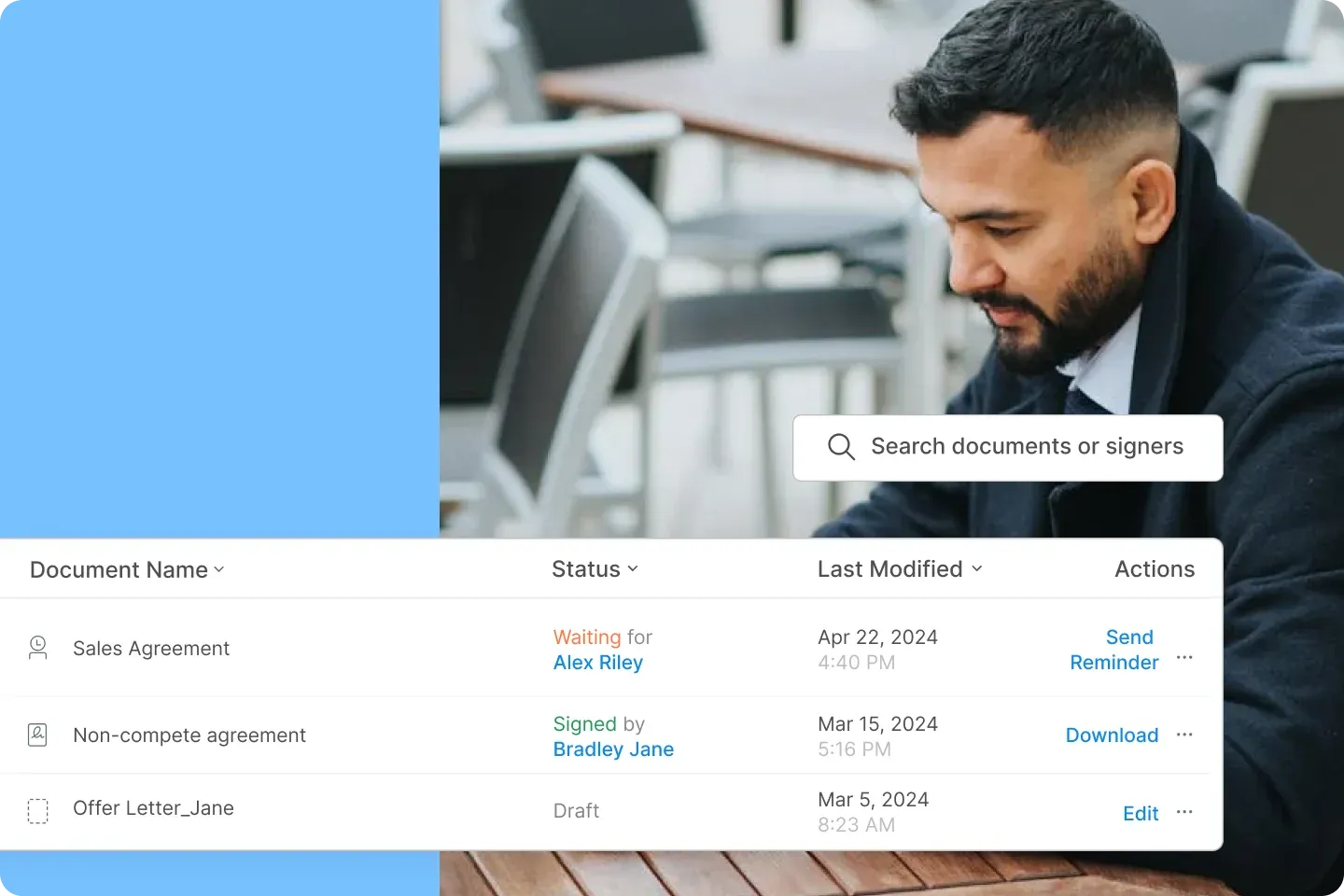
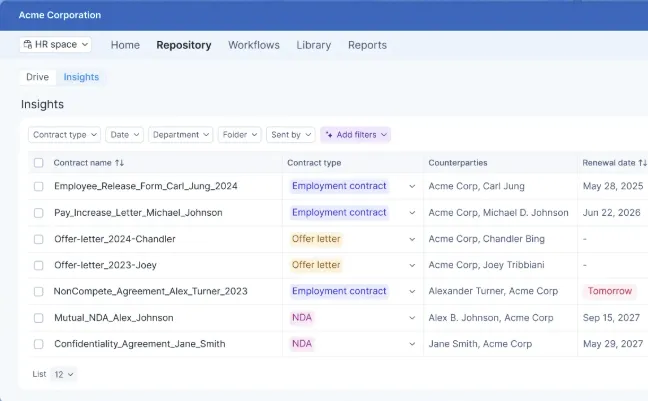
Signeasy provides an intelligent contract repository that stores every agreement in one organized workspace. Teams can upload contracts, categorize them by contract type or department, and track metadata such as signers, contract type, counterparties, and renewal dates. This creates a single source of truth where agreements remain easy to locate, review, and manage.
Because contracts are stored in a structured system, teams can also filter and view agreements based on specific attributes — for example, contracts expiring within a certain timeframe or agreements associated with a particular counterparty. The result is clearer visibility across your entire contract portfolio, with the right information always within reach.
2. Shared workspaces for cross-team collaboration
Contracts rarely involve only one department. Legal, sales, procurement, and finance teams often interact with the same agreements, but they may store or manage documents differently.
Signeasy provides shared workspaces that allow teams to organize contracts by department, project, or function. Access controls ensure the right stakeholders can view or manage agreements while maintaining appropriate permissions. This structure improves collaboration while giving your team better visibility into contract activity across departments.
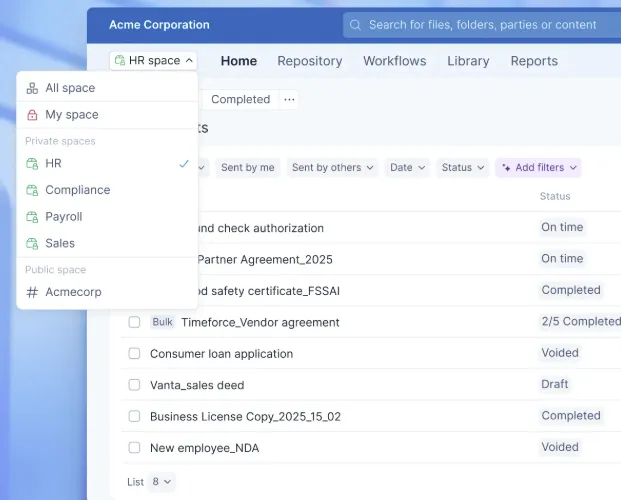
See how shared workspaces in Signeasy help teams organize contracts and collaborate more efficiently across departments.
3. Smart search for contract discovery
Important contract information is frequently buried inside long documents, making it difficult to find specific clauses or details quickly.
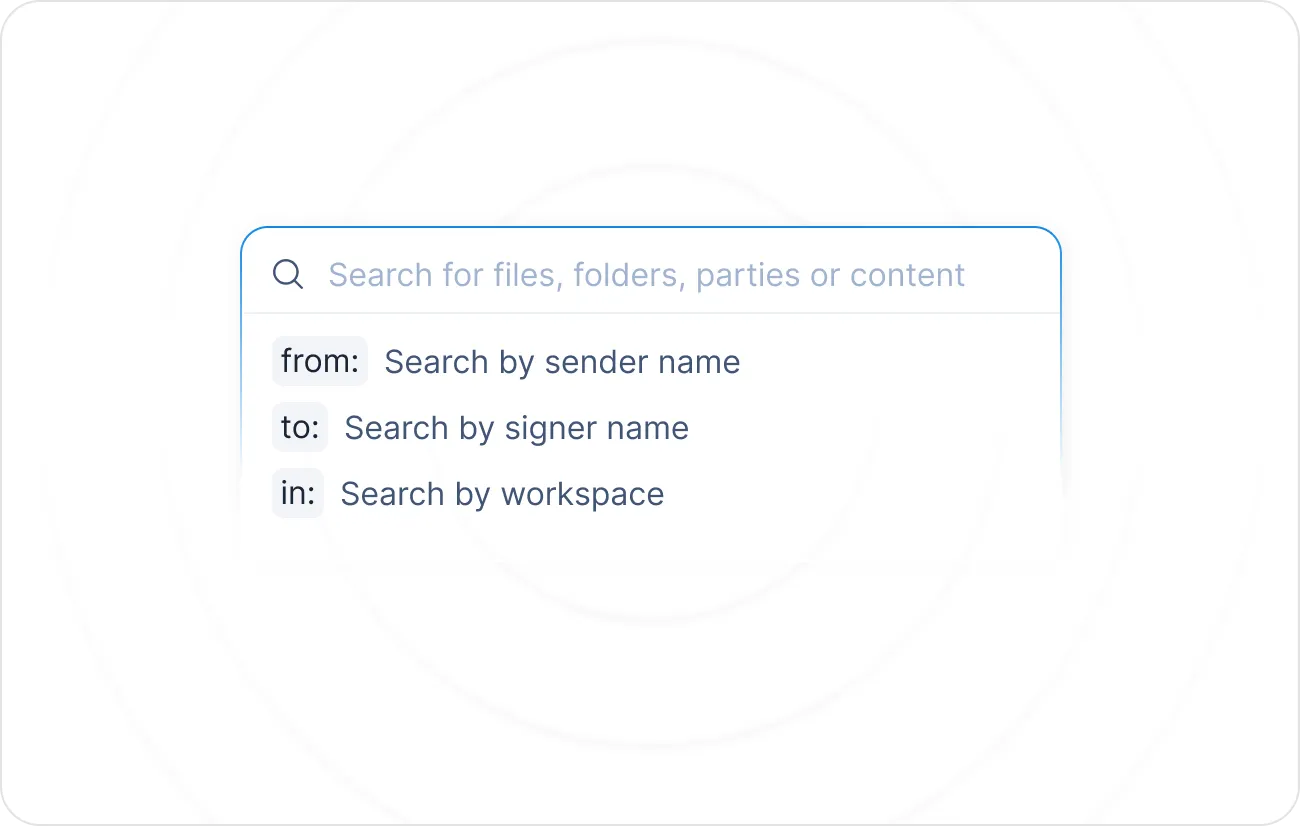
Signeasy enables smarter search capabilities that allow users to locate agreements and contract information using document names, parties involved, or key terms. Instead of manually opening multiple files, teams can quickly surface relevant contracts and access the information they need.
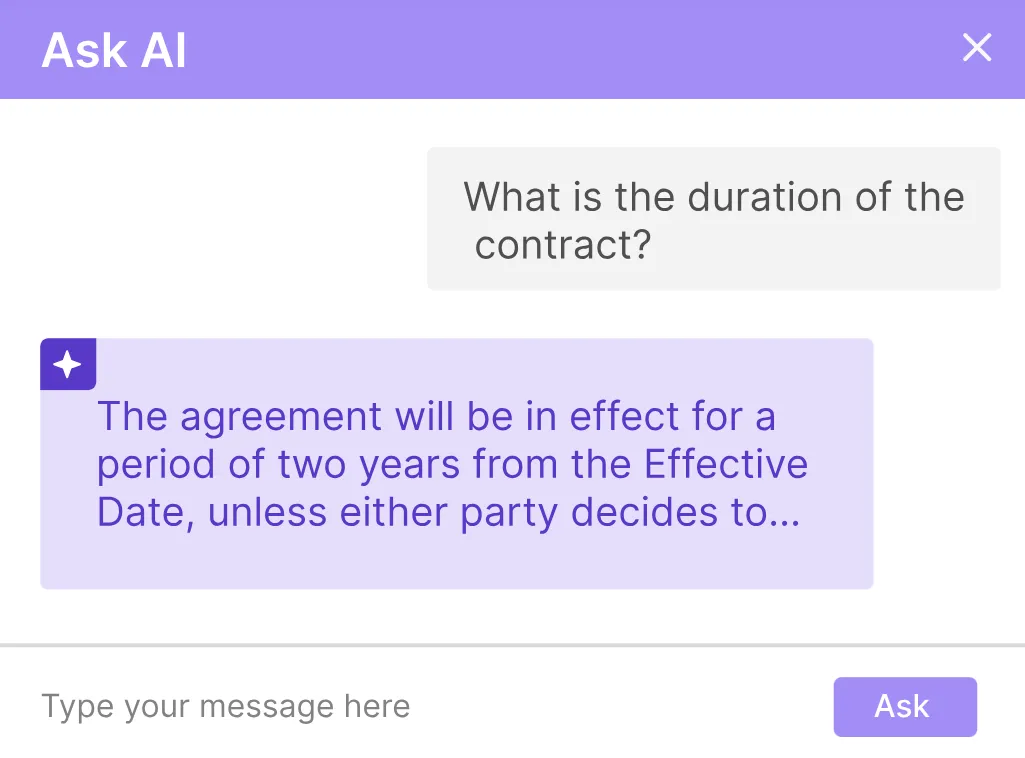
4. AI-powered Q&A for contract insights
AI tools can further improve contract accessibility by allowing users to ask questions directly about their agreements.
With AI-powered Q&A capabilities, users can retrieve specific information from contracts without manually reviewing entire documents. For example, a user could ask about the duration of an agreement or a specific obligation, and the system can highlight the relevant section of the contract.
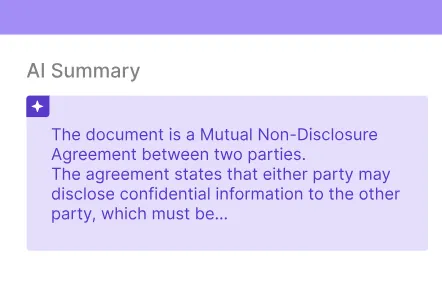
5. AI contract summaries for faster reviews
Contracts often contain dense legal language that requires careful reading. AI summaries help simplify this process by highlighting key information from a document.
Signeasy AI can generate concise summaries of agreements, helping teams quickly understand the purpose, scope, and important clauses within a contract. This can reduce the time required for initial contract review and support faster decision-making.
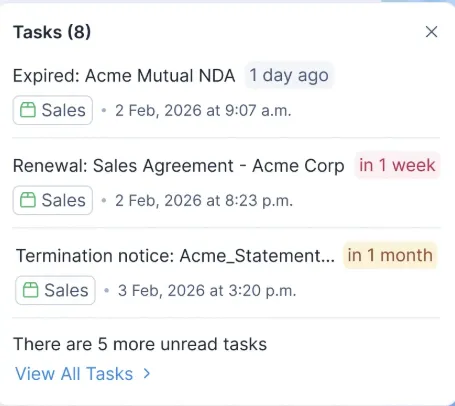
6. Automated alerts for contract milestones
Key dates such as renewals, termination windows, or compliance obligations can easily be overlooked when they remain buried in contract text.
Signeasy helps teams stay ahead of these deadlines with automated alerts and reminders for important milestones. Notifications can be integrated with common calendars such as Google, Apple, or Outlook, ensuring stakeholders are informed about upcoming contract events before they become urgent.
When centralized storage, intelligent search, AI-assisted insights, and automated reminders work together, contracts become more than static documents — they become accessible business records teams can actively use in daily operations.
Bring AI-powered contract insights into your workflow
AI contract data extraction helps your team turn contracts from static documents into structured, searchable business data, making it easier to find key terms, monitor obligations, and support faster decisions across the contract lifecycle.
Signeasy combines AI-powered contract insights with secure document workflows — built for teams that need powerful contract management without CLM complexity. It protects agreements with security features such as single sign-on, two-factor authentication, role-based access controls, and tamper-evident audit trails that record every document action.
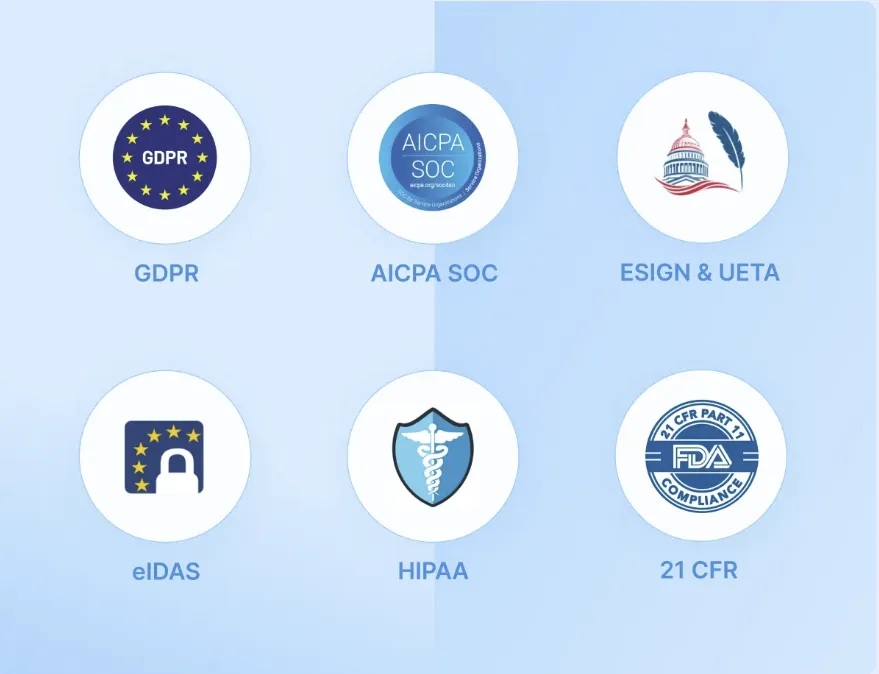
Signeasy is also designed to support regulatory compliance across the contract lifecycle, aligning with global frameworks such as the Electronic Signatures in Global and National Commerce Act, Uniform Electronic Transactions Act, General Data Protection Regulation, and Health Insurance Portability and Accountability Act, so your team can manage agreements confidently.
Flexible pricing plans are available for individuals, growing teams, and larger businesses, including Business ($20 per seat per month) and Business Pro ($30 per seat per month), billed yearly, with scalable features for contract management and automation.
See how Signeasy can help your team automatically extract key contract data, track obligations, and manage agreements more efficiently. Request Demo to explore how AI-powered contract insights and secure workflows come together in one platform.