


Every contract your business signs carries a promise. But without the right safeguards, that promise can quickly turn into a liability.
Many organizations treat contract compliance and integrity as a reactive, checkbox exercise. They focus on meeting the bare minimum requirements without building integrity into the process.
The result: missed obligations, disputes, and eroded trust with partners and clients.
Integrity assurance and contract compliance changes that. When integrity is part of how contracts are created, executed, and managed, the entire compliance process becomes stronger and more sustainable.
In this guide, you will learn:
- What integrity assurance means in contract management, and how it differs from standard compliance
- Why contract compliance matters for businesses of every size
- How to build an integrity-driven compliance program with practical frameworks
- How technology strengthens integrity assurance in contract compliance at scale
- How Signeasy helps teams maintain compliance and contract integrity
What is integrity assurance in contract management?
Integrity assurance in contract management is the practice of embedding ethical standards, transparency, and accountability into every stage of the contract lifecycle. It covers how agreements are drafted, reviewed, signed, stored, and monitored after execution.
Standard compliance focuses on meeting specific regulatory or contractual requirements. It answers the question: "Are we following the rules?" Integrity assurance goes a step further, and asks: "Are we following the rules for the right reasons, and can we prove it?"
In practice, it means the how matters as much as the what. Standard compliance might require an approval on a contract; integrity assurance makes sure that approval came from the right person, was documented, and can be verified at any point.
Hence, integrity assurance in contract management includes:
- Maintaining tamper-proof audit trails that log every action taken on a contract
- Enforcing role-based access so only authorized personnel can view or modify sensitive agreements
- Documenting approval and contract workflows to show who reviewed and signed off at each stage
- Applying consistent ethical standards across all vendor, partner, and client contracts
- Setting up ongoing monitoring to verify obligations are being met after execution
In government contracting, integrity assurance is a formal requirement. The U.S. Federal Acquisition Regulation (FAR) requires the federal acquisition system to operate with "integrity, fairness, and openness" and mandates that government contractors maintain a written code of business ethics and conduct.
Federal agencies track compliance through tools like the Contractor Performance Assessment Rating System (CPARS), which logs contractor performance and integrity information on a quarterly basis.
Understanding the concept is the starting point. The next step is recognizing why contract compliance itself matters for your business.
Why contract compliance matters for every business
Contract compliance is the process of ensuring that all parties involved in an agreement fulfill their obligations as documented. It covers deadlines, payment terms, deliverables, regulatory requirements, and any other conditions outlined in the contract. When compliance breaks down, the consequences reach far beyond a missed clause.
Here is why it matters:
- Financial protection: Missed payment terms, auto-renewals at unfavorable rates, and untracked penalties lead to revenue leakage over time. An overlooked clause can cost more than the contract itself.
- Legal and regulatory risk: Contracts often carry obligations tied to regulations like GDPR, HIPAA, or industry-specific standards. Failing to meet those obligations exposes the business to fines, lawsuits, and enforcement actions.
- Operational continuity: When contract terms are unclear or unenforced, teams work with outdated information. For example, procurement negotiates without knowing the current terms, while finance processes payments against the wrong schedules.
- Trust and business relationships: Partners, vendors, and clients notice when commitments go unfulfilled. Repeated lapses damage credibility and make future negotiations harder.
- Audit readiness: Organizations that track compliance proactively spend less time scrambling during audits and more time focusing on actual performance.
Contract compliance addresses the "what" of fulfilling obligations. But understanding how integrity strengthens that process requires looking at both concepts in the same vein.
How do integrity and compliance work together?
Compliance tells you what needs to happen, and integrity tells you why it matters and whether it is happening the right way. In contract management, the two work as connected layers.
Compliance defines the obligations, deadlines, and regulatory requirements embedded in each agreement. Integrity assurance ensures those obligations are met transparently, ethically, and with a verifiable trail behind every action.
A procurement team can meet every payment deadline in a vendor contract (compliance) while quietly approving invoices without proper review (an integrity gap). The contract terms are technically fulfilled, but the process lacks the accountability and transparency that protect the business long term. Left unchecked, those gaps compound into revenue leakage, disputed invoices, and costs that only surface when it is too late to recover them.
When both work together, contract management becomes stronger at every stage of the lifecycle:
- Drafting and negotiation: Integrity assurance confirms that terms are fair, clearly documented, and reviewed by the right stakeholders before signing. Compliance ensures the contract includes all required regulatory clauses.
- Execution and signing: Integrity is upheld through verified signer identities, tamper-proof records, and audit trails that log every action. Compliance is met when signatures satisfy legal standards like the ESIGN Act or eIDAS.
- Ongoing management: Compliance tracking monitors whether deliverables are met and payments are on schedule. Integrity assurance adds a layer of accountability by verifying that the right people approved changes, that access to sensitive terms is restricted, and that all modifications are logged.
- Renewal and close-out: Compliance flags upcoming deadlines and auto-renewal windows. Integrity ensures renewal decisions are made based on documented performance.
Without integrity, compliance becomes a surface-level exercise. Without compliance, integrity has no structure to enforce.
With this relationship in mind, here is what a program built on both looks like.
Key components of an integrity-driven compliance program
An integrity-driven compliance program builds accountability, transparency, and ethical oversight into the daily operations of contract management. The components below form the foundation of a program that holds up under scrutiny and scales with your business.
1. Clear policies and ethical standards
Every compliance program starts with documented policies that define how contracts should be created, reviewed, approved, and managed. But integrity requires those policies to go further. They should outline expected ethical conduct during negotiations, specify how conflicts of interest are handled, and establish consequences for violations.
These standards need to be accessible. Teams across procurement, legal, finance, and operations should understand what is expected of them at each stage of the contract lifecycle.
When policies are clear and consistently enforced, decision-making becomes more predictable and less dependent on individual judgment.
2. Audit trails and documentation
Audit trails are the backbone of both compliance and integrity assurance. The documentation serves two purposes.
First, it provides evidence during audits and disputes. Second, it creates a culture of accountability. When people know their actions are recorded, they are more likely to follow established procedures.
Effective audit trails should capture who viewed the contract, who edited it, who approved it, and who signed it. They should also flag any changes made after execution, so post-signature modifications do not go unnoticed.
Platforms that support contract automation generate these records automatically, removing the risk of human error or selective documentation.
3. Role-based access and accountability
Not every team member needs access to every contract. Compensation agreements, acquisition terms, and confidential vendor pricing should be visible only to senior leadership, legal, and the finance teams directly involved in those agreements. Role-based access controls (RBAC) enforce this by assigning permissions based on job function and seniority.
Beyond restricting visibility, RBAC creates clear accountability. When access is tied to specific roles, it is easier to trace who was responsible for a particular action or decision.
4. Ongoing monitoring and review
Contracts carry obligations that span months or years, including payment schedules, performance benchmarks, regulatory filings, and renewal deadlines.
Ongoing monitoring ensures those obligations are tracked and met throughout the contract's lifecycle. Regular reviews surface gaps early, whether that is a missed deliverable, an approaching expiration, or a change in regulation that affects existing terms.
But even with the right components in place, certain challenges can undermine the process.
Suggested read: Contract Compliance Reporting: A Practical Guide
What are common contract compliance challenges?
Even well-intentioned compliance programs run into obstacles. Some are structural, others are cultural. Recognizing these challenges early makes it easier to address them before they lead to missed obligations, regulatory exposure, or broken trust.
1. Lack of visibility into contract obligations
When contracts are scattered across email inboxes, shared drives, and local folders, no single person has a complete picture of what the organization has committed to.
A finance team may not know about a payment escalation clause buried in a vendor agreement. At the same time, a procurement lead may miss a renewal window because the contract lives in someone else's inbox.
The lack of visibility creates blind spots, where obligations go untracked, deadlines pass without action, and teams make decisions based on incomplete information.
How to overcome this: Consolidate everything into a centralized, searchable contract repository. When every agreement lives in one place, teams gain shared visibility into obligations, deadlines, and contract status without relying on individual memory or manual tracking.
2. Keeping up with regulatory changes
Regulatory requirements shift frequently. Data privacy laws expand, industry-specific standards get updated, and cross-border agreements introduce new compliance controls.
For businesses operating across multiple jurisdictions, this challenge multiplies. What satisfies a U.S. regulation may not meet EU standards, and vice versa.
How to overcome this: Build regulatory review into your contract monitoring process. Schedule periodic reviews of active contracts against current regulations, and use contract management platforms that support compliance across multiple frameworks, including ESIGN, eIDAS, GDPR, HIPAA, and SOC 2.
3. Getting buy-in across teams
Compliance programs lose momentum when they sit with one department. Contracts touch sales, HR, finance, operations, and leadership. If compliance is positioned as a legal or procurement initiative alone, other teams treat it as someone else's problem.
The result is informal workarounds, undocumented approvals, and terms that get modified outside the established workflow.
How to overcome this: Make compliance a shared responsibility. Give relevant stakeholders access to the contracts that affect their work. Use role-based permissions to balance visibility with security, and establish clear workflows that define who is responsible for what at each stage of the contract management process.
These challenges are common, but they are not inevitable. Next, we look at practical steps to build contract integrity into your daily operations to sidestep these problems and create a foundation that protects the business when it matters most.
Best practices for building contract integrity
Integrity in contract management is a set of habits and systems that ensure every agreement is handled consistently, transparently, and with clear accountability. The practices below help teams move toward proactive contract integrity.
1. Build a clause library of pre-approved, compliant language
Contract risk often enters during drafting and negotiation, when teams create agreements from scratch or pull language from outdated contract templates.
A clause library gives teams a centralized set of vetted, compliant language for common scenarios, covering everything from indemnification and termination to data handling and liability caps.
When regulations change, the library becomes the sole place to update language, ensuring every future contract reflects the latest standards. The result is quicker drafting, fewer legal bottlenecks, and a lower chance of non-compliant terms making it into a signed agreement.
Albea Cosmetics, one of the world's leading beauty packaging companies, manages contracts across procurement, legal, finance, HR, and sales teams spanning manufacturing units in Mexico and headquarters in Paris.
After adopting Signeasy, they standardized document workflows using templates and Envelopes to bundle up to 10 documents into one signature request. 32% of contracts are now completed within the first hour, and 73% now turn around within 24 hours.
2. Use a risk-based approach to compliance prioritization
Treating a multi-year enterprise vendor agreement the same as a short-term freelancer contract wastes resources. It also creates the kind of fatigue that leads teams to cut corners where it matters.
A risk-based approach segments contracts by:
- Value and financial exposure: Higher-value agreements warrant deeper review and more frequent monitoring.
- Regulatory sensitivity: Contracts involving personal data, healthcare records, or financial information require stricter compliance checks.
- Strategic importance: Agreements tied to key partnerships or revenue streams deserve tighter oversight and shorter review cycles.
Doing this keeps compliance efforts focused where the stakes are highest.
Suggested read: Top 7 Contract Management Best Practices
3. Create a contract compliance and integrity scorecard
What gets measured gets managed. A compliance scorecard tracks performance across active agreements and gives leadership a clear view of where the organization stands. Useful metrics to track include:
- Percentage of contracts with complete audit trails
- Average time to resolve flagged compliance gaps
- Number of contracts approaching renewal without a completed review
- Frequency of unauthorized modifications or access attempts
Over time, this data reveals patterns, whether certain vendors consistently miss deadlines, specific contract types carry more risk, or particular teams need additional support. It turns compliance from a qualitative judgment call into a measurable, improvable process.
Technology plays a central role in making these practices sustainable at scale. Here is how automation, digital audit trails, and generative AI in contract management strengthen compliance.
The role of technology in integrity assurance and contract compliance
Technology has shifted integrity in contract compliance from a manual, resource-heavy process to one that can be automated, monitored, and scaled with far less effort.
From reducing human error during drafting to maintaining real-time visibility across hundreds of active agreements, the right tools make integrity assurance in contract compliance sustainable.
1. Automation that makes compliance the default
Contract automation handles the repetitive, high-risk tasks most prone to human error:
- Routing contracts through the correct approval chain before execution
- Sending deadline reminders for renewals, payments, and regulatory reviews
- Starting every agreement from a pre-approved template with compliant language already in place
When those tasks run in the background, compliance becomes a default rather than something that depends on someone remembering to follow up.
2. AI that makes contracts usable
An intelligent contract repository lets teams search across their entire library by keyword, clause type, or party name.
AI-based contract management helps compliance teams understand what a contract contains without reading it cover to cover. For organizations managing hundreds of active agreements, this turns hours of manual review into focused, targeted analysis.
3. Digital audit trails that replace guesswork with proof
None of the above matters without a reliable record of what happened and when. That is where digital audit trails come in, and where the gap between modern and legacy systems is widest.
With digital audit trails replacing paper-based records, the next step is seeing how these capabilities come together in a unified platform like Signeasy.
Suggested read: Contract compliance auditing: frameworks, challenges and solutions
How Signeasy supports integrity and compliance
Signeasy brings together the security, automation, and contract intelligence features that make integrity assurance and contract compliance practical for teams of any size. Here is how it helps.
1. Built-in security for every contract
Signeasy's Advanced Contract Security embeds integrity and accountability into every contract interaction:
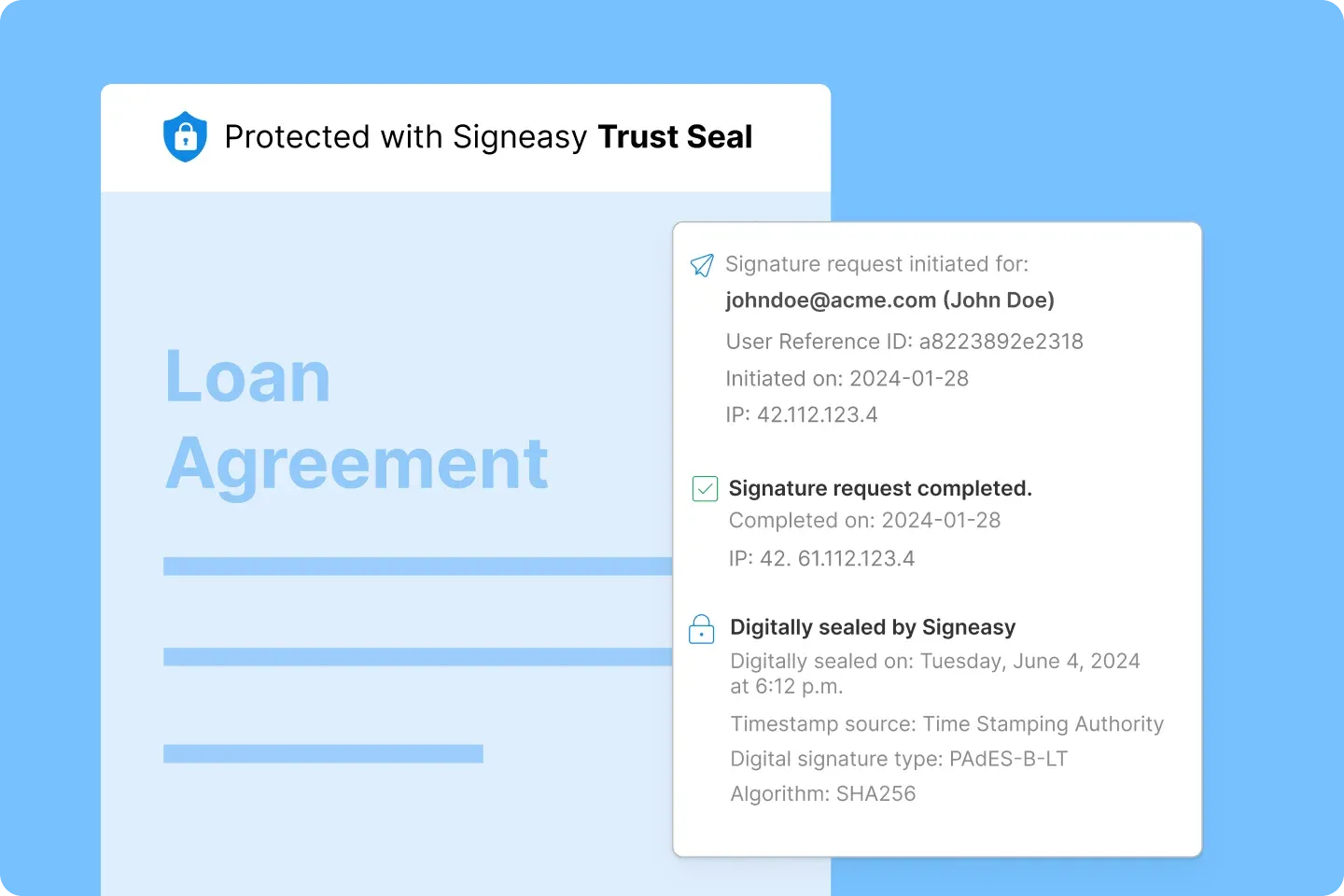
- Audit Trails log every action taken on a contract, including views, edits, approvals, and signatures, each with a timestamp and user identity attached.
- Two-Factor Authentication (2FA) and Single Sign-On (SSO) verify signer identity before execution and simplify secure access for internal teams.
- Role-Based Access Controls (RBAC) restrict sensitive contracts like compensation agreements, acquisition terms, or confidential vendor pricing to authorized personnel only.
- AES-128 and SSL-256 encryption protect documents both in transit and at rest.
- Trust Seal applies tamper detection to every signed document, so any post-signature modification is flagged immediately, and the original agreement’s integrity is preserved.
2. Automated workflows that keep every agreement on track
Signeasy Contract Automation standardizes how every agreement moves through the lifecycle. Templates pre-load compliant language so teams do not draft from scratch.
Additionally, Sequential Signing routes contracts to the correct approvers in a defined order, preventing unauthorized sign-offs. Auto-Reminders surface upcoming renewals, payment milestones, and review deadlines before they slip.
Together, these features make compliance the default outcome of every contract workflow.

3. Centralized visibility across every agreement
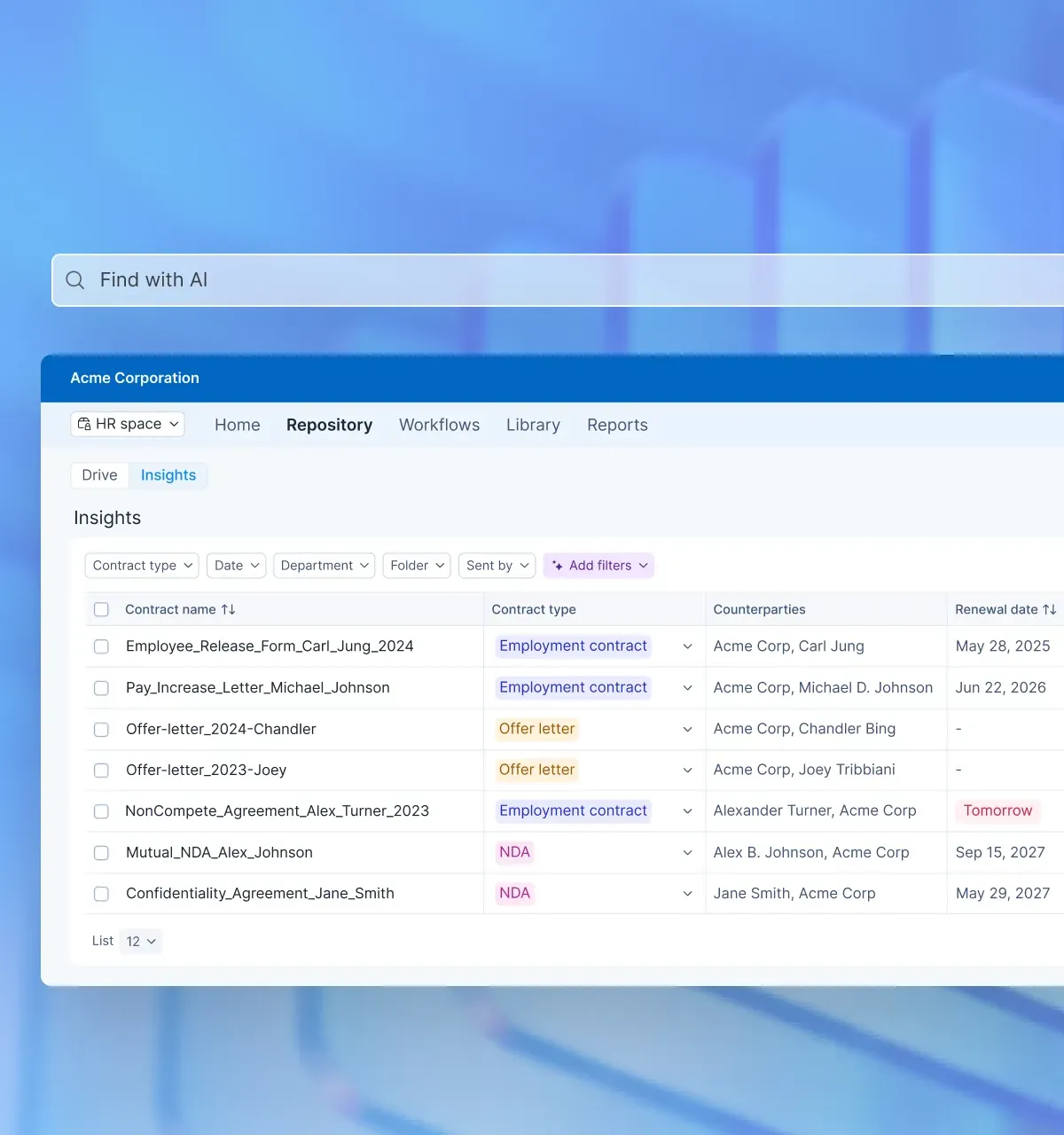
Signeasy's Intelligent Contract Management platform centralizes every agreement in a searchable repository where contracts are organized by status, type, and department.
AI-powered features like Smart Summary, Key Terms Extraction, and Smart Q&A help teams quickly understand what a contract contains, what obligations are active, and what deadlines are approaching, without opening and reading every document manually.
4. Legally binding eSignatures across jurisdictions
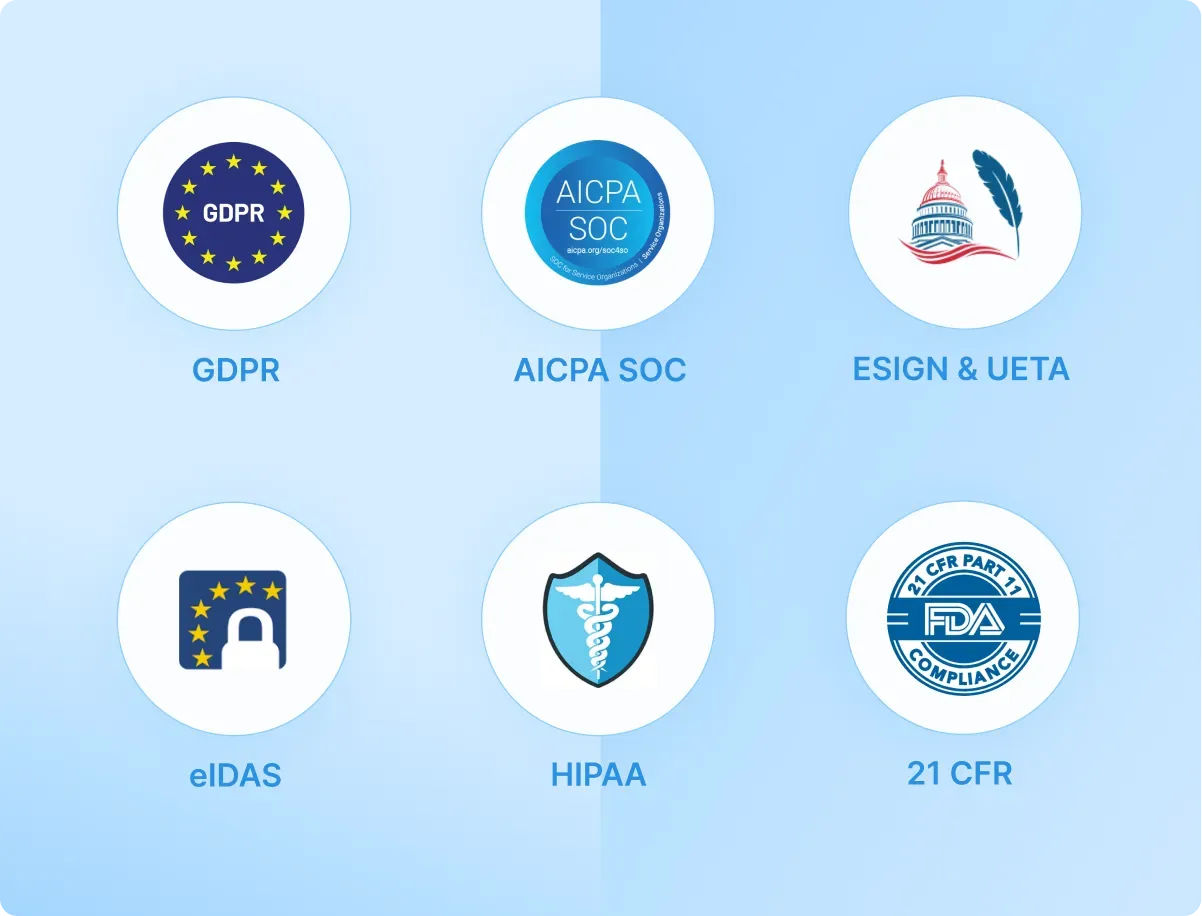
Signeasy supports eSignature legality across major regulatory frameworks, including ESIGN, UETA, eIDAS, HIPAA, SOC 2, and 21 CFR Part 11. That means contracts signed on the platform hold up legally across both jurisdictions and industries, from healthcare agreements governed by HIPAA to financial contracts requiring SOC 2 compliance.
Keep every contract compliant, accountable, and audit-ready
Integrity assurance and contract compliance work best when they are woven into the same daily workflow. Organizations that stay audit-ready embed accountability, transparency, and documentation into every stage of the contract lifecycle. That is what separates a compliance program that holds up from one that falls apart under pressure.
Signeasy helps teams do exactly that. Every signed contract is backed by a tamper-proof audit trail with Trust Seal protection. Automated workflows route agreements through the right approvals without manual follow-up.
AI-powered features like Smart Summary and Key Terms Extraction surface obligations and risks without cover-to-cover reading. Plus, with compliance support across regulations like ESIGN and eIDAS, contracts signed on Signeasy are legally binding wherever your business operates.
See what integrity-driven compliance looks like in practice with Signeasy. Request demo.